
When Your Cat Is Sick and You Can’t Stop Worrying
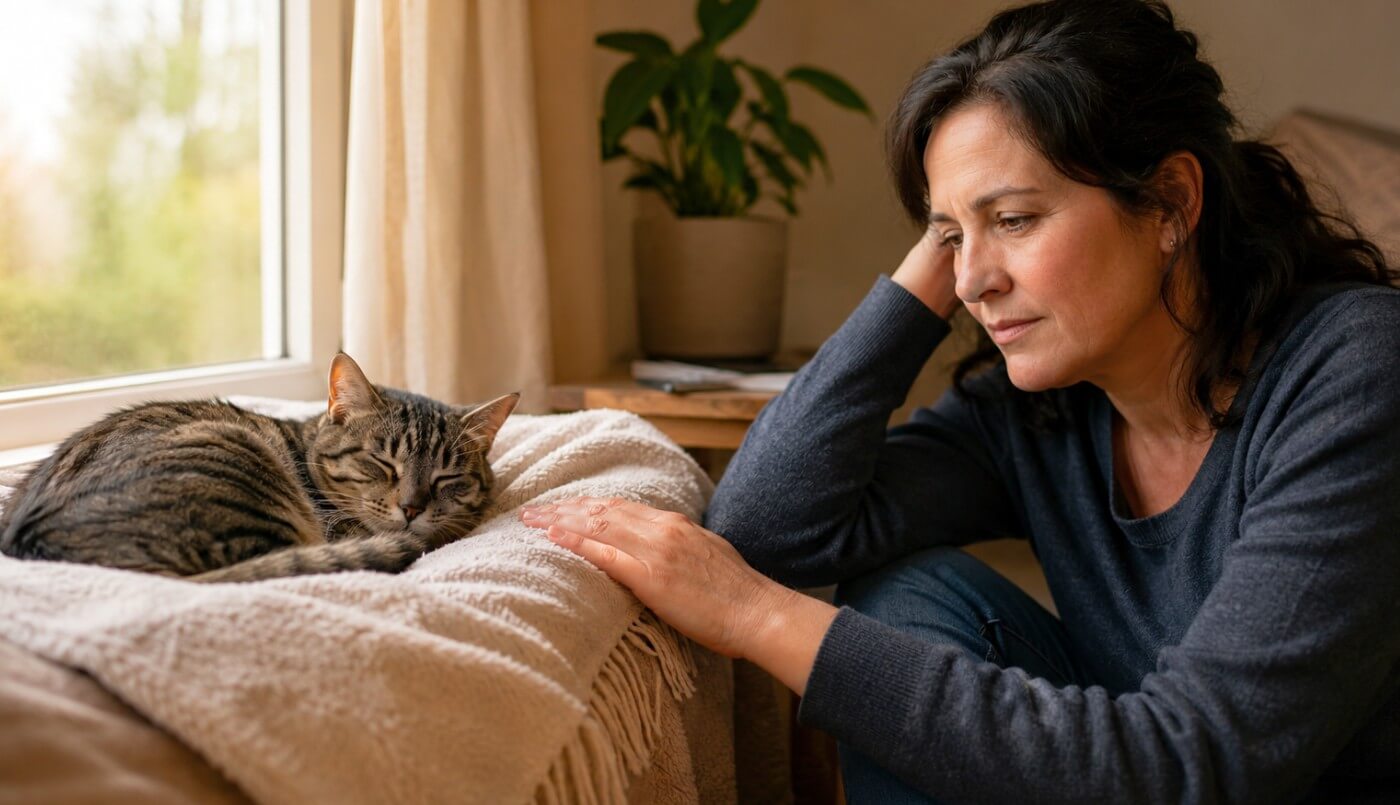
When your cat is sick, worry can move into the house with you.
It follows you into the kitchen.
It sits beside you while you’re trying to work.
It wakes up before you do.
It waits for the sound of the food bowl, the litter tray, the back door, the tiny cough, the change in breathing, the unusual sleeping place, the look in your cat’s eyes that may or may not mean something.
And before long, you’re not just caring for your cat.
You’re watching.
All the time.
When my little cat Moofy was diagnosed with cancer, I became a full-time helicopter Cat Mama.
I noticed everything: where she slept, what she ate, how the lump on her flank looked, whether she was moving normally, whether she still wanted cuddles, and whether she was still doing the ridiculous Moofy things that made her Moofy.
Because she was an indoor-outdoor cat, I also listened for her to come home.
If she was late, my brain could produce a full disaster movie in about eight seconds.
I’d wonder where she was, whether she was hiding somewhere, whether something had changed, and whether I should have kept her inside where I could see her.
Some of that watching was necessary.
Moofy had cancer, so I did need to notice changes, make decisions, and know when to call the vet.
But some of it was fear wearing a helpful-looking hat.
That’s the tricky part.
When your cat is seriously ill, you do need to pay attention.
But if anxiety takes over completely, it can steal the ordinary moments you still have with your cat.
And those moments matter.
The short answer
If you can’t stop worrying about your sick cat, you’re not being dramatic. Serious cat illness can make you hypervigilant because you love your cat and you’re afraid of missing something important. The goal isn’t to stop caring or force yourself to feel calm. The goal is to turn some of that fear into useful noticing: know what changes matter, keep your vet involved, make a simple care plan, and then gently come back to the cat in front of you. You’re allowed to feel scared and still be a good cat parent.
Why caring for a sick cat can make you so anxious
Cat illness is hard because cats don’t explain themselves.
They don’t say:
I feel nauseous today.
My pain is worse.
I’m tired but not suffering.
I just don’t like that food anymore.
I’m sleeping because I’m comfortable, not because I’m declining.
Instead, you have to interpret.
You look at appetite, energy, breathing, grooming, litter tray habits, hiding, posture, facial expression, weight, movement, and all the other tiny clues cat parents learn to read.
That takes a lot out of you.
It can make your mind feel constantly switched on, especially if your cat has cancer, kidney disease, heart disease, diabetes, chronic pain, digestive problems, or another serious condition that needs ongoing care.
You may find yourself asking the same questions over and over.
Is this normal?
Is this worse?
Should I call the vet?
Am I overreacting?
Am I underreacting?
How will I know when things are changing?
What if I make the wrong decision?
That kind of fear doesn’t mean you’re weak.
It means you’re emotionally attached to a small, vulnerable creature who can’t tell you exactly what’s happening.
Of course that’s stressful.
Of course your nervous system reacts.
Of course your heart keeps scanning for danger.
You’re not failing because you’re anxious.
You’re scared because you love your cat.
If cancer is the diagnosis that has brought you here, How to Cope When Your Cat Is Diagnosed With Cancer may help with some of the shock, fear and uncertainty of those first days.
The problem with becoming the full-time watcher
When Moofy was sick, I wanted to notice everything.
At first, that felt responsible.
Then it started to become exhausting.
Every nap started to feel like something I needed to interpret.
A smaller meal could send my mind racing, and a quiet day made me wonder whether Moofy was peacefully resting or beginning to fade.
Even the happy moments could hurt a little, because I knew they might not last.
That’s one of the cruelest parts of serious cat illness.
You can be sitting beside your cat while they’re warm, safe, fed, and content, and your mind is already racing ahead to the day you’ll lose them.
That’s anticipatory grief.
You’re grieving before the loss has happened, because the future no longer feels as open as it once did.
If this feeling has started to take over your days, Anticipatory Grief for a Cat: How to Cope Before Goodbye looks more closely at why we begin grieving our cats while they’re still with us.
Your feelings are totally understandable.
But your cat is still here.
That sounds obvious, but illness can make it surprisingly easy to forget.
Your cat is not only a diagnosis, a set of symptoms, or a body you’re monitoring.
They’re still your cat.
The one with favorite places, familiar habits, strong opinions, and very particular ideas about how life should be arranged.
The one who knows your voice.
The one who may still want food, warmth, sleep, a window, a lap, a routine, or the right to ignore you for several hours before suddenly requiring your full attention.
That ordinary cat is easy to lose sight of when fear becomes the main thing in the room.
So the aim isn’t to stop noticing.
It’s to stop panic from becoming the only way you notice.
Useful noticing is different from panic watching
There’s a difference between caring observation and anxious checking.
Useful noticing helps you make decisions.
Panic watching keeps asking for certainty no one can give you.
Useful noticing might sound like:
She ate half her breakfast, which is less than usual.
I’ll offer food again soon and keep track today.
Panic watching sounds like:
She ate half her breakfast.
This is it.
Everything’s going wrong.
I need to search for every possible reason a cat might eat less.
Useful noticing says:
She’s sleeping more today, but she’s comfortable, breathing normally, and came out for food.
Panic watching says:
She’s sleeping.
Is she dying?
How much sleep is too much sleep?
Did she always sleep like this? I can’t remember.
I should wake her up and check.
Useful noticing says:
The lump looks different.
I’m going to take a photo, note the date, and call the vet.
Panic watching says:
I’m going to stare at this lump ten times a day and frighten myself every time.
I say this with love because I’ve done it, too.
The fear tells you that if you watch hard enough, you’ll be able to prevent pain, decline, or loss.
But you can’t control everything by watching.
You can only notice enough to respond.
That’s the balance.
Give your worry somewhere useful to go
Anxiety gets worse when it has no container.
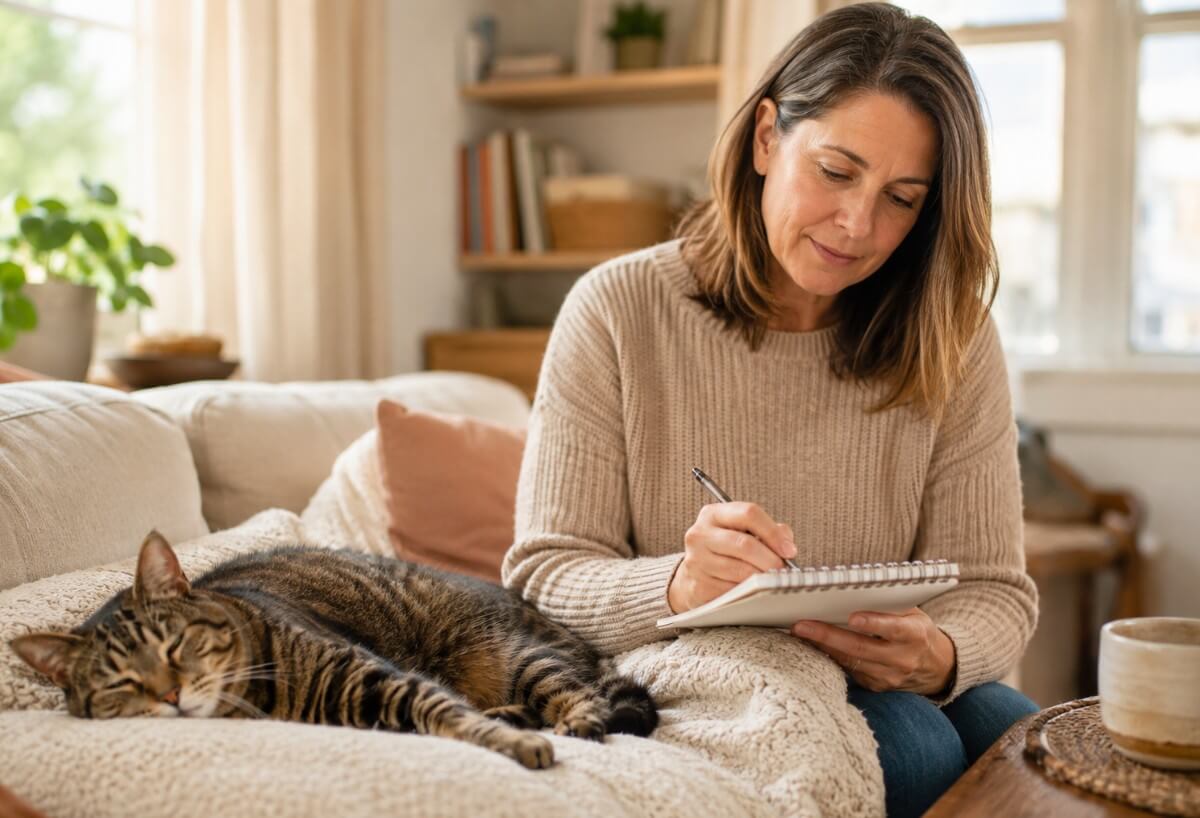
So instead of trying to hold every detail in your head, make a simple care note.
Not a dramatic medical diary that turns your whole life into a spreadsheet of dread.
Just something calm and practical.
You might note:
Food and appetite.
Water intake, if relevant.
Litter tray changes.
Vomiting or diarrhea.
Breathing changes.
Hiding or withdrawal.
Pain signs.
Mobility.
Medication.
Anything new or unusual.
Keep it brief.
One or two lines a day may be enough.
The point is not to document your cat into a case study.
The point is to stop your brain from trying to analyse everything at 3 a.m.
A simple note can help you see patterns.
It can also help when you talk to your vet, because you’re not trying to explain everything from a place of panic.
You can say:
She’s eaten less for two days.
She’s vomited three times since Monday.
She’s hiding more than usual.
She’s still eating and using the litter tray, but she seems uncomfortable when she jumps.
That kind of information is useful.
It gives your worry a job.
And once the worry has a job, it may not need to run the whole house.
Ask your vet what actually matters
One of the best things you can do for sick-cat anxiety is ask your vet what changes should prompt a call.
Not in a vague way.
In a very practical way.
It can help to ask your vet very practical questions, not just general ones.
You might want to know which symptoms would be urgent, what changes you should monitor at home, and what might be expected with your cat’s illness or medication.
It’s also worth asking what to do if your cat stops eating, how to recognize possible pain, when quality of life needs to be reassessed, and who to call after hours.
If your cat has an illness that can’t be cured, When Your Cat’s Illness Can’t Be Cured: What You Can Still Do may help you think about what good care can still look like when the focus begins to shift toward comfort.
These questions don’t mean you’re being difficult.
They mean you’re trying to care for your cat responsibly.
When you don’t know what matters, everything can feel alarming: a slightly smaller meal, a longer nap, a grumpy expression, a skipped cuddle, a new sleeping place, or a weird little noise you’re suddenly convinced you’ve never heard before, even though your cat has probably been making it for ten years.
A vet can help you sort the truly worrying signs from the things that are worth noting but not panicking over.
That doesn’t remove the fear completely.
But it can make the fear less blurry.
And blurry fear is often the hardest kind to live with.
Know when to call the vet urgently
This article is about anxiety, not about how to diagnose your cat.
But I do want to say something clearly.
Sometimes worry is not “just anxiety.”
Sometimes it’s your inner alarm noticing that something has genuinely changed.
If your cat is struggling to breathe, unable to urinate, collapsing, crying in pain, bleeding, unable to walk, having repeated vomiting or diarrhea, suddenly becoming extremely weak, or hiding and refusing food, don’t try to calm yourself out of responding.
Call your vet or an emergency clinic.
If your cat hasn’t eaten for a concerning length of time, especially if they’re already unwell, don’t wait and hope things sort themselves out.
Cats can become very ill when they don’t eat enough.
The same goes for breathing changes or straining in the litter tray.
Those are not “wait and see while I talk myself down” situations.
That’s why having a plan helps.
It lets you say:
This is a real vet issue.
Or:
This is something I’m going to note and monitor.
Or:
This is my fear talking, and I’m going to come back to the present.
You don’t have to make those decisions perfectly.
You just need support, information, and a way to respond that isn’t driven entirely by panic.
Come back to what is still okay
When your cat is sick, your mind naturally looks for signs of decline.
That makes sense.
But if you only look for what’s wrong, you can miss what’s still right.
So it can help to deliberately notice the ordinary good things too.
Is your cat eating something they enjoy?
Are they resting comfortably?
Are they seeking warmth?
Are they still interested in you?
Are they still choosing favorite spots?
Are they still grooming a little?
Are they still watching birds, following sunlight, nudging your hand, talking to you, or bossing you around in whatever way they’ve always found effective?
These things don’t erase the illness.
They don’t guarantee the future.
But they matter.
When Moofy had cancer, she still climbed curtains.
She still demanded cuddles in front of the TV.
She still appeared at the window in the rain as if checking whether I was admiring her properly.
She was sick, yes.
But she was also alive.
Very much alive.
And I had to learn to let myself see that.
Not in a denial way.
In a truthful way.
The illness was real.
So were the good moments.
Both things were true.
If you’re caring for a cat with cancer, I’ve shared more of the practical things that helped Moofy keep enjoying those good moments in Natural Support for Cats With Cancer: What Helped My Cat Live Well.
Give yourself permission to take small breaks
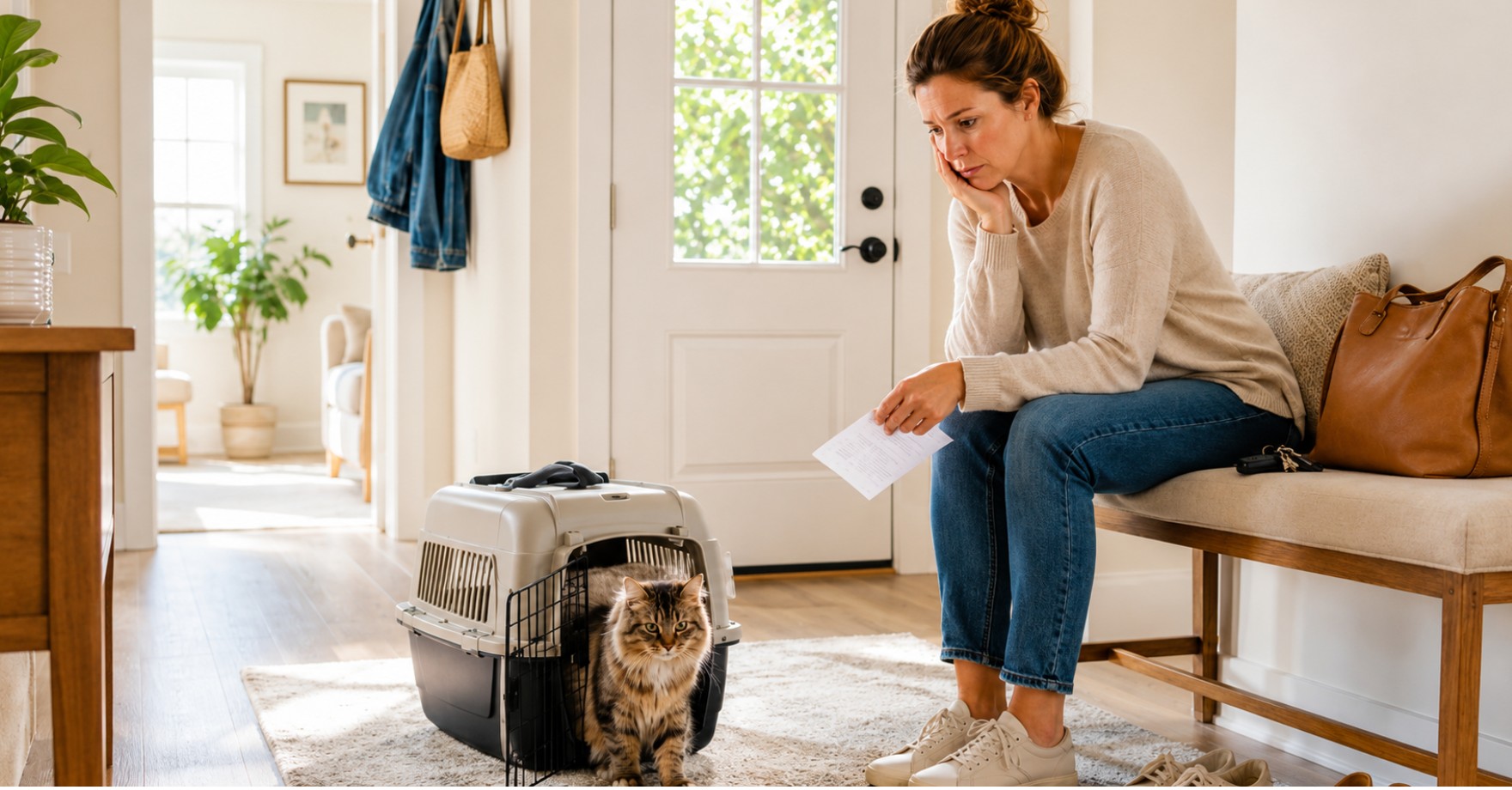
When your cat is seriously ill, leaving them can feel impossible.
Even going to the supermarket can feel like betrayal.
You may worry that something will happen the moment you stop watching.
You may feel guilty for sleeping, working, eating, showering, laughing, or having one normal conversation about something other than your cat’s illness.
But you’re still human.
You still need pauses.
And unless your cat is in an urgent stage where they need constant supervision, small breaks are not abandonment.
They’re how you keep going.
Make your cat comfortable.
Check they have what they need.
Follow the plan your vet has given you.
Then let yourself step away for a little while if you can.
Have a cup of tea.
Stand outside.
Fold laundry.
Sit somewhere your cat can’t see you staring at them with tragic eyes.
You don’t have to earn every moment of rest by being perfectly calm first.
Rest is part of care too.
A terrified, exhausted cat parent is still loving, but they’re also very tired.
And tired brains are wonderful at turning every uncertainty into a catastrophe.
Be careful with internet spirals
The internet can be useful when your cat is sick.
Sometimes it helps you understand a word your vet used, find the courage to ask a better question, or feel a little less alone in the middle of a frightening diagnosis.
But it can also drag you into a pit of despair.
One search becomes ten.
A mild symptom becomes a terminal possibility.
A forum story from twelve years ago becomes the thing your brain decides is definitely happening to your cat.
Someone says their cat had the same symptom and was fine.
Someone else says their cat had the same symptom and wasn’t.
Now you’re crying, your cat is asleep in a perfectly normal position, and you’ve convinced yourself the world is ending by lunchtime.
I understand this completely.
Searching can feel like love.
It can feel like action.
But after a certain point, it stops helping.
If you’re searching because you need a practical question answered, that may be useful.
If you’re searching because you’re trying to make fear go away, it probably won’t work.
Fear is very bad at feeling satisfied.
It always wants one more article.
One more forum thread.
One more answer.
One more sign.
Sometimes the kindest thing you can do is close the laptop and look at your actual cat.
Not the worst-case cat from your search results, but the cat in your house: warm in the sun, stretched out on the blanket, still here, still themselves, still living this moment with you.
The one who may be sick, but is still here.
You don’t have to be perfectly calm
There’s a phrase people often use around illness:
Be strong.
I understand why people say it.
But I don’t love it.
Because when your cat is sick, you don’t feel strong.
You may feel frightened, tired, teary, irritable, guilty, helpless, angry, numb, or unable to concentrate.
That doesn’t mean you’re doing this wrong.
You don’t have to be a peaceful, glowing, emotionally regulated saint to care for your cat well. You might cry before you call the vet, feel scared while you give medication, or be so exhausted that offering food and changing a blanket feels like a huge act of love.
Because sometimes it is.
You might panic for a minute, take a breath, and come back.
None of that means you’re failing.
It means you’re human, frightened, tired, and still deeply loving.
The goal is not perfect calm.
The goal is enough steadiness to take the next caring step.
Sometimes the next step is practical.
You call the vet, offer food, give medication, clean the litter tray, check their breathing, or make their bed more comfortable.
Other times, the next step is much quieter.
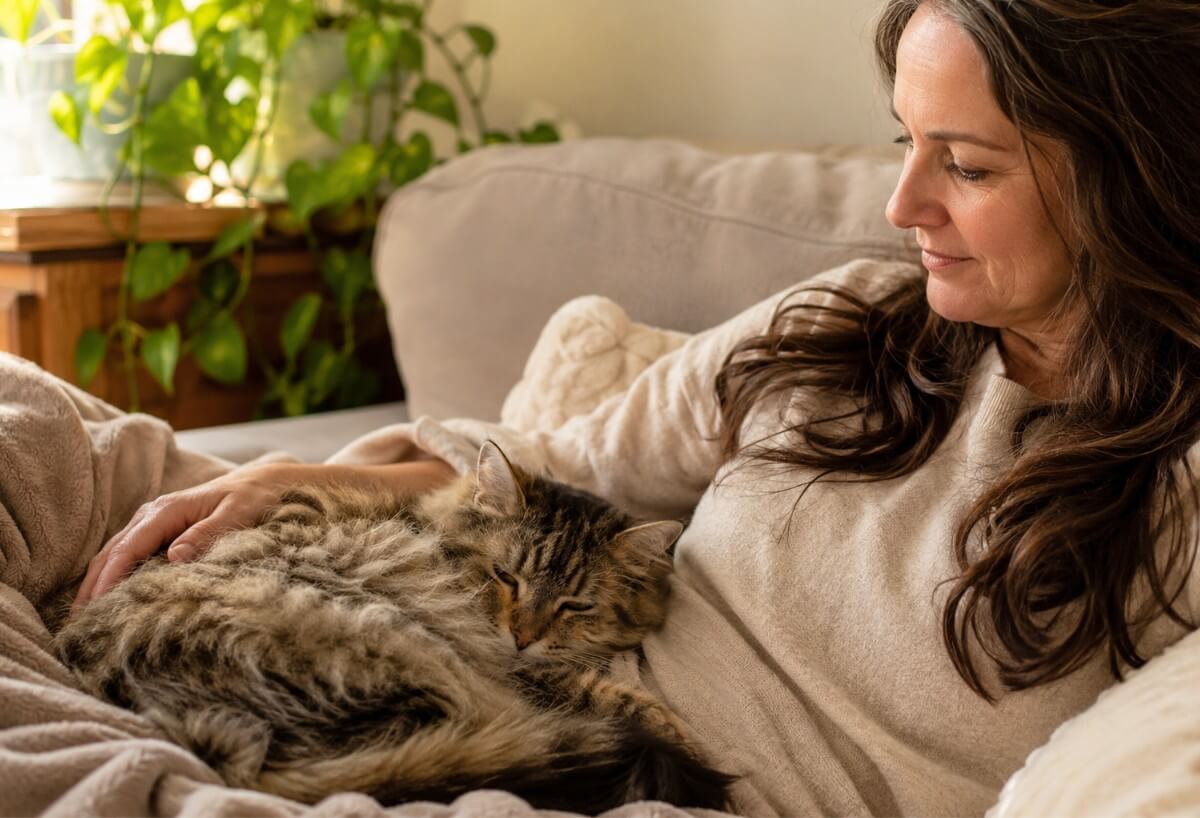
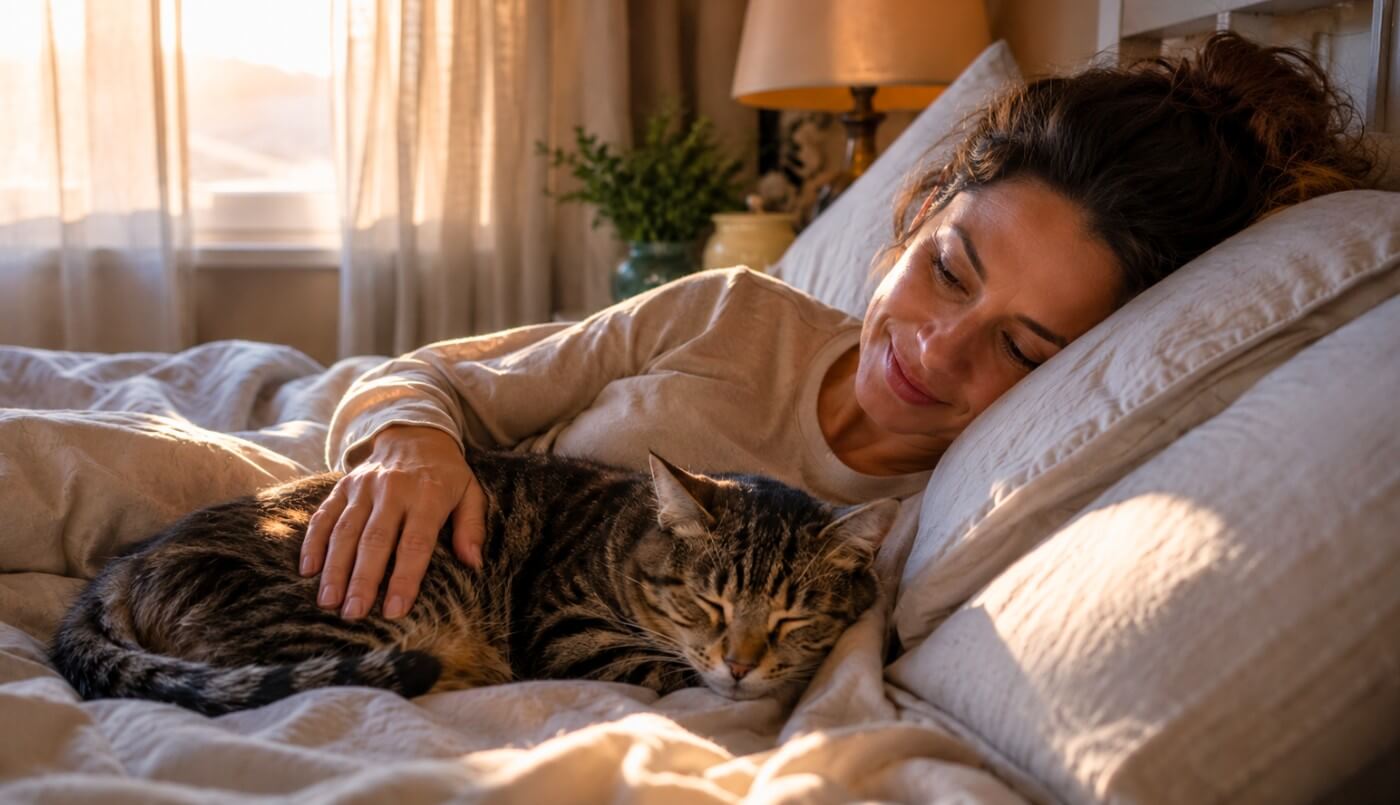
You sit beside your cat for a while and stroke their head if they want that.
Instead of staring at the symptom, you let yourself notice the rest of them too: the warmth of their body, the softness of their fur, the ordinary comfort of having them close.
And maybe, for a few breaths, the moment becomes something more than fear.
What helped me with Moofy
With Moofy, I had to learn that worry wasn’t proof of love.
Love was love.
Worry was just what my frightened mind did with it.
What helped most was having small anchors.
I tried to notice what mattered without turning every moment into surveillance.
I paid attention to her appetite, her energy, her lump, her comfort, and her joy.
But I also tried to notice when she was still herself.
That was important.
Because Moofy was not interested in becoming a tragic symbol.
She had things to do.
Curtains to climb.
Cuddles to demand.
Rain to dance through.
A household to supervise.
If I had spent all her good days grieving in advance, I would have missed so much of her life.
Not because the grief wasn’t real.
It was.
But because she was real too.
And she was still living it.
That’s what I want to say to you, if you’re in this place now.
Don’t ignore your worry.
But don’t let it become the whole relationship.
Your cat needs your care.
Your cat may need medication, vet visits, monitoring, comfort routines, food changes, pain relief, or palliative support.
But your cat also needs you.
Not only as a nurse.
As their person.
The one they know.
The one who remembers who they are beyond the illness.
That relationship can change in surprisingly tender ways during illness, too, and I talk more about that in Caring for a Sick Cat: How Illness Can Deepen Your Bond.
When worry and love live in the same room
Caring for a sick cat is one of the hardest kinds of love.
It asks you to be watchful, but not consumed.
Hopeful, but not blind.
Prepared, but not constantly living in the future.
Present, even when the present hurts.
You won’t get the balance right every day. No one does.
Some days you’ll feel surprisingly steady. Other days, you’ll check the food bowl six times, cry in the bathroom, and wonder how anyone is supposed to do this gracefully.
There will be moments when you handle things beautifully, and moments when fear gets the better of you for a while.
Some days you’ll search too much, hover too much, worry too much, and then feel guilty for worrying.
Please be gentle with yourself.
You’re not anxious because you don’t trust your cat.
You’re anxious because you know how much they matter.
But the illness doesn’t deserve every moment.
Fear doesn’t deserve every moment.
Try to save some of your attention for the cat who is still here.
Your worry won’t cure your cat.
But your care matters.
Your presence matters.
Your gentleness matters.
And on the days when all you can manage is one breath, one small kindness, and one sensible decision, please don’t dismiss that as nothing.
That’s what love looks like when things are hard.
Frequently Asked Questions
Is it normal to feel anxious when my cat is sick?
Yes. It’s very normal to feel anxious when your cat is sick, especially if the illness is serious, chronic, or uncertain.
You may feel watchful, distracted, tearful, or afraid of missing a sign that something has changed.
That doesn’t mean you’re overreacting.
It means you love your cat and you’re trying to protect them.
How do I stop constantly checking my sick cat?
It may help to create a simple care note so you’re not trying to hold every detail in your head.
Track the things your vet says matter, such as appetite, litter tray habits, medication, breathing, pain signs, vomiting, mobility, or hiding.
Then give yourself permission to stop checking between reasonable check-ins unless something clearly changes.
How do I know if I should call the vet?
Call your vet if you notice a meaningful change in your cat’s appetite, breathing, litter tray habits, comfort, mobility, behavior, or energy.
Seek urgent help if your cat is struggling to breathe, unable to urinate, collapsing, crying in pain, bleeding, unable to walk, repeatedly vomiting, or refusing food while seeming unwell.
What if I’m scared I’ll miss something important?
That fear is very common.
Ask your vet what specific signs you should watch for and what counts as urgent for your cat’s condition.
Having a clear plan can help you respond to real changes without feeling as if you have to monitor every tiny movement all day.
Is worrying about my sick cat a form of anticipatory grief?
It can be. If your cat has a serious or life-limiting illness, you may start grieving before they’re gone.
That can make you feel anxious, watchful, and afraid of the future.
Anticipatory grief doesn’t mean you’ve given up.
It means you already understand that something precious is changing.
How can I enjoy time with my cat when I’m so afraid?
Start very small.
Notice one thing that’s still okay right now.
Maybe your cat is warm, resting, eating a little, looking out the window, or leaning into your hand.
You don’t have to pretend everything is fine.
You’re just making room for love alongside the fear.
Further Reading
If you’d like to keep reading, these guides may help with the next part of the journey:
Anticipatory Grief for a Cat: How to Cope Before Goodbye
If you find yourself grieving what may happen before your cat is gone, this explores why anticipatory grief can feel so overwhelming and how to live alongside it.
Caring for a Sick Cat: How Illness Can Deepen Your Bond
Illness changes everyday life with your cat, but it can also create moments of extraordinary closeness, trust and tenderness.
When Your Cat’s Illness Can’t Be Cured: What You Can Still Do
When treatment can’t make your cat well again, there is still so much you can do to protect their comfort, dignity and enjoyment of life.
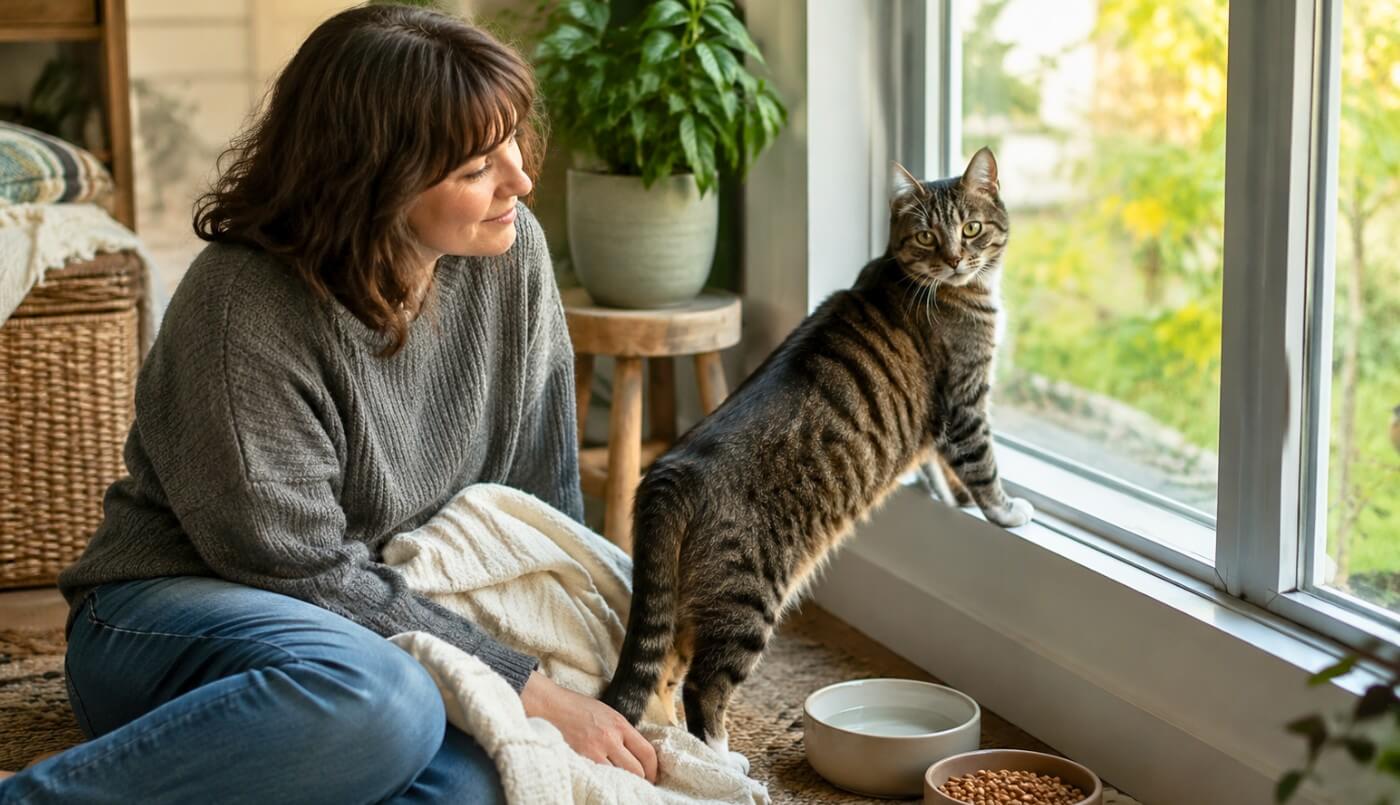
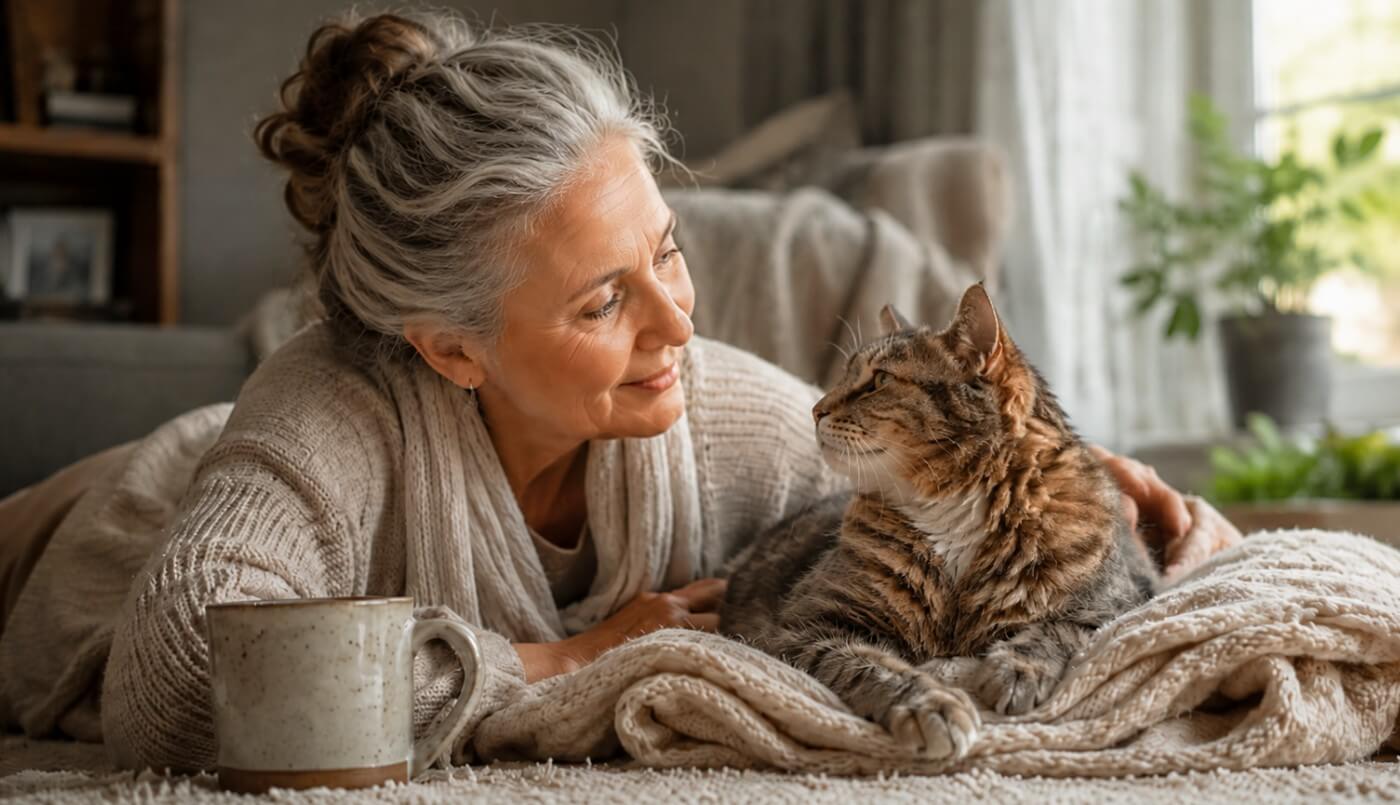
If you’re caring for a sick cat and finding yourself constantly checking, worrying, and second-guessing, you’re not alone. Serious illness can make even ordinary moments feel loaded with fear. I hope this post helps you find a little steadiness, a little practical clarity, and a little more room to simply be with the cat you love.