
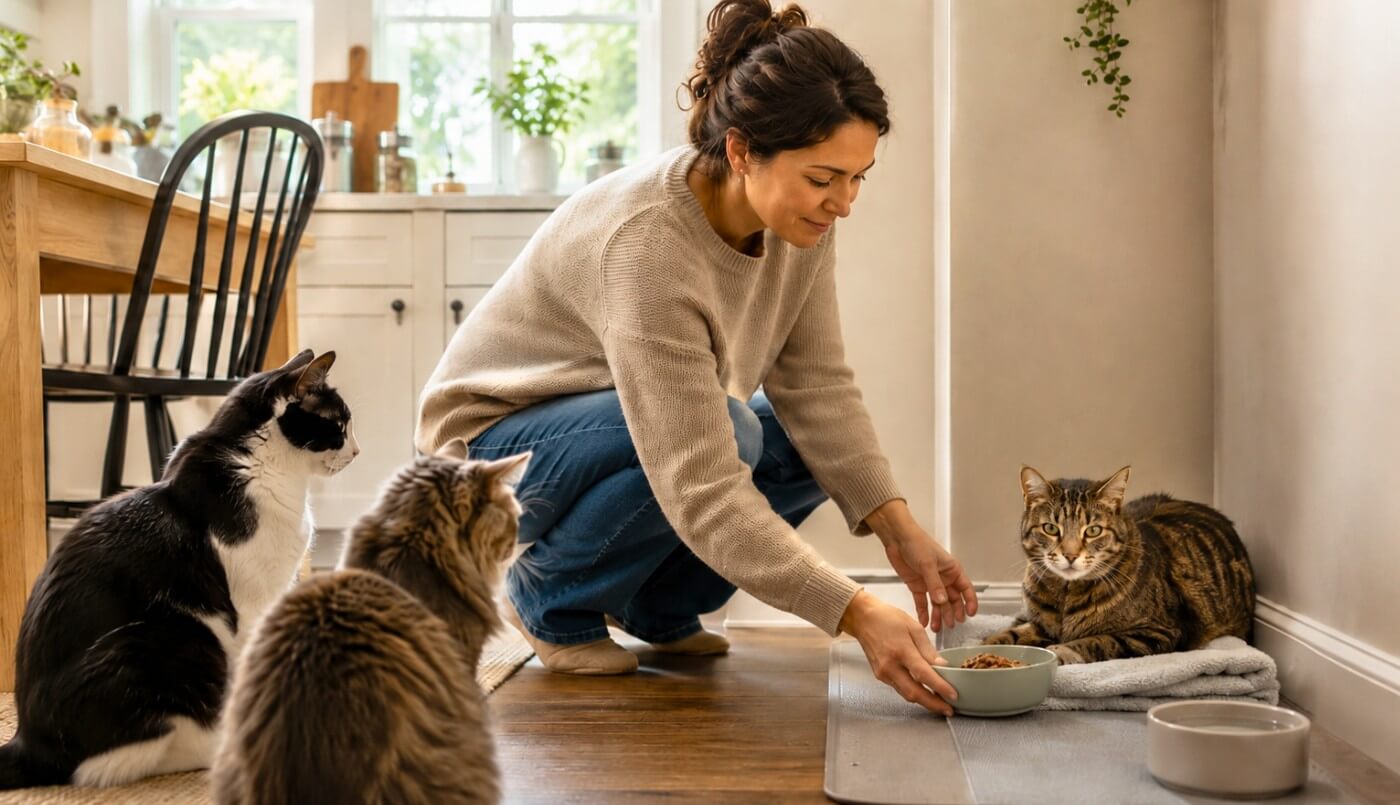
How to Care for a Sick Cat When You Have Other Cats
Updated for 2026: This post has been rewritten and expanded to better support cat parents caring for a sick cat in a multi-cat household.
Taking good care of a sick cat is hard enough on its own.
But when you have other cats in the house, everything becomes a little more complicated.
You’re not only thinking about your sick cat’s food, medication, comfort, appointments, and changing needs.
You’re also thinking about everyone else.
The cats who still expect dinner on time.
The snuggly cat who wants your lap.
The cat who suddenly thinks the sick cat’s special food looks much more interesting than their own.
And you.
Because you’re part of the household too.
When my little tabby Moofy had cancer, we had four other cats as well.
Moofy’s cancer care routine was intense.
She needed a lot of my time, a lot of attention, and a lot of emotional energy.
But I couldn’t put the other cats in cold storage while I cared for her.
They still needed feeding.
They still needed affection.
They still needed a sense that life had not become completely strange.
And I still had to find a way to manage the whole cat family without feeling as if I was failing everyone.
That’s what this article is about.
Not doing everything perfectly.
Just finding practical, gentle ways to care for one sick cat while keeping the rest of the household as calm and secure as possible.
The short answer
If you have a sick cat and other cats at home, the most important things are routine, separation where needed, and careful observation. Your sick cat may need separate food, medication, a quieter resting place, and more supervised meals, while your other cats may need reassurance, play, attention, and enough space so they do not feel pushed aside. The goal is not to isolate your sick cat from the family unless your vet tells you to, but to make the household easier for everyone to live in.
Start with your vet’s advice
Before you change food, separate cats, give supplements, or adjust routines, check what your sick cat actually needs.
Some sick cats need prescription food.
Some need medication with food.
Some need medication away from food.
Some shouldn’t eat certain treats or supplements.
Some need quiet rest.
Some illnesses may have infection-control concerns.
Others, like many cancers, may not be contagious but may still require careful feeding, medication, or comfort care.
Your vet can help you understand what matters most for your cat’s condition.
Useful questions to ask include:
- Does my sick cat need to eat separately?
- Can the other cats eat this food safely?
- Is this medication dangerous if another cat eats it?
- Should my sick cat be kept apart from the others at any point?
- What changes should I track at home?
- What signs mean I should call you urgently?
This is especially important if your sick cat is not eating, vomiting, hiding more than usual, losing weight, breathing differently, struggling to use the litter tray, or seems weak, painful, or withdrawn.
When in doubt, call your vet.
A multi-cat household can be managed.
But medical changes still need medical guidance.
Keep the normal routine where you can
Cats are often much more attached to routine than we realise.
Dinner time.
Morning greetings.
Where the bowls are.
Where the litter trays are.
Who sleeps where.
Which cat gets the sunny patch.
When one cat becomes sick, you may have to change some things.
But try not to change everything at once.
When Moofy was sick, I learned quickly that the rest of the cats still needed their ordinary rhythm.
They didn’t understand cancer.
They didn’t understand why Moofy needed extra care.
They only knew that something in the house felt different.
Keeping the basic routine steady helped everyone.
So feed the other cats at their usual time if you can.
Keep their familiar bowls and sleeping places.
Try not to move every resource in the house unless you need to.
Keep greetings, treats, play, and bedtime rituals as ordinary as possible.
This doesn’t mean pretending nothing’s happening.
It means giving the whole cat family something predictable to hold onto.
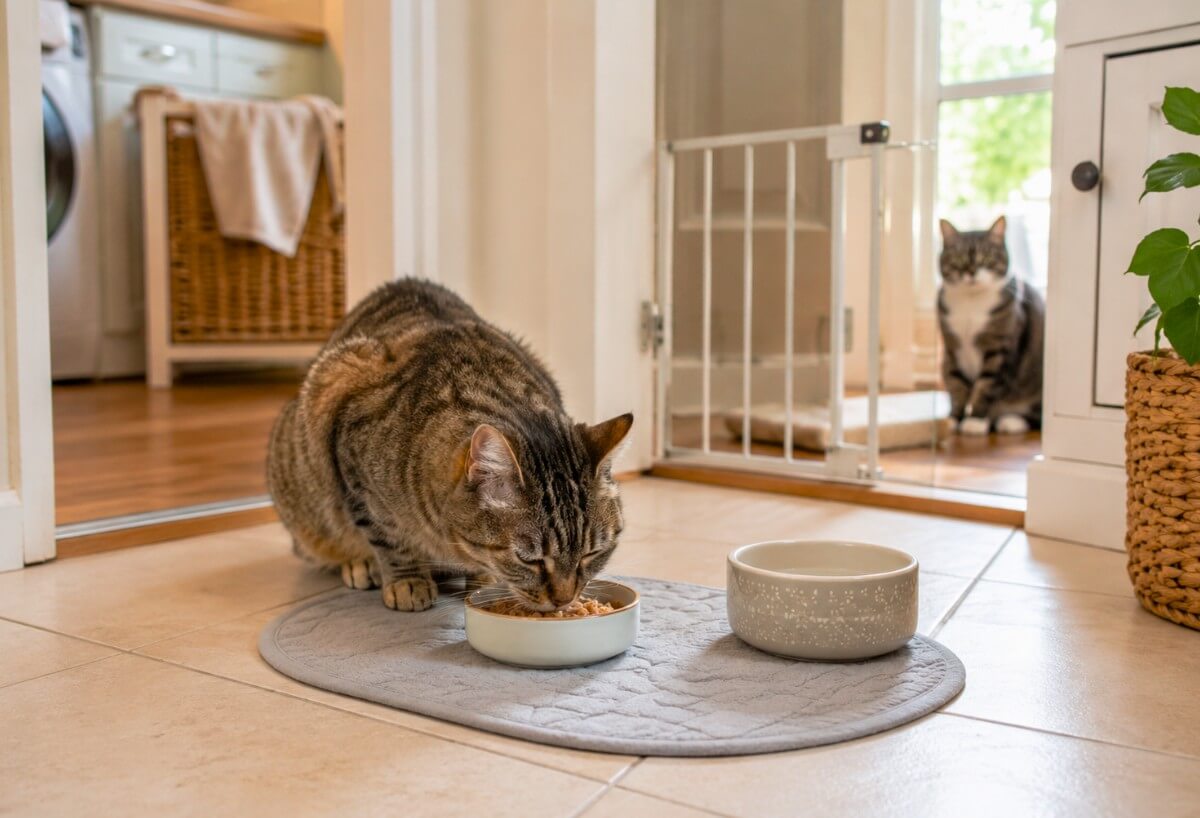
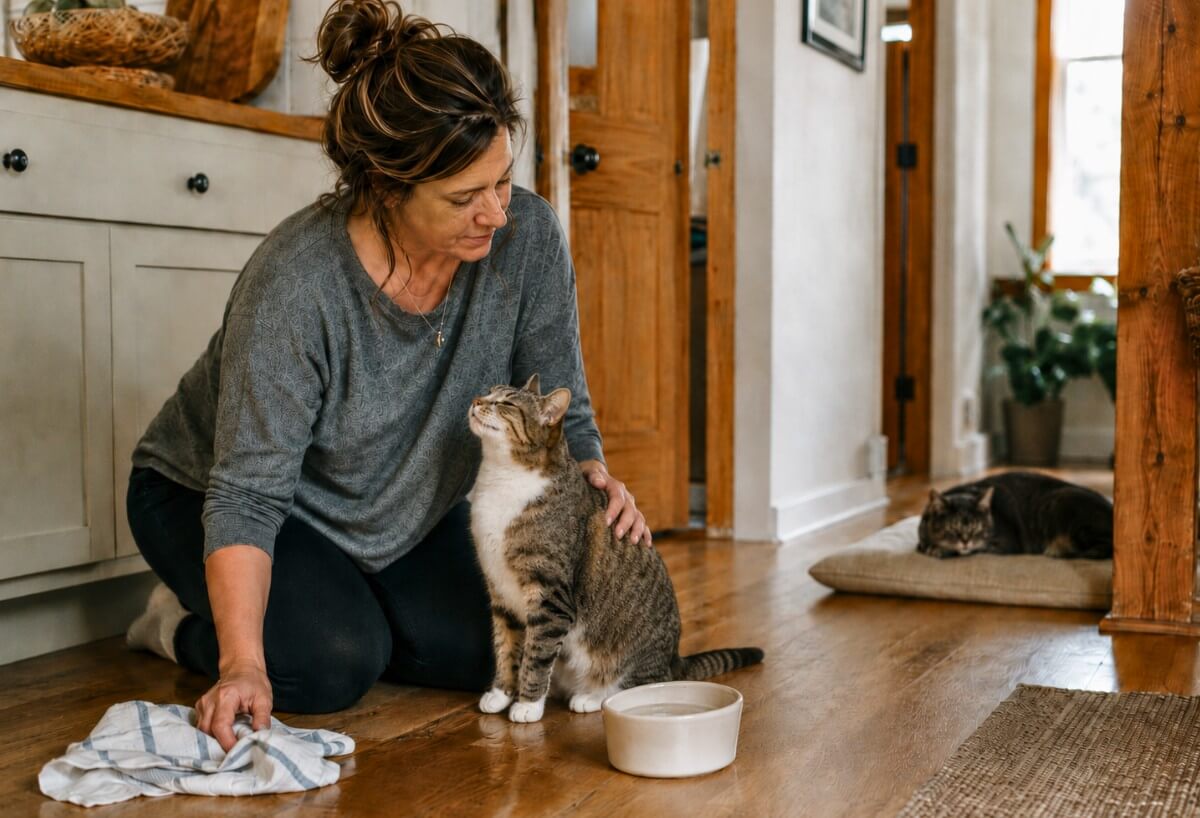
Set up a separate feeding area for your sick cat
Food is often where multi-cat care gets messy.
Your sick cat may be eating a special diet.
They may need extra calories.
They may be eating more slowly.
They may need medication mixed into food.
Or they may be eating very little, which means every mouthful matters.
Meanwhile, your other cats may see the new food and think it’s an exciting upgrade.
This is where a separate feeding setup helps.
It doesn’t have to be fancy.
You might use:
- a quiet corner of the kitchen
- a spare room
- a bathroom
- a laundry
- a bedroom
- a feeding station behind a baby gate, or
- a microchip feeder, if food stealing is a major problem.
The point is simple.
Your sick cat needs a chance to eat without being crowded, rushed, watched too closely, or pushed out of the way.
This matters even more if your sick cat is weaker than the others.
A healthy cat who bolts their own food may happily wander over and help themselves to the sick cat’s meal.
That might be annoying in an ordinary household.
When your sick cat needs every calorie, it becomes a real problem.
Give your sick cat time.
Give them space.
Let them eat at their own pace.
And if they’re on medicated food or a prescription diet, make sure the other cats cannot get to it.
Supervise meals when you need to
In a house with several cats, you may not be able to put food down and walk away anymore.
That was one of the adjustments I had to make with Moofy.
Before she was sick, feeding time could be fairly automatic.
Put the food down.
Let everyone eat.
Clear up later.
But once Moofy needed special care, I had to pay much closer attention.
Was she actually eating?
Was she just sniffing and walking away?
Was one of the other cats hovering?
Had someone finished their own dinner and started eyeing hers?
Was she being quietly pushed away?
Supervision doesn’t have to mean standing over everyone anxiously.
Sometimes it simply means staying nearby for a few minutes.
Quietly.
Calmly.
Without turning dinner into a performance.
You’re watching for small things:
- whether your sick cat is eating enough
- whether another cat is stealing food
- whether your sick cat is being blocked or bullied
- whether medication has actually been taken, and
- whether the routine is working.
If your sick cat is eating very slowly, you may need to give them extra time after the others have finished.
If they’re eating medicated food, remove the bowl as soon as they walk away.
If they’re not eating at all, that’s not something to simply wait out for days.
Call your vet and ask what to do next.
Make medication safe in a multi-cat home
Medication can be one of the most stressful parts of caring for a sick cat.
In a multi-cat home, there’s an extra layer to deal with.
You need to make sure the right cat gets the right medication.
And only that cat.
If medication is mixed into food, don’t leave the bowl unattended where another cat can reach it.
If pills are prepared on the bench, keep the other cats away while you’re organising them.
If you use treats to give medication, make sure the other cats are not swooping in and grabbing something that wasn’t meant for them.
It may help to create a small medication routine:
- choose one quiet place
- use the same time each day if possible
- keep supplies together but safely stored
- separate your sick cat before giving medication
- check that the medication has actually been swallowed or eaten, and
- give the other cats attention afterwards, not access to the medication.
I know this can sound obvious.
But when you’re tired, worried, and doing the same care tasks over and over, mistakes are easier to make.
A simple routine protects everyone.
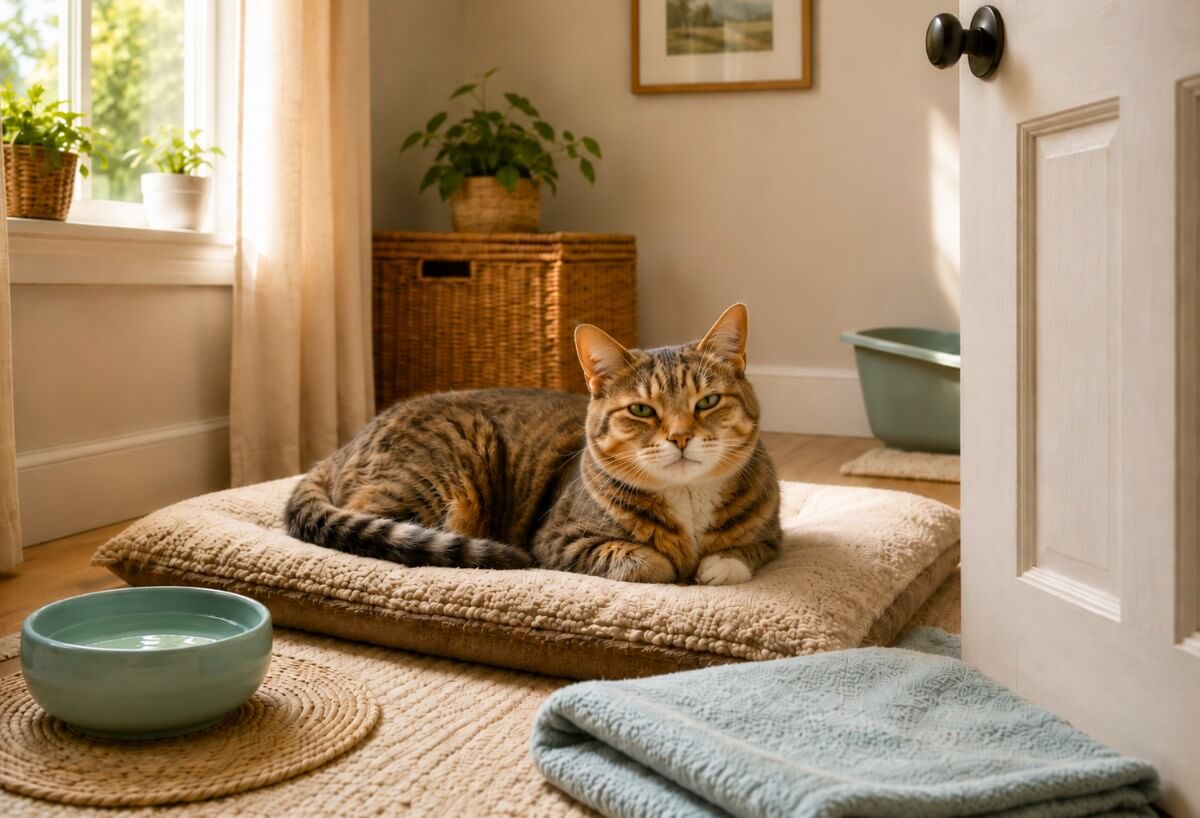
Give your sick cat a calm resting place
A sick cat may still want to be part of the household.
They may still want to sit near you.
They may still want familiar smells, familiar rooms, and familiar voices.
But they may also need a place where they can rest without being climbed over, pestered, chased, or watched by the other cats.
This doesn’t have to be a dramatic separation.
It might be as simple as:
- a warm bed in a quiet room
- a sunny spot away from traffic
- a low-sided bed that’s easy to step into
- a favourite blanket on the floor rather than up high
- a room with water, food, and a litter tray nearby, and
- a place where you can close the door for short periods if your cat needs peace.
The key is choice.
If your sick cat wants company and is safe with the other cats, they may not need to be shut away all day.
But if they’re tired, vulnerable, eating poorly, or being bothered, a quiet space can be a kindness.
If your cat is living with an illness that can’t be cured, there are still many practical ways to protect their comfort and quality of life, even when the focus of care has changed.
Moofy still belonged to the family.
But there were times when she needed more protection from the bustle of the family.
Watch the other cats for stress or tension
I don’t know whether cats feel jealousy the way we do.
But I do know they notice changes.
They notice when one cat is suddenly getting special food.
They notice when you’re spending more time in another room.
They notice when your lap is occupied.
They notice when your voice changes.
They notice when the household feels tense.
Some cats respond by becoming clingier.
Some become pushy.
Some seem unsettled.
Some may hiss at the sick cat.
Some may block doorways, guard food, or hover around the special feeding area.
Some may act as if nothing has changed at all.
Try not to assume everything’s fine just because there’s no obvious fighting.
In multi-cat homes, tension can be subtle.
Watch for:
- one cat blocking another cat’s path
- one cat staring at or following the sick cat
- one cat guarding food, water, litter trays, or resting spots
- the sick cat avoiding certain rooms
- the sick cat eating less when other cats are nearby
- hissing, swatting, chasing, or ambushing
- changes in litter tray habits, or
- one cat hiding more than usual.
If you see tension starting, step in early.
Add more space.
Separate feeding areas.
Open up more routes through the house.
Add another litter tray.
Give your sick cat protected rest.
Give the other cats something else to do.
Small changes can stop a small problem from becoming the new household pattern.
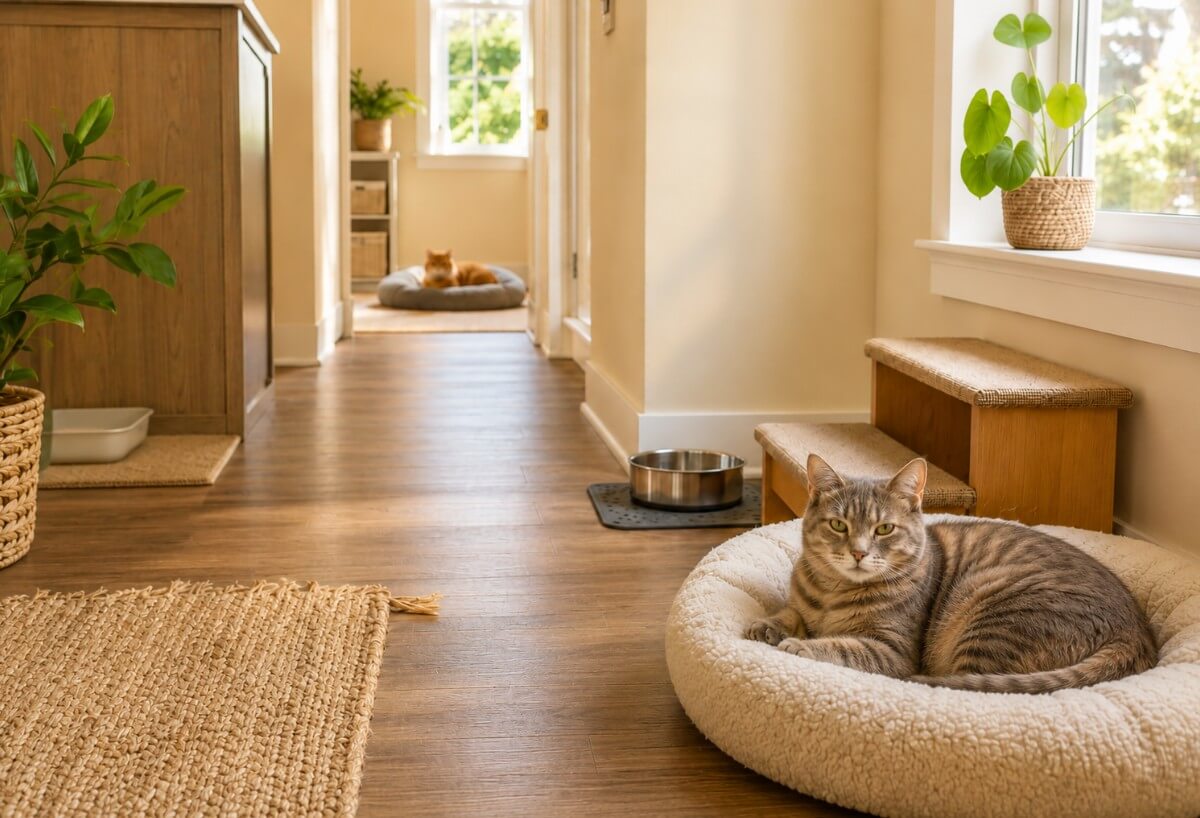
Add more resources, not more pressure
When one cat is sick, the household can become more crowded around the things that matter.
Food.
Water.
Litter trays.
Warm beds.
Your attention.
Doorways.
Sunny places.
Quiet corners.
If there are not enough resources, or if they’re all clustered together, cats may compete without making it obvious.
That competition can be especially hard on a sick cat.
They may not have the energy to push through.
They may simply withdraw.
So instead of expecting everyone to share beautifully, make sharing less necessary.
You might add:
- another water bowl in a different room
- another litter tray in a quiet spot
- an extra resting place away from the busiest area
- a second scratching post
- a food station with more distance between cats
- a low step or ramp if your sick cat is struggling to jump
- a hiding place where your sick cat can retreat safely
Don’t make your sick cat fight for access to the basics.
And don’t make your other cats feel that everything good has suddenly been moved behind a closed door.
A multi-cat household often works best when cats have choices.
Especially when one cat is unwell.
Be careful after vet visits
This is one of those multi-cat issues that can take people by surprise.
A cat goes to the vet.
They come home.
And suddenly another cat hisses at them as if they are a stranger.
It can feel upsetting, especially when the returning cat is already unwell.
But cats rely heavily on scent.
After a vet visit, your sick cat may smell different.
They may smell like the clinic, disinfectant, other animals, medication, or stress.
The other cats may react badly.
If this happens, try not to panic.
Give the returning cat a quiet place to settle.
Don’t force the cats to interact.
Let the vet smell fade.
Use familiar bedding if it’s safe and clean.
Keep the household calm.
You may need to separate the cats briefly and reintroduce them gradually.
This is especially important if your sick cat is weak, recovering from a procedure, or easily frightened.
The last thing they need after a hard appointment is to come home and be ambushed in the hallway.
A little patience after vet visits can protect the peace of the whole household.
Give the other cats small moments of attention
When one cat is seriously sick, your attention naturally goes there.
Of course it does.
You’re tracking symptoms.
Preparing food.
Giving medication.
Watching breathing.
Checking litter trays.
Making appointments.
Trying to understand what’s happening.
And loving them through all of it.
But the other cats still need you too.
They may not need the same intensity of care.
But they do need moments of normal connection.
This doesn’t have to be huge.
It might be:
- two minutes of play with a wand toy
- a brush if they enjoy being groomed
- a quiet cuddle in another room
- saying hello properly when you come home
- letting them have their usual bedtime routine, or
- feeding them before you start the more complicated care tasks.
These tiny rituals matter.
They reassure the other cats.
They also remind you that your household is still bigger than the illness.
When Moofy was sick, I couldn’t give the other cats equal attention all the time.
But I could give them small, deliberate pieces of myself.
That helped.
Not perfectly.
But enough.
Try not to take your stress out on the others
This is a tender one.
When you’re caring for a sick cat, you may become more tired than you realise.
You may be sleeping lightly.
Listening for sounds.
Watching every bite.
Worrying about money.
Worrying about the next appointment.
Worrying about whether you’re doing enough.
And then another cat knocks something over.
Or steals food.
Or meows at the worst possible moment.
Or blocks your path while you’re carrying the one thing you absolutely cannot spill.
It’s very easy to snap.
Not because you don’t love them.
Because you’re stretched.
If this happens, try not to turn it into another reason to feel guilty.
Just notice it.
Take a breath.
Lower the pressure where you can.
If that constant watching, checking and worrying is starting to take over your days, When Your Cat Is Sick and You Can’t Stop Worrying is about that exhausting side of caring for a cat you love.
The other cats are not trying to make things harder.
They’re living through the change too.
They may be confused.
They may be unsettled.
They may be asking for reassurance in inconvenient ways.
You deserve compassion.
So do they.
Make care easier for yourself
A sick cat’s routine can become surprisingly complicated.
Food.
Medication.
Supplements.
Appointments.
Weight checks.
Symptom notes.
Litter tray changes.
Questions for the vet.
And in a multi-cat home, you’re doing all of this while still running the ordinary cat household.
So make it easier where you can.
You might keep a simple care station with:
- your cat’s food instructions
- medication schedule
- vet contact details
- notebook or printed tracker
- clean bowls
- wipes or towels
- treats approved by your vet, and
- a list of urgent signs to watch for.
You don’t need an elaborate system.
You need something you can use when you’re tired.
A simple written routine can also help if someone else in the household needs to step in.
Because when you’re emotionally overloaded, even basic decisions can feel heavy.
Where’s the medicine?
Did she eat?
Did she already have that dose?
When’s the next appointment?
What did the vet say to watch for?
Write it down.
Not because you’re failing.
Because you’re carrying a lot.
What I learned from caring for Moofy with other cats in the house
When Moofy had cancer, I learned that illness doesn’t happen neatly.
If cancer is what has brought you here too, I’ve written more about how to cope when your cat is diagnosed with cancer, especially those frightening early days when there suddenly seems to be so much to understand.
Cancer doesn’t pause the rest of the household.
It doesn’t make the other cats suddenly patient and understanding.
It doesn’t give you endless time, money, or emotional capacity.
Life keeps going around the sick cat.
Dinner still has to happen.
The other cats still want attention.
Someone still needs to clean the bowls.
Someone still needs to notice whether the sick cat ate.
Someone still needs to be gentle when everyone’s tired.
I could not make Moofy well by organising the household.
I wish I could have.
But I could make her days gentler.
I could protect her food.
I could give her quiet.
I could notice when she was tired, overwhelmed, hungry, or asking for help in the small ways cats do.
I could stop the other cats from accidentally making things harder for her.
And I could remind them, in small daily ways, that they were still loved too.
None of that changed the diagnosis.
But it changed the kind of day Moofy was having.
And sometimes, when you’re caring for a sick cat, that’s where love has to go.
Into the bowl placed somewhere safer.
The door left slightly open.
The hand that waits.
The routine made softer.
The household held together as gently as you can — for all the cats in your family.
Those small acts of care can also change something in the relationship between you.
Caring for a Sick Cat: How Illness Can Deepen Your Bond is about the closeness that can grow through this kind of everyday caregiving.
Final thoughts
When you have one sick cat and several other cats, it can feel as if everyone needs something from you at once.
The sick cat needs care.
The other cats need reassurance.
The household needs structure.
And you need room to breathe.
You may not get every detail right.
You may have messy days.
You may feel guilty that you cannot give everyone the same amount of attention.
But you can still make thoughtful choices.
You can protect your sick cat’s food.
You can keep routines steady.
You can watch for tension.
You can give the other cats small moments of love.
You can ask your vet for help.
And you can create a home that feels a little safer, softer, and calmer for everyone in it.
Including you.
Frequently Asked Questions
Should I separate my sick cat from my other cats?
Sometimes, but not always.
If your sick cat is comfortable with the other cats and there is no food stealing, bullying, infection concern, or stress, they may not need to be separated much.
But separation can be helpful if your cat needs special food, medication, rest, litter tray monitoring, or protection from more active cats.
Ask your vet if there is any medical reason your sick cat should be kept apart.
How do I stop my other cats eating my sick cat’s food?
Feed your sick cat separately and supervise meals.
You can use a separate room, baby gate, feeding station, bathroom, laundry, or microchip feeder.
Don’t leave medicated food or prescription food where the other cats can reach it unless your vet has said it’s safe for everyone.
Why are my other cats hissing after my sick cat comes home from the vet?
Your sick cat may smell different after a vet visit.
Other cats can react to unfamiliar scents from the clinic, other animals, medication, or stress.
Give your returning cat a quiet place to settle and do not force interaction.
If the reaction is strong, separate them and reintroduce them gradually.
Can cats get jealous when one cat is sick?
They can certainly notice when routines and attention change.
Whether we call it jealousy or stress, the response is real.
Try to give the other cats small moments of attention, play, and routine so they still feel secure.
When should I call the vet urgently?
Call your vet promptly if your sick cat is not eating, is repeatedly vomiting, seems weak or lethargic, is struggling to breathe, cannot urinate, appears painful, collapses, hides in a way that is unusual for them, or suddenly declines.
If something feels seriously wrong, don’t wait to see how the other cats react.
Get veterinary help.
Further Reading
Caring for a sick cat can affect every part of life at home, not just the practical routine.
These guides may help with some of the emotional weight that comes with loving and caring for an ill cat.
Caring for a Sick Cat: How Illness Can Deepen Your Bond
Illness can make everyday life harder, but all those small acts of feeding, comforting, watching and helping can also create an extraordinary closeness between you and your cat.
When Your Cat Is Sick and You Can’t Stop Worrying
If you’re constantly checking your cat, watching for changes and wondering whether you’re doing enough, this article is for the exhausting worry that can come with serious illness.
When Your Cat’s Illness Can’t Be Cured: What You Can Still Do
When the diagnosis can’t be changed, there are still many ways to protect your cat’s comfort, dignity and quality of life.
This guide looks at what caring can become when curing is no longer possible.
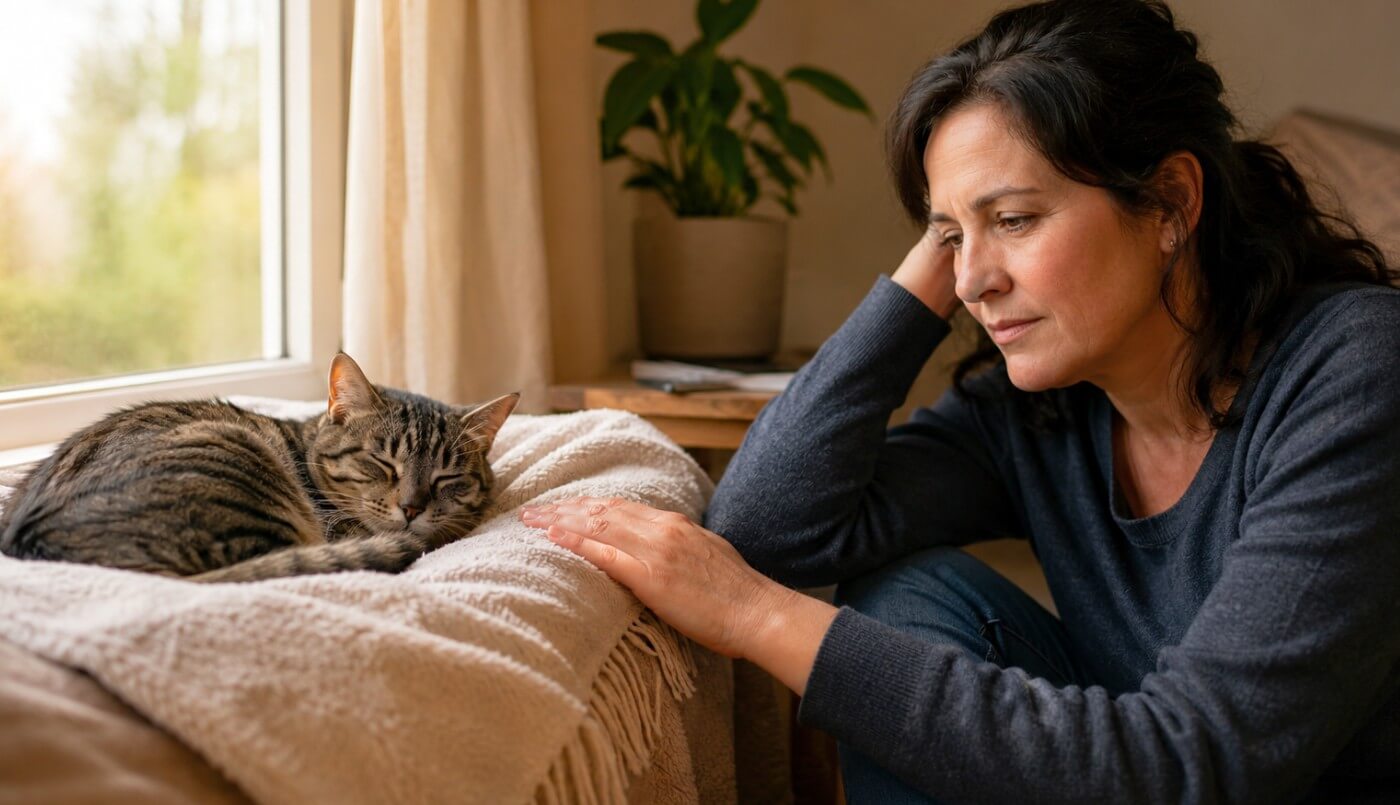
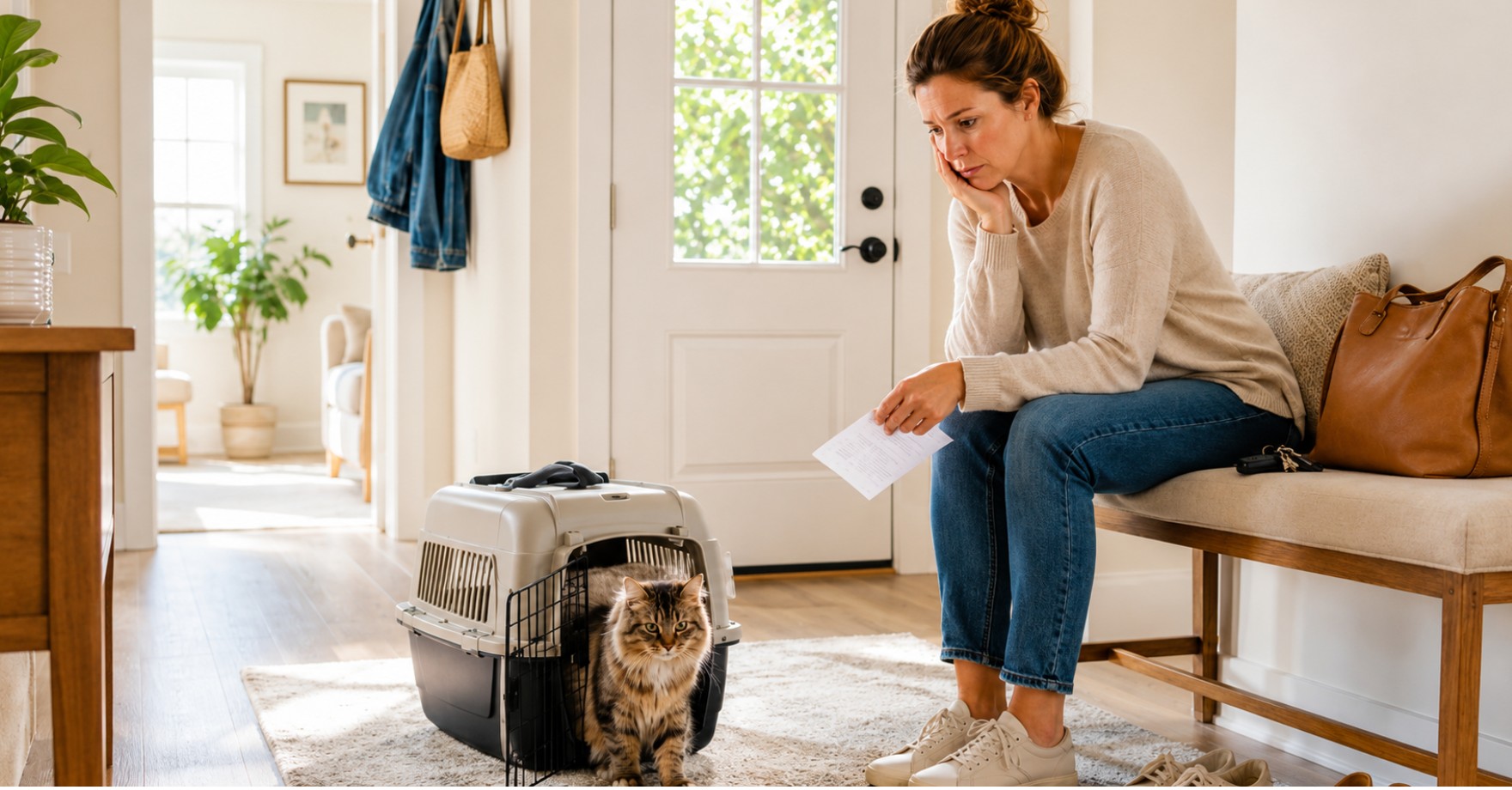
If you’re caring for a sick cat while also trying to look after the other cats in your home, please know how hard that can be.
When Moofy had cancer, I had four other cats too, and I remember how much there was to think about — food, medication, routines, jealousy, stress, and trying to make sure no one felt forgotten.
There’s no perfect way to manage it all. Sometimes you’re just doing the next kind, practical thing: feeding one cat separately, giving another a little reassurance, keeping the house calm, or taking a breath before you react.
If you’ve been through this in a multi-cat household, you’re very welcome to share what helped your cats below. Your experience may be exactly what another cat parent needs to hear today.
I have a multi-cat household and one of my older cats is required to eat the tasty soft food. Of course I have to supervise her mealtimes, like a good waitress (as you hilariously point out!) and the others wolf their’s down to try and get to her food afterwards. I feed the others out of those cat feeding towers to slow them down, while she has the privilege of eating out of a bowl. She is not a sick cat (thank goodness) but it’s still a challenge to juggle mealtimes because she’s such a slow eater. I always end up giving them a tsp each of her tasty food in the end. I’m thinking of getting one of those personalized automatic feeding bowls programmed for only one cat, but that would only be my last resort! Love your posts and the illustrations!
That’s a tricky one, Yas. That’s why I actually physically stand there while the feeding frenzy unfolds – so you can supervise. I have seen something called a Cat Cube (from memory!) – a little clear perspex cube that one cat can fit into and eat in isolation. Thanks for your kind words! So nice of you.