

How to Cope When Your Cat Is Diagnosed With Cancer
When your cat is diagnosed with cancer, your whole world suddenly changes.
One moment, you may be trying to listen to the vet.
The next, your mind is racing through words like tumor, biopsy, spread, treatment, pain, cost, time, and goodbye.
You may feel shocked, numb, panicked, guilty, or strangely calm because your brain can’t take it all in yet.
If your cat has just been diagnosed with cancer, you don’t have to know everything today.
You don’t have to make every decision immediately.
You don’t have to become an expert overnight.
Right now, your job is smaller than that.
Breathe.
Ask the next question.
Write things down.
Come back to what matters most: your cat’s comfort, your cat’s quality of life, and the love you already have for them.
The short answer
If your cat is diagnosed with cancer, the first step is to slow the situation down enough to understand what you’re dealing with. Ask your vet what type of cancer it is, whether it has spread, what treatment or palliative options are available, what your cat may feel, and what signs would mean their quality of life is changing. Then make decisions one step at a time, with your vet’s guidance, your cat’s comfort at the center, and compassion for yourself as well as your cat.
First, let yourself be in shock
A cancer diagnosis is not just medical information.
It’s emotional information.
It can change how you look at your cat in an instant.
Yesterday, they may have been your sleepy companion, your demanding breakfast alarm, your lap warmer, your little shadow.
Today, you may suddenly be watching every movement and wondering what it means.
Are they eating enough?
Are they hiding because they’re tired, or because they’re in pain?
Did they always breathe like that?
Is that normal?
How long has this been happening?
Did you miss something?
This is the part many people don’t expect.
The diagnosis doesn’t only bring fear about the future.
It can rewrite the past in your mind.
You may start replaying every small sign, every vet visit, every moment when your cat seemed “a bit off.”
Please be gentle with yourself here.
Cats are very good at hiding illness.
Many signs of cancer can look like other problems, aging, dental pain, stomach issues, stress, or ordinary changes in appetite or behavior.
Even when something serious is happening, it isn’t always obvious from the outside.
You’re not a bad cat parent because you didn’t know before you got the official diagnosis.
Ask what kind of cancer your cat has
“Cancer” is a frightening word, but it isn’t one single illness.
Different cancers behave differently.
Different cancers can behave in very different ways.
Some grow slowly, while others are more aggressive or likely to spread.
Treatment may be possible in some cases, while in others the focus may be on managing symptoms and keeping your cat comfortable.
Sometimes the next steps are fairly clear. In other cases, your vet may need further tests before they can give you a realistic picture of what the diagnosis means for your cat.
One of the kindest things you can do for yourself is ask your vet to explain the diagnosis in plain language.
You might ask:
- What type of cancer does my cat have?
- Where is it in their body?
- Do we know whether it has spread?
- How certain is the diagnosis?
- Do we need more tests to understand it?
- Is this cancer usually painful?
- Is treatment possible, or are we focusing on comfort?
- What would you do next if this were your cat?
You don’t need to ask all of these at once.
You can write them down and bring them to the next appointment.
When you’re overwhelmed, it’s very hard to remember what was said.
Taking notes, asking for written instructions, or bringing someone with you can help.
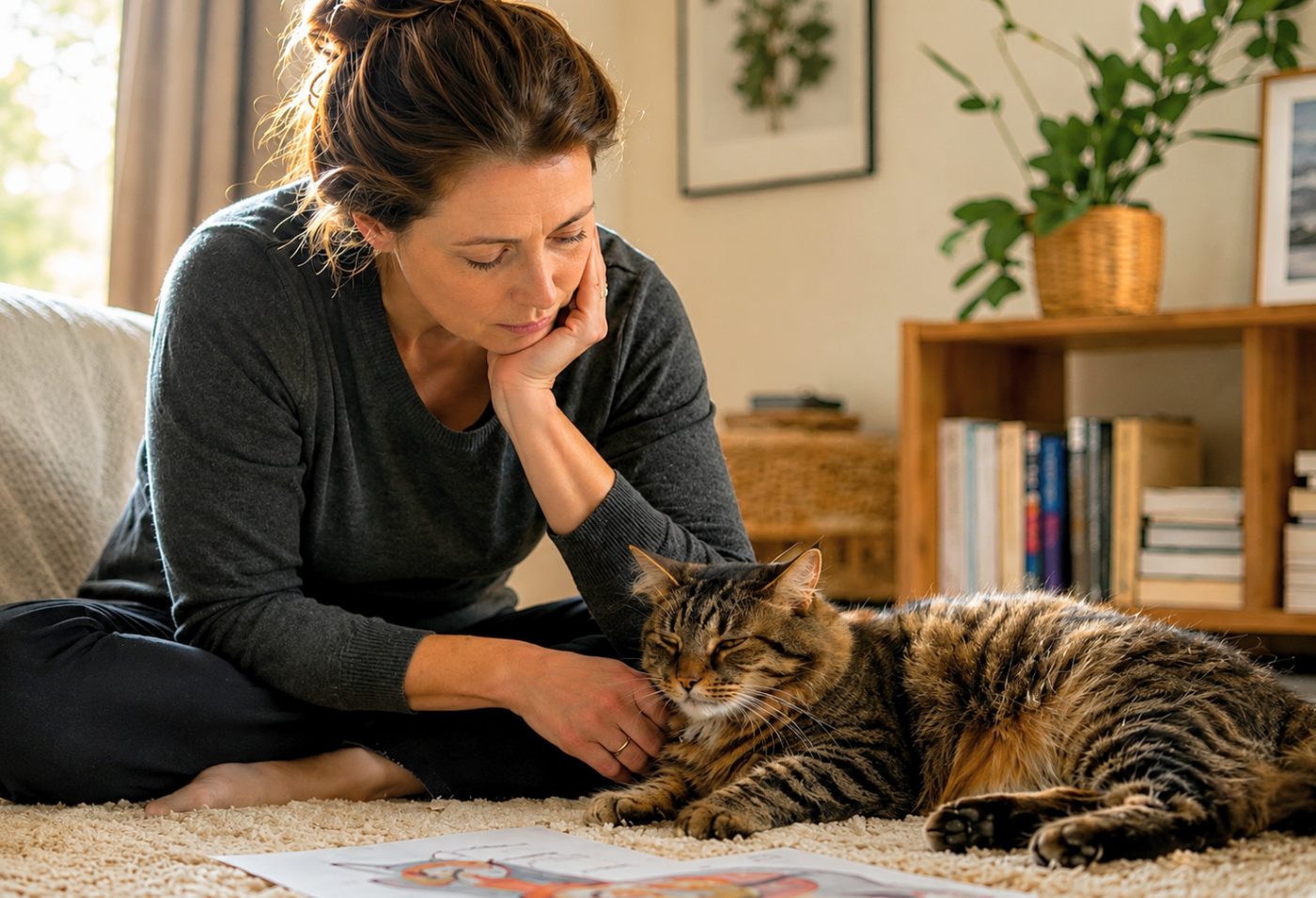
Don’t force yourself to decide everything right away
Sometimes a cat cancer diagnosis comes with urgency.
Other times, there may be space to breathe, gather information, and think.
If your cat is in severe distress, your vet may need to help you make fast decisions about pain relief, emergency care, or euthanasia.
But if your cat is stable, it’s okay to ask whether you have time to consider your options.
You can say:
“I’m feeling overwhelmed. Is this something I need to decide today, or can I take a little time to think?”
That one question can help you understand the pace of the situation.
A diagnosis can make you feel as if you’re already behind.
But many decisions are better made after the first wave of panic has softened a little.
You’re allowed to pause.
You’re allowed to ask again.
You’re allowed to need things explained more than once.
Understand the difference between treatment and comfort care
When a cat has cancer, care usually falls into two broad areas.
There may be treatment aimed at controlling, shrinking, removing, or slowing the cancer.
Depending on the type and location, this may include surgery, chemotherapy, radiation therapy, or other specialist options.
There may also be palliative care, which means focusing on comfort, pain relief, appetite, hydration, mobility, hygiene, and quality of life.
Treatment and palliative care are not necessarily opposing choices.
Pursuing treatment doesn’t mean you’re prolonging your cat’s life selfishly, and choosing comfort-focused care doesn’t mean you’re giving up.
Deciding against aggressive treatment also says nothing about how deeply you love your cat.
The right path depends on your cat’s diagnosis, age, temperament, pain level, prognosis, treatment tolerance, finances, travel options, and the emotional and practical reality of your home.
Some cats cope surprisingly well with treatment.
Others would be deeply stressed by repeated travel, handling, medication, or hospital visits.
Your cat is an individual, not an abstract case.
That matters.
Ask what treatment would actually mean for your cat
When you hear the word “treatment,” it can sound like one clear path.
But treatment has details – and variations.
How many visits would be needed?
Would your cat need sedation or anaesthesia?
Would they need tablets at home?
Would they need blood tests?
Would they need to travel to a specialist?
What side effects are likely?
What’s the goal — cure, remission, slowing the disease, or comfort?
A helpful question is:
“What would my cat’s day-to-day life look like if we choose this option?”
That question brings the decision back to your cat’s actual experience, rather than focusing only on survival time, a particular drug or what may be medically possible.
Try to picture what daily life would look like for your cat.
Would they still want breakfast, enjoy their sunny spot or come to you for a cuddle?
Would they still have more good moments than difficult ones?
These are the questions that matter when medical decisions have to be balanced with love, comfort and quality of life.
Let quality of life become your anchor
A cat cancer diagnosis can leave your mind circling around the same fears.
You may worry about doing too much, not doing enough, choosing treatment that causes suffering or later regretting a decision to focus on comfort.
When every option feels complicated, your cat’s quality of life can become the clearest guide.
Quality of life doesn’t mean your cat must be perfectly healthy.
Many cats with illness still have meaningful, comfortable, happy times.
That’s what I found with my soul cat, Moofy, when she was diagnosed with cat cancer.
Think about what life feels like for your cat now.
Are they eating enough to stay comfortable?
Can they rest peacefully?
Can they get to the litter box?
Do they still enjoy touch, company, food, warmth, windows, toys, or routine?
Are they hiding all the time?
Are they struggling to breathe, move, groom, or settle?
Do they seem more like themselves than not?
You don’t need to answer perfectly.
You just need to keep observing with love.
Your vet can help you understand which signs are expected, which signs need medication, and which signs may mean your cat is declining.
Create a simple tracking system
When emotions are high, every day can feel like a crisis.
A simple notebook can help.
You don’t need an elaborate chart.
Just write down a few things each day:
- Appetite
- Water intake
- Litter box changes
- Energy
- Hiding or social behavior
- Breathing changes
- Pain signs
- Medication given, or
- One thing your cat enjoyed.
That last part matters.
Don’t only track decline. Track life.
Perhaps your cat ate a little chicken, purred when you sat beside them or spent part of the afternoon asleep in the sun.
They may have head-butted your hand, sought out their favourite spot or complained loudly because dinner was three minutes late.
Those things count.
A notebook can help you talk clearly with your vet.
It can also help you see patterns instead of being pulled only by fear.
Keep your cat’s world gentle and familiar
Cancer can make your cat’s world feel different, but familiar routines may still comfort them.
Try to keep normal rhythms where you can.
Feed them in their usual place if they still like it.
Keep favorite blankets nearby.
Make warm resting spots easy to reach.
Place water, food, and litter where they don’t have to work too hard.
Use ramps, low-sided litter boxes, or extra bedding if movement becomes harder.
Keep noise and stress low.
You don’t have to turn the whole house into a sickroom.
In fact, many cats may feel safer when life still feels like home.
Your cat doesn’t know the word cancer.
They know warmth.
Food. Smell. Routine.
Your voice. Your hand.
Their favorite place to sleep.
Give them as much of these things as you can.

Don’t overlook pain relief
Cats can be quiet about pain.
They may hide, sleep more, stop jumping, resist being touched, eat less, become restless, groom less, or seem withdrawn.
If you’re worried your cat is uncomfortable, ask your vet directly about pain relief.
You can say:
“Could my cat be in pain?”
“What signs should I watch for?”
“What can we do to keep them comfortable?”
“How will I know if the medication is helping?”
“What should I do if symptoms change?”
Please don’t give human pain medication unless your vet has specifically prescribed it.
Many human medications are dangerous for cats.
Pain control is not a small thing.
It can change everything about your cat’s remaining time.
Be honest about money without shaming yourself
This is one of the hardest parts to talk about.
Cancer care can be expensive.
Specialist appointments, scans, biopsies, surgery, chemotherapy, medication, repeat blood tests, and emergency care can add up quickly.
It can feel unbearable to have money enter a decision about a beloved cat.
But it does.
For many people, it has to.
You’re not a bad person if there are financial limits.
You’re not cold or uncaring because you have rent, food, bills, debt, work constraints, or other responsibilities.
Love is not measured only by how much treatment you can afford.
If money is a concern, tell your vet.
A good vet would rather know your real limits than build a plan you quietly can’t manage.
You can ask:
- What’s the most important next step?
- What would this option cost?
- Are there lower-cost ways to keep my cat comfortable?
- Which tests would change the treatment plan, and which are optional?
- What can we do if I can’t pursue specialist care?
- Can we make a comfort-focused plan?
A compassionate plan is still a plan.
Get a second opinion if you need one
A second opinion doesn’t mean you distrust your vet.
It means the situation is serious enough that you may need more information.
If treatment is complex, expensive, uncertain, or emotionally difficult, you can ask whether a veterinary oncologist is available.
You can also ask your regular vet to help you understand whether referral would be useful.
Sometimes a second opinion gives you more options.
Sometimes it confirms that your first vet’s plan is already the kindest one.
Either way, more clarity can help if you need it.
Let yourself grieve before your cat is gone
A cancer diagnosis can bring grief long before your cat dies.
This is known as anticipatory grief, and it may include sadness for the future you expected to have together, the loss of ordinary carefree days and every small change you notice in your cat.
You may find yourself grieving even while they’re still beside you, purring, eating or asking for attention.
That doesn’t mean you’ve given up on them.
It means you love them and you understand that something precious is changing.
Anticipatory grief can feel confusing because your cat is still here.
You may feel guilty for crying while they’re alive.
You may feel afraid that being sad somehow invites the worst.
It doesn’t.
Grief can begin when love realizes it may have to say goodbye.
Don’t spend all your remaining time monitoring
When your cat has cancer, it’s natural to become intensely watchful.
You may find yourself counting their breaths, checking how much they’ve eaten, following them from room to room or waking during the night to make sure they’re resting comfortably.
Some of that is care.
But constant vigilance can also steal the remaining tenderness from your time together.
Try to create moments when you’re not only assessing your cat.
Sit with them without checking anything.
Stroke them if they want touch.
Talk to them in your ordinary voice.
Let them nap beside you.
Offer a favorite treat if your vet says it’s okay.
Take photos or videos if that feels comforting.
Notice the shape of their paws, their whiskers, their little routines.
You’re not only their caregiver.
You’re their person.
They still need that part of you too.
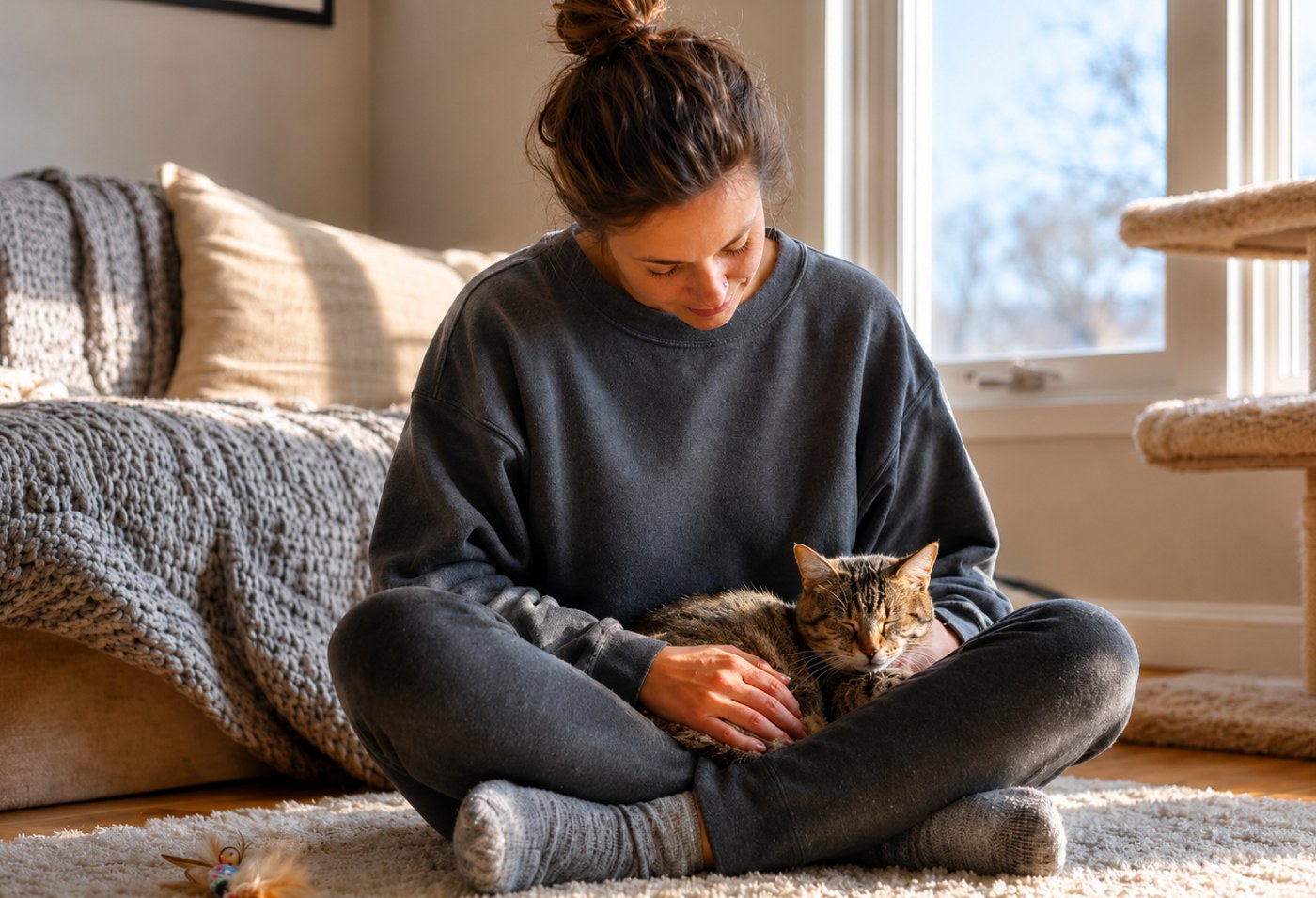
Let your cat have small pleasures
When cancer enters the picture, life can become full of appointments, decisions, and medication.
But your cat’s life is still made of small things.
A warm blanket.
A sun patch.
A favorite bowl.
A slow blink.
A brush, if they enjoy grooming.
Your lap, if they want closeness.
A quiet room away from noise.
Special food, if your vet approves it.
A window cracked open for scent and air, if that’s safe.
These things won’t change the diagnosis.
But they can change the day.
And sometimes, when time feels uncertain, a good day matters deeply.
Know that hope can change shape
At first, hope may mean a cure or remission.
As the situation changes, it may become the hope for more comfortable time together, a good week or simply one peaceful day.
This doesn’t mean hope has disappeared.
It may become quieter and more grounded: hope that treatment helps, that your cat feels safe and comfortable, that you receive the clarity you need, or that you’ll find the strength to make the next decision when the time comes.
Sometimes hope is not about changing the outcome. It is about trusting that love will help you meet whatever comes next.
Talk about the hard part before it becomes an emergency
No one wants to ask about euthanasia when their cat has just been diagnosed with cancer.
It can feel like betrayal.
But asking about it early doesn’t mean you’re choosing it now.
It means you’re trying to protect your cat from suffering later.
You can ask your vet:
“How will I know if my cat is no longer comfortable?”
“What signs would mean it’s time to call you urgently?”
“What would a peaceful euthanasia look like if we reach that point?”
“Can we talk about how to avoid waiting too long?”
These questions are heartbreaking.
They are also loving.
Many people are afraid of choosing too soon.
Many are also afraid of waiting too long.
Talking with your vet before a crisis can help you make a calmer, kinder decision if that moment comes.
Let other people support you
You may feel very alone after your cat’s diagnosis.
Some people won’t understand.
They may say, “It’s just a cat,” or “You can get another one,” or “At least they had a good life.”
Those words can hurt deeply.
S try to find the people who do understand.
A friend who knows your cat matters.
A family member who can come to appointments.
An online support group that doesn’t judge.
A vet nurse who can explain things again when your brain is full.
A pet loss counselor or grief support service.
You don’t have to carry every appointment, decision, fear, and possible goodbye by yourself.
Be careful with internet searching
It’s completely understandable to search online after a diagnosis.
You may want survival times, treatment stories, miracle recoveries, warning signs, diet advice, supplements, and anything that might help.
But the internet can also make panic worse.
Your cat’s cancer type, stage, age, health, symptoms, and treatment options may be very different from the cat in someone else’s story.
Try to use the internet for questions, not conclusions.
Write down what you want to ask your vet.
Avoid late-night spirals if they leave you terrified.
Be cautious with anyone promising a cure.
Don’t start supplements, herbs, diets, or medications without checking with your vet, because some can interfere with treatment or be unsafe for cats.
You might want to learn as much as you can about your cat’s condition.
But you don’t have to drown in information – especially if it might be unhelpful, or even wrong.
Make decisions from love, not fear
There may not be one perfect path.
That is one of the cruelest parts of a serious diagnosis.
Treatment may offer time, but not certainty.
Comfort care may feel peaceful, but also painful.
Waiting may feel cautious, but also frightening.
Acting quickly may feel responsible, but overwhelming.
When you don’t know what to do, try to come back to love rather than panic, guilt, comparisons with other people or the idea of what a “perfect” cat parent should choose.
Ask what’s kindest for your cat, what is realistic for your household, what your vet believes is medically reasonable and what your cat is likely to tolerate.
Most of all, think about what will help them feel safe, comfortable and loved.
You may still cry, doubt yourself or wish the answer had been clearer.
But a decision made with good information, compassion and your cat’s comfort at the centre is not a failure.
Your cat doesn’t need you to be fearless
Your cat doesn’t need you to handle this perfectly.
They don’t need you to hold back every tear, understand every medical term or make difficult decisions without feeling afraid.
What they need is your familiar voice, your warmth and your attention.
They need you to keep asking for help, to notice when they’re comfortable and when something has changed, and to continue loving them tenderly through the parts you cannot control.
A cancer diagnosis can leave you feeling powerless, especially when you cannot control the illness, know exactly how much time remains or make the fear disappear.
But there are still meaningful ways you can help your cat.
You can ask questions, seek clarity, manage pain, protect their comfort and make home feel softer, quieter and easier for them.
You can also keep noticing the small moments of pleasure, familiarity and connection that still belong to both of you.
Most of all, you can keep showing up—not perfectly or without fear, but with love and steadiness.
Your cat doesn’t need you to have all the answers today.
They need to feel safe, loved, and not alone.
So take the next step in front of you.
Ask the next question.
Make the next small kindness.
Sit beside them for the next quiet moment.
That’s how you cope with a cat cancer diagnosis.
One loving step at a time.
Frequently Asked Questions
Is cancer in cats always terminal?
No, not always.
Some cancers can be treated, managed, or slowed, depending on the type of cancer, where it is, whether it has spread, and your cat’s overall health.
Other cancers may not be curable, but your vet may still be able to help with pain relief, appetite support, and comfort care.
What should I ask my vet after my cat is diagnosed with cancer?
Ask what type of cancer your cat has, whether it has spread, what treatment options are available, what the goal of treatment would be, how your cat may feel, what side effects are possible, and what signs would mean their quality of life is declining.
Write down the answers so you can refer to them later, calmly, at home.
Should I see a veterinary oncologist for my cat?
A veterinary oncologist may be helpful if your cat’s diagnosis is complex, treatment options are unclear, or you want specialist guidance before making a decision.
You can ask your regular vet whether a referral would be useful in your cat’s situation.
How do I know if my cat with cancer is in pain?
Cats may show pain through hiding, reduced appetite, reluctance to jump or move, restlessness, changes in grooming, withdrawal, tension, or changes in litter box habits.
If you suspect pain, contact your vet rather than trying to manage it with human medication.
Is it wrong not to treat my cat’s cancer aggressively?
No. Choosing comfort care or palliative care can be a loving, responsible decision, especially if treatment would be too stressful, unlikely to help, unaffordable, or hard on your cat’s quality of life.
The kindest choice depends on your cat and your circumstances.
How can I cope emotionally with my cat’s cancer diagnosis?
Let yourself be shocked, write down questions, ask for clear information, focus on one decision at a time, and let trusted people support you.
Try to spend time with your cat as their person, not only as their caregiver.
You don’t have to handle the diagnosis perfectly to love your cat well.




A cancer diagnosis can make you feel as though every decision has to be made immediately and perfectly. It doesn’t.
You’re allowed to pause, ask questions more than once and focus on the next small step rather than the entire road ahead.
What has helped you and your cat most since the diagnosis—clearer information, a supportive vet, a simple comfort routine or just taking things one day at a time? You’re welcome to share as much or as little as feels right.