

Why Does Losing a Cat Hurt So Much?
Losing a cat can hurt with a force that shocks you.
Even if you knew they were old.
Even if they were sick.
Even if you had time to prepare.
Even if part of you knew this day would come.
One moment, your cat was woven into the smallest details of your day — the sound of paws, the meow at mealtimes, the warm weight beside you, the little routines only the two of you understood.
And then suddenly, the house is still.
The bowl is there.
The bed is there.
The place they always slept is empty.
And you may find yourself wondering, why does losing a cat hurt this much?
The short answer
Losing a cat hurts so much because cats are not “just pets.” They become part of your home, your daily rhythm, your emotional life, and often your sense of safety and comfort. Cat grief can feel intense because the bond is built through years of care, routine, affection, dependency, and quiet companionship. When a beloved cat dies, you’re not only grieving their death. You’re grieving their presence in your everyday life, the routines you shared, the role they played in your heart, and the version of home that existed when they were still there.
Your cat was part of your everyday life
One reason cat grief can feel so overwhelming is that cats are often present in the quietest parts of life.
They may not have gone everywhere with you.
They may not have needed walks or big outings or constant entertainment.
But they were there.
They were there when you woke up.
They were there when you made coffee.
They were there when you came home.
They were there when you were tired, lonely, sick, stressed, grieving something else, or trying to get through a perfectly ordinary day.
Cats have a way of becoming part of the background music of home.
You may not notice every little routine while it’s happening.
The food bowl.
The litter tray.
The favorite chair.
The best spot on the bed.
The pointed complaint when dinner is late.
The careful step around them in the hallway.
The way you automatically looked for them when you walked into a room.
But after they’re gone, those tiny habits are suddenly everywhere.
That’s part of why it hurts so much.
You’re not only missing your cat in one big emotional way.
You’re missing them in a hundred small moments every day.
If that sense of absence is making your home feel almost unrecognisable, Why the House Feels So Empty After Your Cat Dies explores why familiar rooms and routines can suddenly feel so painful.

Cat grief can feel invisible to other people
One of the hardest parts of losing a cat is that the world may not respond in a way that matches the size of your grief.
Everyone expects you to be a little upset, sure, but not this devastated.
You may get a kind message or two, and then everyone else seems to move on.
Someone may say, “At least they had a good life.”
Or, “You can get another cat.”
Some people will say nothing at all.
And that can make the grief feel even lonelier.
Because inside your home, everything has changed.
But outside your home, nothing has.
This is one of the cruelest things about pet loss.
The grief can be enormous, but socially invisible.
There may be no funeral.
No formal bereavement leave.
No public ritual.
No shared language that fully explains what your cat meant to you.
So you may start questioning yourself.
Am I overreacting?
Should I be coping better?
Why am I crying this much?
Why do I feel broken over a cat?
But you’re not broken.
You’re grieving a real bond.
You didn’t just love your cat — you cared for them
The love between a person and a cat is not abstract.
It’s hands-on and practical.
You fed them.
You watched their moods.
You learned their habits.
You noticed when they seemed “off.”
You made vet appointments.
You cleaned up after them.
You worried about them.
You protected them.
You adjusted your life around them in ways you may not even have realised until they were gone.
That kind of care creates a deep emotional bond.
When your cat dies, the caregiving stops abruptly.
And that can feel deeply disorienting.
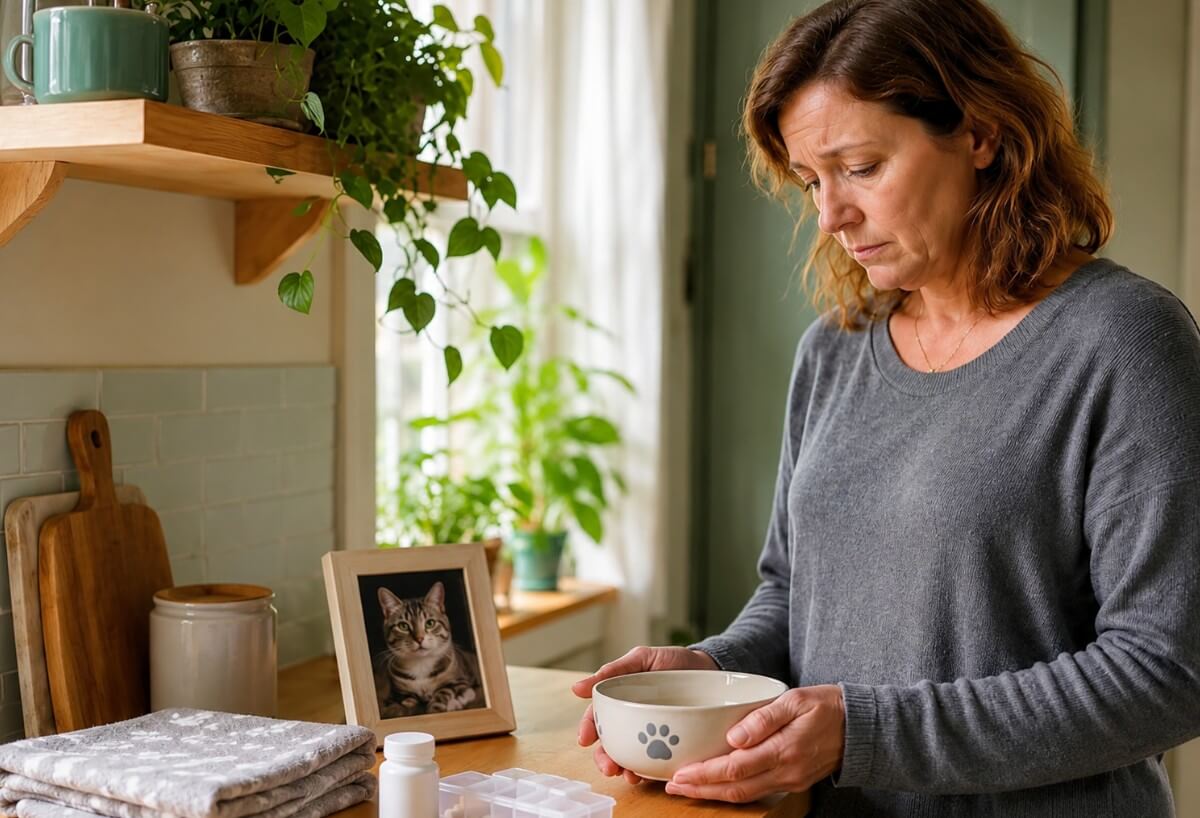
You may wake up and, for one split second, think you need to feed them.
You may look at the clock and feel the old pull of medication time.
You may hear a noise and expect them to appear.
You may feel lost because the part of you that was always monitoring them, loving them, and caring for them no longer knows where to go.
That ache is real.
It’s one of the reasons losing a cat can feel so physical.
Your daily care once had somewhere to go.
Now your love is still there, but your cat is not.
Cats can be emotional anchors
For many people, a cat is not just a companion.
A cat is an emotional anchor.
They may have been with you through a divorce, illness, bereavement, depression, anxiety, loneliness, moving house, raising children, losing people, changing jobs, or simply surviving difficult seasons of life.
Sometimes a cat is the one steady presence in a life that has changed many times.
They have seen you at your worst.
They have loved you in the quiet, uncomplicated way animals do.
They didn’t need you to explain yourself.
They didn’t require you to be cheerful.
They didn’t ask you to have the right words.
They simply stayed nearby.
That kind of presence can be profoundly healing.
So when they die, it can feel as if a piece of your emotional safety has gone with them.
You may not only be grieving your cat.
You may be grieving the comfort they gave you during years when you badly needed comfort.
The silence after losing a cat can be shocking
Cats are quiet animals, but their absence can be incredibly loud.
The house may feel wrong.
Too still.
Too tidy.
Too empty.
The places they used to occupy may seem painfully obvious.
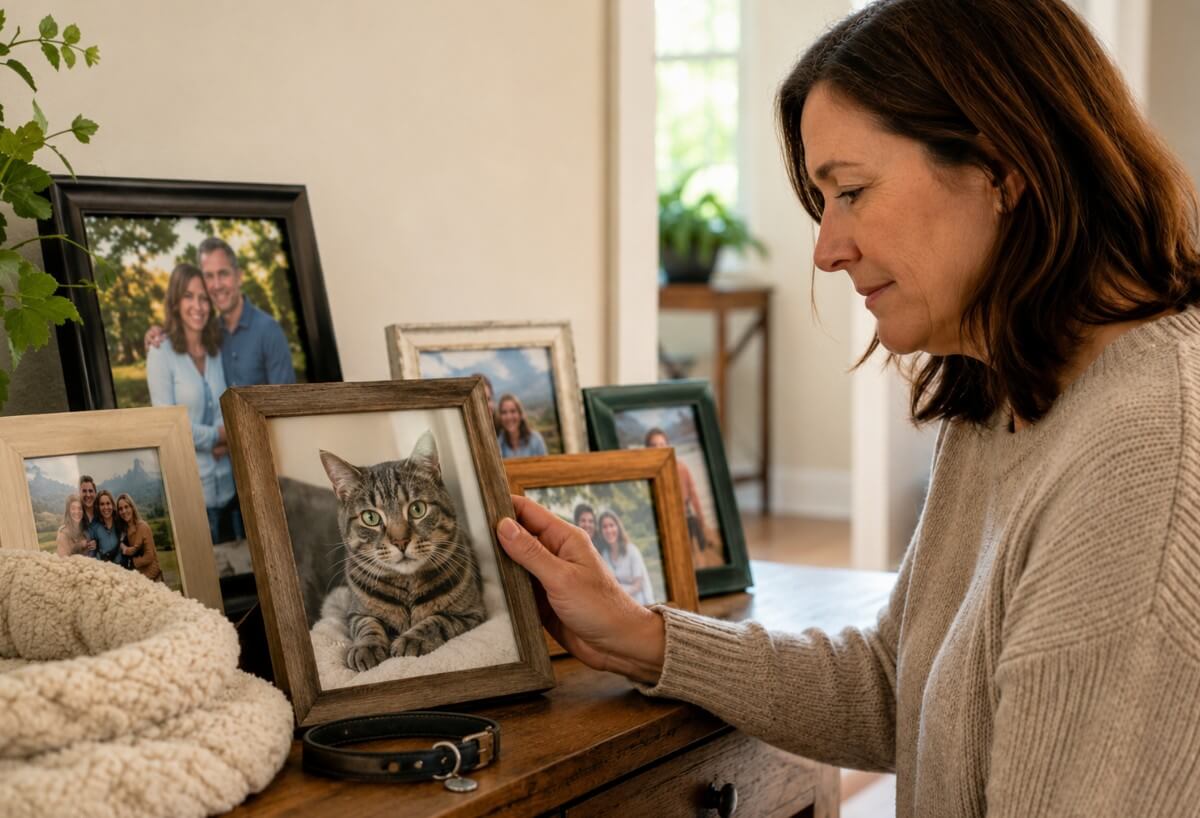
Their favorite blanket.
The sunny patch on the floor.
The windowsill.
The end of the bed.
The chair they claimed as theirs even though it was technically yours.
You may find yourself avoiding certain rooms.
Or staring at the place where they used to sleep.
Or feeling startled by the absence of small sounds you barely noticed before…
The little thud of paws jumping down.
The scratch at the door.
The rustle near the food bowl.
The purr.
The meow.
The silence can make the loss feel fresh over and over again.
That doesn’t mean you’re being dramatic.
It means your home has changed.
And your heart is trying to understand that change.

Guilt can make cat grief hurt even more
Cat grief often comes with guilt.
Even when you did your best.
Especially when you did your best.
You may replay decisions.
Did I miss something?
Did I wait too long?
Did I let them go too soon?
Should I have tried another treatment?
Should I have noticed earlier?
Were they scared?
Did they know I loved them?
These thoughts can become unbearable, especially if your cat was euthanised or died after illness.
Guilt is one of the most painful parts of pet loss because love and responsibility are so closely tied together.
You were their person.
You made choices for them.
You wanted to protect them from suffering.
And when the ending was not perfect — because endings rarely are — your mind may keep searching for a way to rewrite it.
But guilt is not proof that you failed your cat.
Often, guilt is proof that you loved them deeply and wanted more time with them than life allowed you to have.
If euthanasia is part of what you keep replaying, Guilt After Cat Euthanasia: Why It Happens and How to Cope looks more closely at the second-guessing that so often follows that decision.
The bond with a cat can be beautifully private
Some relationships are loud and visible.
The bond with a cat is often quieter.
It lives in small rituals.
The slow blink.
The bedtime routine.
The paw on your arm.
The head bump.
The cat who followed you from room to room.
The cat who pretended not to care, but always appeared when you were sad.
The cat who slept beside you when no one else knew how hard things were.
Other people may not fully understand that bond because they didn’t live inside it.
They didn’t know the tiny language you shared.
They didn’t know what a certain meow meant.
They didn’t know how your cat looked at you.
They didn’t know the exact weight of them on your lap.
They didn’t know how much comfort could fit inside one small furry body.
But you knew.
And that’s why the loss hurts so much.
You may be grieving more than one loss
When your cat dies, yes, you’re grieving that huge loss.
But you may also be grieving:
- the end of a life chapter
- the loss of a daily routine
- the quiet companionship they gave you
- the feeling of being needed
- the version of your home that included them
- the future moments you expected to have, and
- the part of yourself that existed with them.
This can be especially painful if your cat was with you for many years.
Maybe they were there when your children were small, or before a relationship ended.
Maybe they were connected to a person, place, or time in your life that is already gone.
When they die, it can feel as if a whole era has closed.
That’s not “just pet grief.”
That’s real grief.
Why does losing a cat sometimes feel worse than losing a person?
This is something many grieving cat people are afraid to say.
But sometimes, losing a cat can feel as painful as losing a person.
Sometimes it may even feel more raw, at least in certain ways.
That doesn’t mean you love people less.
It doesn’t mean your grief is wrong.
It means the relationship was different.
A cat may have been physically close to you every day.
They may have slept beside you, and depended on you.
They may have offered comfort without conflict, judgement, expectation, or complicated history.
Human relationships are not so pure and simple.
Yes, they can be loving, but they can also be layered and difficult.
The bond with a cat can feel simpler, safer, and more constant.
So when that bond is gone, the grief can go straight to the softest part of you.
There’s no need to compare losses or rank grief.
If losing your cat has shattered you, that’s enough.
Your grief does not need to compete with anyone else’s to be valid.
It hurts because love had nowhere else to go
After a cat dies, the love doesn’t stop.
That may be the hardest part.
You still love them.
You still think of them.
You still want to care for them.
You still want to reach down and stroke them.
You still want one more ordinary moment.
One more meal.
One more purr.
One more sleepy blink.
One more chance to say, “I love you.”
But grief is what happens when love continues after the physical presence is gone.
That’s why it hurts.
Not because you’re weak.
Not because you’re too sensitive.
Not because you should have “moved on” by now.
It hurts because your cat mattered.
How to be gentle with yourself after losing a cat
You don’t have to solve your grief today.
You don’t have to make sense of everything.
You don’t have to pack away their things before you’re ready.
You don’t have to stop crying because someone else thinks it’s been long enough.
If your loss is very recent, The First Few Days After Losing a Cat: What Grief Feels Like may help you understand some of the emotions and reactions that can feel overwhelming at the beginning.
For now, it may help to do very small things.
Drink some water.
Eat something simple.
Sit somewhere warm.
Let yourself cry.
Say your cat’s name.
Hold their blanket.
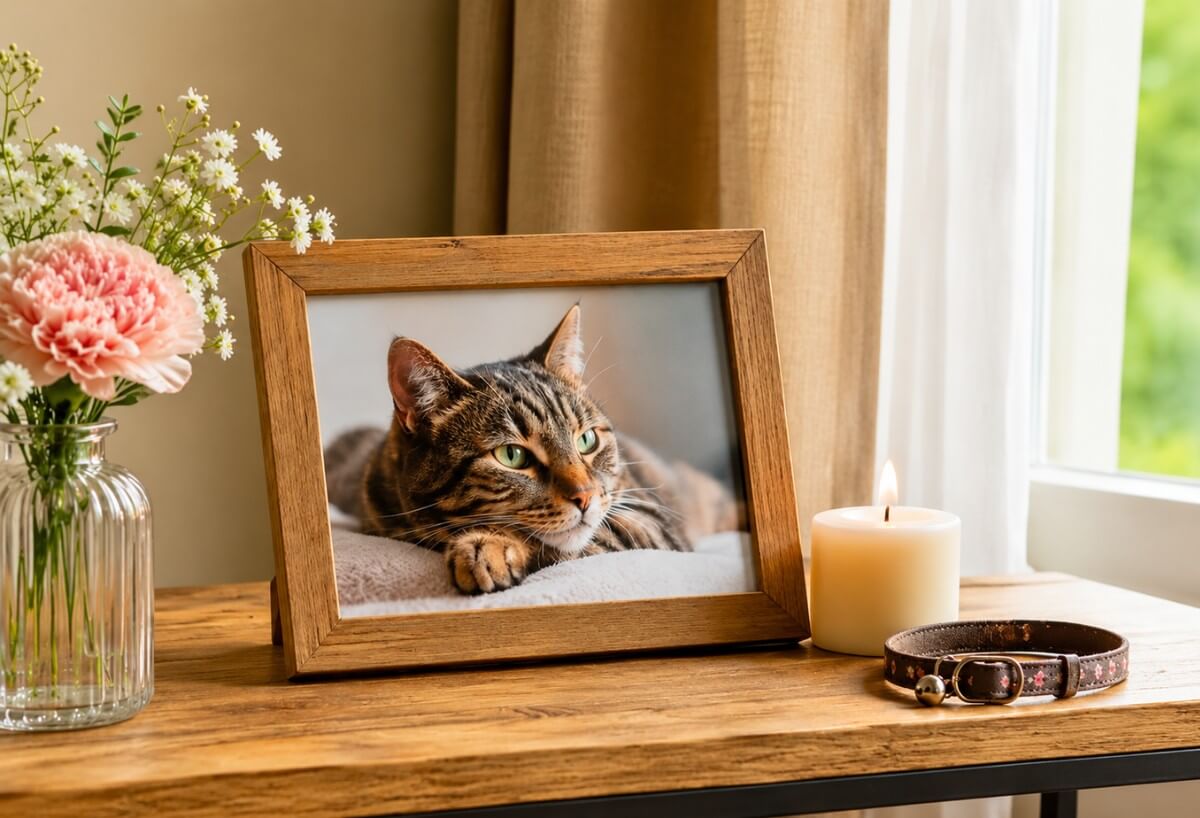
Light a candle.
Write down one memory.
Talk to someone who understands.
And if you’re frightened by how much you’re crying or wondering whether your grief is becoming “too much,” My Cat Died and I Can’t Stop Crying: Is This Grief Normal? may reassure you that intense grief after losing a cat is far more common than many people realise.
And when the grief comes in waves, try not to treat that as failure.
That’s how grief often moves.
It rises.
It settles.
It returns.
It softens.
It changes shape.
You’re not doing it wrong.
You’re grieving someone you loved very much.
A gentle final thought
If losing your cat hurts more than you expected, please don’t turn that pain against yourself.
Your grief is not silly.
It’s not embarrassing.
It’s not “too much.”
It’s the echo of a real relationship.
Your cat shared your home, your routines, your private moments, and your heart.
Of course it hurts.
Of course the silence feels enormous.
Of course you miss them in ways other people may not understand.
You loved a small life deeply.
And that love deserves to be honoured.
Frequently Asked Questions
Is it normal to grieve deeply for a cat?
Yes. It is completely normal to grieve deeply for a cat.
Cats can become part of your family, daily routine, emotional safety, and sense of home.
When they die, the grief can feel intense because the relationship was real and deeply personal.
Why does losing my cat feel unbearable?
Losing your cat may feel unbearable because their presence was woven into your everyday life.
You may be grieving their companionship, your routines, the caregiving role, the silence in your home, and the emotional comfort they gave you.
Why do I feel guilty after my cat died?
Guilt is very common after losing a cat, especially if illness, euthanasia, or difficult decisions were involved.
It does not necessarily mean you did anything wrong.
Often, guilt comes from love, responsibility, and the painful wish that you could have controlled more than you could.
How long does grief last after losing a cat?
There is no fixed timeline for cat grief.
Some people feel the sharpest pain in the first days and weeks, while others grieve in waves for months or longer.
Grief often changes over time rather than disappearing all at once.
Why does the house feel so empty after my cat died?
The house can feel empty because your cat was part of its rhythm.
Their sounds, habits, sleeping places, feeding routine, and presence shaped the feeling of home.
After they die, those familiar spaces can suddenly feel painfully quiet.
Can losing a cat hurt as much as losing a person?
For some people, yes.
Losing a cat can feel as painful as losing a person because the bond may have been deeply affectionate, constant, physically close, and emotionally safe.
Grief does not need to be ranked to be real.
Further Reading
If you’re trying to make sense of life after losing your cat, these may help with some of the feelings that often come next.
The First Few Days After Losing a Cat: What Grief Feels Like
The earliest days of grief can feel disorienting and strangely unreal; this explains some of the emotions and reactions you may experience.
Why the House Feels So Empty After Your Cat Dies
If the silence and empty spaces at home are hurting almost as much as the loss itself, this looks more closely at why your cat’s absence can feel so physically present.
My Cat Died and I Can’t Stop Crying: Is This Grief Normal?
If you’re worried that you’re crying too much or grieving more intensely than you “should,” this may help reassure you that there is no correct way to mourn a cat you loved.



Maddy
I’m so sorry for your loss, Lin…
If you’ve found this article because you’ve recently lost your cat, I’m so sorry.
Cat grief can be much bigger, deeper, and more disorienting than people expect — especially when your cat was part of your everyday routines, your home, and your emotional safety.
You’re welcome to share your cat’s name in the comments, or a small memory of them if that feels right. No grief has to be explained or justified here.
Please be kind to yourself, and to each other. Your cat mattered. Your love for them still matters.