
Caring for a Sick Cat: How Illness Can Deepen Your Bond
When your cat becomes seriously ill, fear moves into the house with you.
It arrives in the quiet moments.
When they pause before eating.
When they sleep longer than usual.
When you notice a new lump, a new symptom, a new hesitation.
When the vet says something you were hoping not to hear.
Suddenly, ordinary routines feel loaded with meaning.
A meal is no longer just a meal.
A long nap makes you pause.
A litter tray visit becomes something you quietly register.
You remember medicine times, make mental notes for the vet, learn words you never wanted to need, and sometimes search for answers late at night even though you know sleep would probably help more.
Caring for a sick cat can stretch your heart and your day in ways you didn’t expect.
There’ll be medication to measure.
Vet appointments to manage.
Bills to think about.
Food to tempt them with.
Decisions to make.
And perhaps, if it feels right for your cat, safe complementary support to discuss with your vet.
It can be frightening.
It can be tiring.
It can make ordinary life feel very small and very precious at the same time.
And yet, in the middle of all that fear, something tender can happen too.
Not because illness is good.
Not because anyone would choose it.
Not because it makes the pain easier.
But because caring for a sick cat can change the way you notice them.
You may become more patient with small demands, more grateful for ordinary affection, and more aware that the quiet moments together are not as ordinary as they once seemed.
The short answer
Caring for a sick cat is painful, frightening, and often exhausting, but it can also deepen the bond between you. When you know your time together may be more fragile than you thought, small moments can start to feel deeply meaningful: a cuddle, a purr, a meal eaten well, a quiet morning beside you. This doesn’t erase the worry. But it can change the way you notice your cat, love your cat, and stay present with them while they are still here.
Serious illness changes the air around everything
Before your cat gets sick, life with them feels beautifully ordinary.
They jump on the bed.
They ask for food.
They interrupt you.
They sit on the one piece of paper you’re trying to read.
They wake you too early.
They want attention at the least convenient moment.
And because you believe there will be endless ordinary days, you may not always treat every moment as precious.
That’s normal.
It’s just what happens when love becomes part of daily life.
Then illness arrives, and everything shifts.
After a diagnosis, familiar things can start to feel different.
The meow you have heard a thousand times, the paw on your arm, the warm weight of your cat settling beside you — none of it is new, exactly, but it may suddenly feel more precious.
You may still be tired and overwhelmed.
You may still wish you could go back to the easier days before the diagnosis.
But alongside the fear, you may begin to see your cat with a more tender kind of attention: not just as someone who needs care, and not as a set of symptoms to watch, but as the same beloved cat, still reaching for you in the ways they know how.
The morning Moofy woke me up
One Tuesday morning, around 5:30am, my precious cat Moofy landed on the bed beside me with a gentle thump and a chatty little meow.
It was just getting light.
I opened one eye and squinted.
There she was.
My beautiful girl.
My little cat with cancer.
In the dim light, I could see the shape of her body and the outline of the tumor that had become part of our reality.
It was a strange, tender, painful thing to see.
And still, despite the barbaric hour, I smiled.
Moofy had arrived with purpose.
She had things to say.
She purred loudly in the semi-darkness and began kneading the soft blanket.
Then she curled herself tightly against me, roaring like a tiny idling motor.
By then, of course, I was fully awake.
I lay there with one hand on my purring cat, listening to the house breathe around us.
The day hadn’t started yet.
The worry hadn’t had time to gather its full strength.
The world outside the curtains was still quiet.
And as the first pale light started filtering into the room, I realised something.
Before Moofy got cancer, I probably wouldn’t have been so patient.
I’m not proud of that.
But it’s true.
Before I understood that our time might be shorter than I wanted, I might have gently pushed her away.
Not now, Moof.
Come back later.
I’m trying to sleep.
But that morning, I didn’t want her to go away.
I didn’t want to miss one second of her choosing me.
She had come to me in the dark.
She had curled into my body.
She was warm and alive and purring.
And suddenly 5:30am didn’t feel like an interruption.
It felt like a privilege.
A sick cat can make you more present
One of the hardest things about caring for a sick cat is that your mind keeps running ahead.
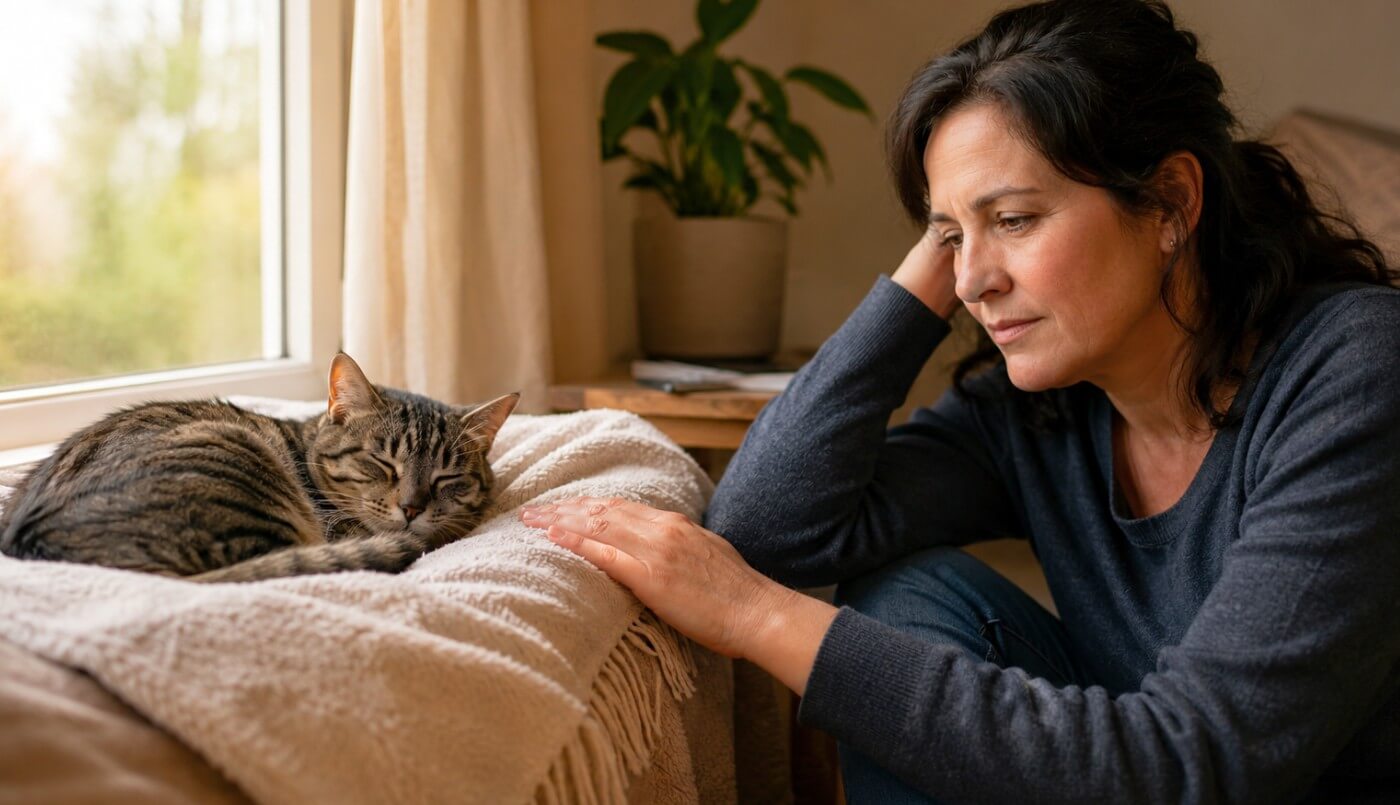
You may worry about whether they’ll get worse, whether a treatment will help, whether you’ll miss something important, or whether this is the beginning of goodbye.
Those thoughts are understandable.
They come from love.
But they can also pull you away from the cat who’s still right in front of you.
That’s why small moments can start to matter so much.
The sound of a purr, the weight of a paw on your arm, a meal eaten a little more easily than yesterday, or the sight of your cat relaxing in a patch of sunlight can become more than ordinary details.
They can remind you that your cat’s life is still happening now, not only in the fearful future your mind keeps trying to prepare for.
Those moments don’t fix the illness.
They don’t answer every question, and they don’t take away the grief that may already be forming.
But they can give you a place to stand for a little while: here, with your cat, in a moment that still matters.
If worry keeps pulling you away from those moments, When Your Cat Is Sick and You Can’t Stop Worrying can help you find a gentler way to live with the uncertainty.
Illness can soften the way you respond
Caring for Moofy changed me, though not in some saintly, glowing way.
I still got tired.
I still worried.
I still had moments when it all felt like too much.
But I became softer with her.
I was more patient when she needed me, less irritated by small interruptions, and more grateful when she came looking for comfort.
Being wanted by a sick cat began to feel less like a demand and more like trust.
You may not always feel endlessly patient with your own cat, either.
Caregiving can stretch you thin, and there may be moments when you think, I cannot keep doing this, even as you keep doing it.
That doesn’t mean you love your cat any less.
It means you’re human, and the responsibility is heavy.
Caregiving is emotional work.
It’s practical work.
It’s nervous-system work.
It’s heart work.
But sometimes, in the middle of that work, you may notice that your priorities have changed.
The sleep you missed still matters.
But so does the cat who came looking for you.
The routine you had planned still matters.
But so does the fact that your cat happily ate breakfast today.
The mess still matters.
But so does the trust in their eyes when they let you help them.
Illness can make life feel more difficult.
It can also make love feel more exact.
Your bond may deepen because you’re paying closer attention
When a cat is well, it is easy to feel as if you already know them completely.
Their habits, moods, favourite sleeping places, food preferences, little complaints, and ways of asking for affection.
Illness can make you notice all of that again, but with a different kind of tenderness.
You become more aware of what’s normal for them and what’s not.
You learn when a nap feels peaceful and when it feels worrying, which foods are worth trying, when they want touch, when they want space, and how they ask for help.
That level of attention can be exhausting, especially when you feel responsible for noticing every small change.
But it can also become strangely intimate.
You’re not watching them closely because you want to control everything, although it may feel that way on anxious days.
You’re watching because you love them and because their comfort matters to you.
A sick cat may have changed needs, harder days, and more care woven into their routine.
But they don’t stop being themselves.
Underneath the illness, the cat you love is still there, and sometimes paying closer attention helps you see them more clearly than ever.
You may grieve and feel grateful at the same time
This is one of the strange emotional contradictions of caring for a sick cat.
You may feel frightened and grateful in the same hour.
You may cry after a vet appointment, then smile when your cat asks for dinner.
You may dread what is coming and still love the quiet evening you’re having together.
You may feel the ache of possible loss while they’re curled warmly beside you.
That doesn’t mean you’re confused.
It means you’re living through anticipatory grief.
Part of you is already grieving what may come.
Another part of you is still here, loving the cat who is still alive.
Both parts are real.
You don’t have to choose between them.
If you recognise that mixture of love, fear and sadness, Anticipatory Grief for a Cat: How to Cope Before Goodbye looks more closely at what it means to begin grieving while your cat is still here.
You can be scared and still present.
You can be sad and still grateful.
You can feel tired and still treasure the cuddle.
You can worry about tomorrow and still recognise that today had something beautiful in it.
That morning when Moofy woke me up, I knew cancer was still there.
Nothing had changed medically.
There were still decisions ahead.
There were still bills.
There was still fear.
There was still the reality of her illness.
But for that small pocket of dawn, she was beside me.
Purring.
Kneading.
Warm.
Alive.
Mine.
And I let that be enough.
Let the ordinary moments count
When your cat’s sick, it can feel as if everything important happens at the vet: the diagnosis, the test results, the treatment options, the medication plan, and the difficult decisions you may be trying to prepare for.
Those things matter deeply.
Your vet’s guidance matters.
Pain relief, appetite support, safety, and quality of life all matter.
If your cat’s illness can’t be cured, When Your Cat’s Illness Can’t Be Cured: What You Can Still Do explores the many ways you can still protect their comfort, dignity and enjoyment of everyday life.
Your cat’s life is not only made up of medical moments.
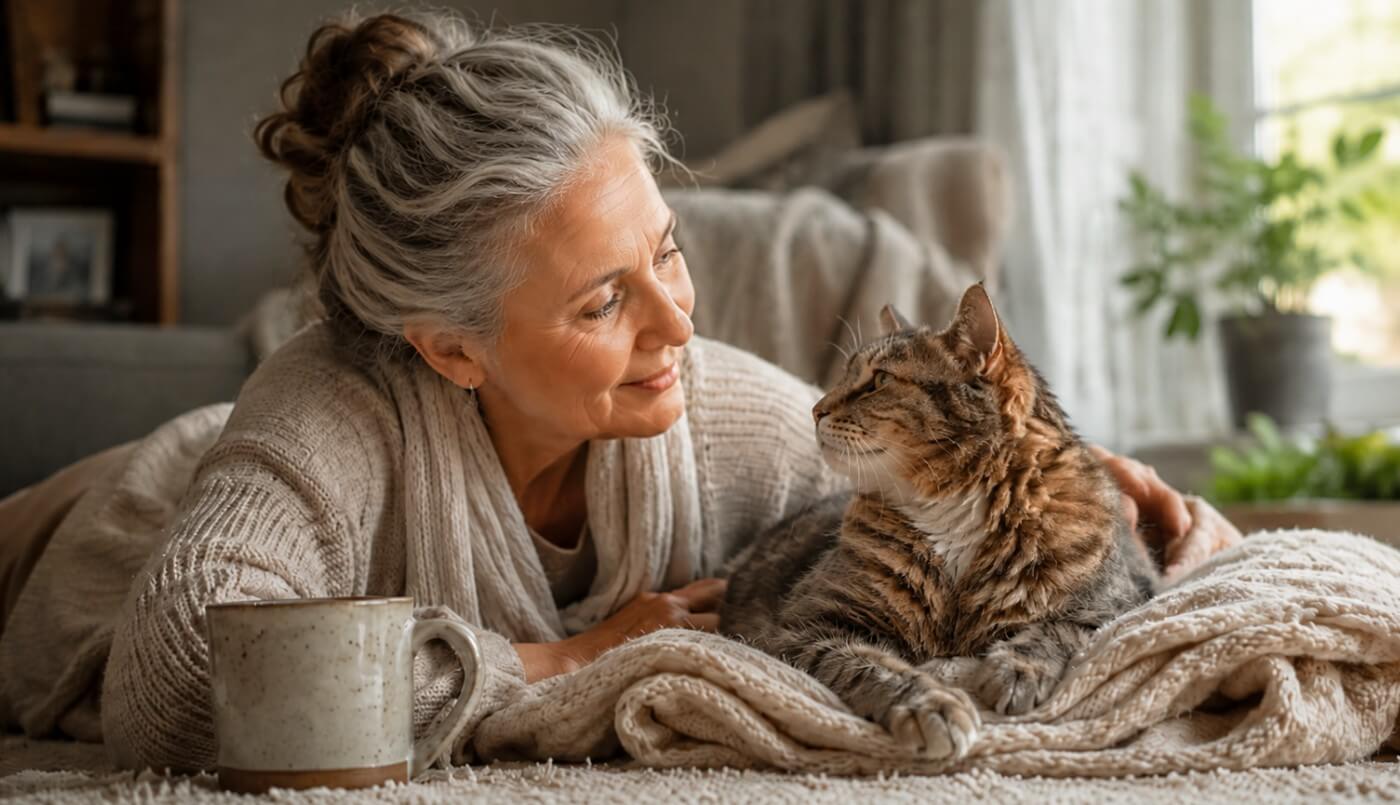
It is also made up of ordinary ones: a nap in the sun, a small meow from the hallway, a chin lifted for a scratch, a slow blink across the room, a breakfast eaten, a blanket chosen, or the warm weight of your cat pressed against you in the early morning.
These moments may not look important from the outside.
But when you’re caring for a sick cat, they can become the places where your heart catches its breath.
You don’t have to pretend the day is easy or that the future is certain.
You’re simply allowed to notice when something still feels good.
A good moment with a sick cat is not small.
It is something precious to hold onto.
You’re not only managing illness
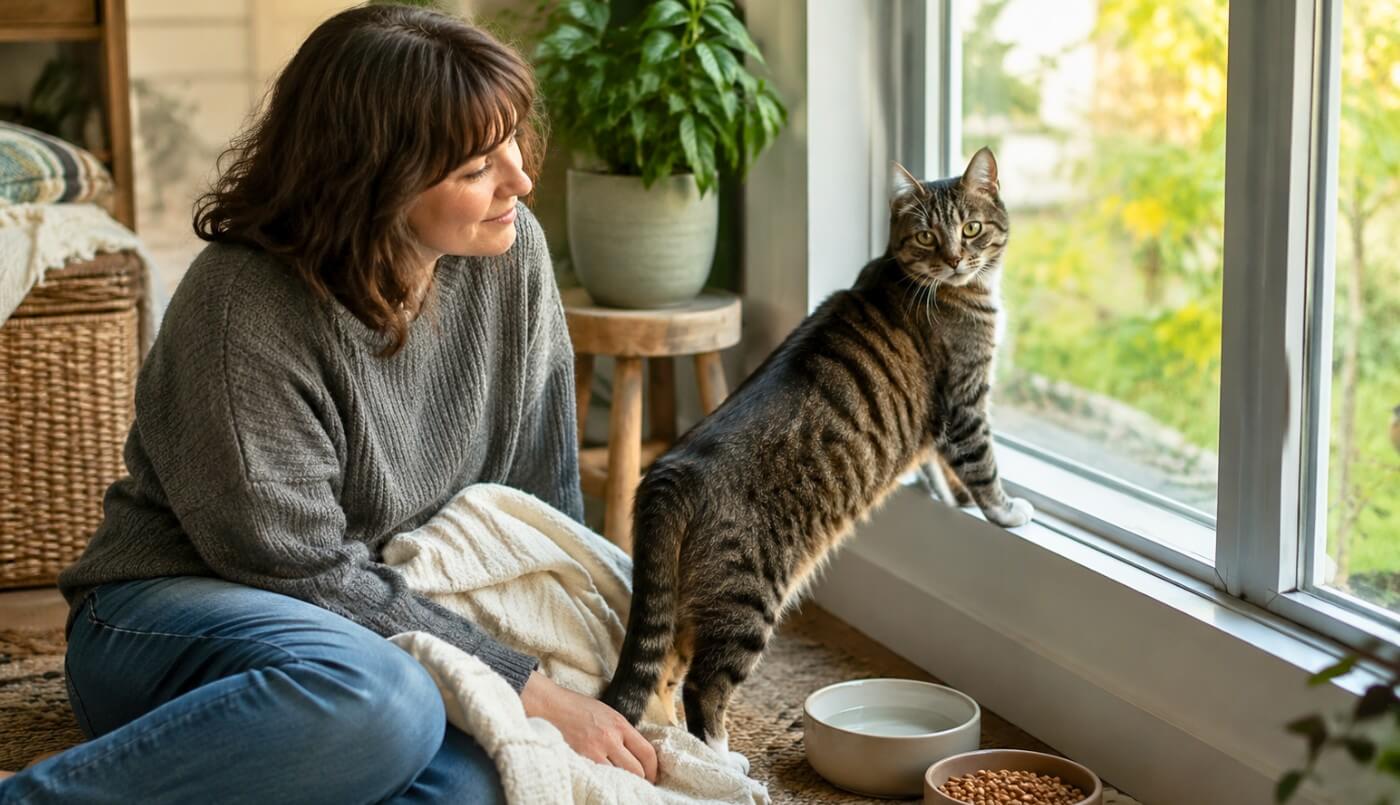
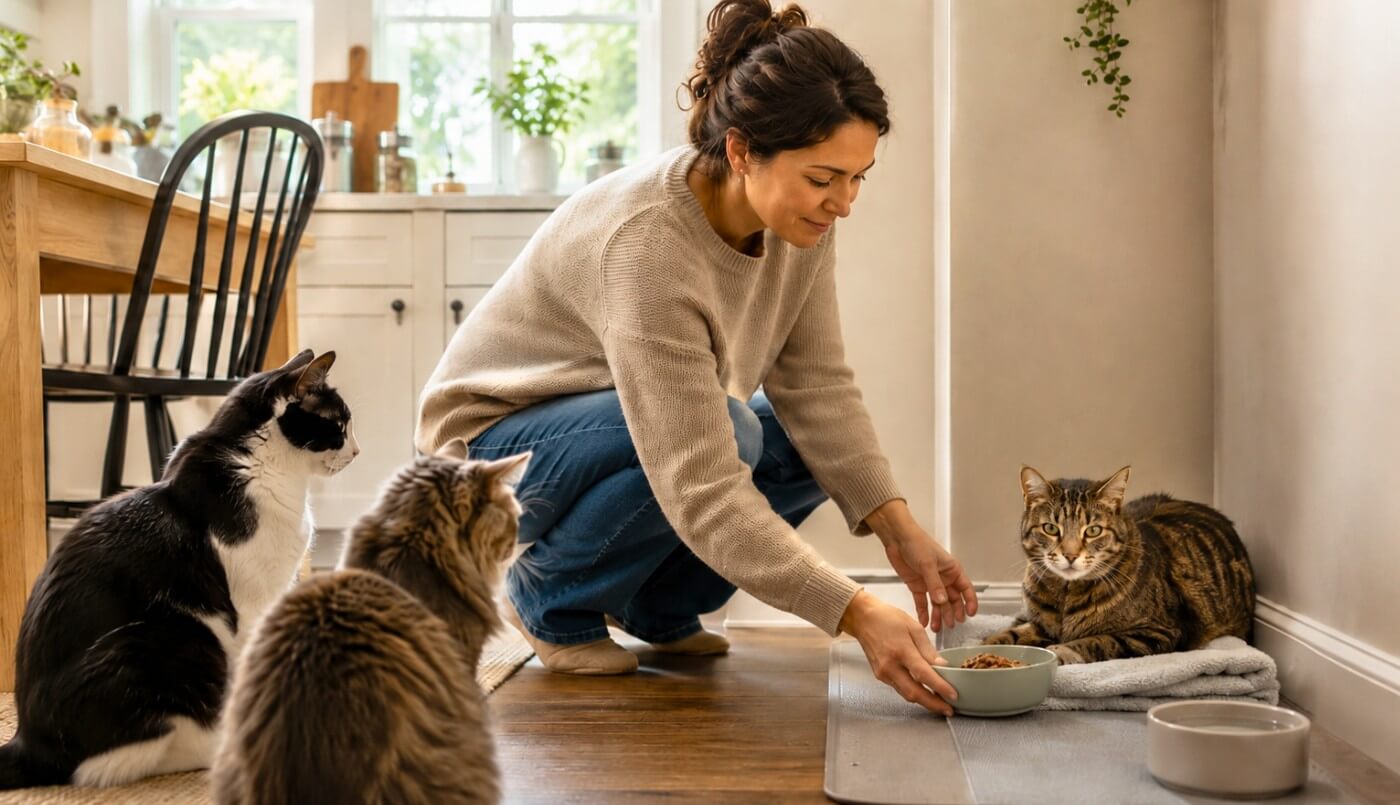
When you care for a sick cat, you can start to feel like a nurse, organiser, researcher, driver, advocate, and anxious detective all at once.
There’s so much to manage that it can be easy to forget something important: you’re still your cat’s person.
You’re not only the one who gives the medicine, makes the appointments, watches symptoms, and faces the difficult decisions.
You’re also the familiar voice, the known hands, and the safe presence your cat has trusted all along.
Your cat doesn’t need you to do everything perfectly.
They need you to keep seeing them as themselves, even while their needs are changing.
That may mean noticing their comfort, protecting their dignity, asking for help when they need it, and enjoying them where you can.
The illness may take up a lot of space, but it doesn’t have to become the whole relationship. The bond between you can still be bigger than fear.
What Moofy taught me that morning before the dawn
That morning, as I lay awake beside Moofy, I had one hand on my purring cat and the other on my sleeping husband, who is also pretty furry in his own way.
The house was quiet.
My two special furry creatures were sleeping safely beside me.
And in the dawn light, I smiled.
Actually, it was more like a grin.
There was still plenty to worry about.
But I decided I could deal with the future later.
Right then, Moofy was there.
She had chosen me.
And I finally understood that this was one of the things illness had changed.
It had made me stop pushing love away just because it arrived at an inconvenient hour.
It had made me pay attention, and it had made me grateful for the warm little weight of her body beside me.
In an ideal world, none of us would ever have to care for a seriously ill cat.
There would be no cancer, no frightening diagnoses, no hard decisions, no watching and waiting, and no wondering how much time is left.
But in the world we actually live in, time can become fragile, and that fragility can change the way we love.
A sick cat can teach us to slow down.
Caregiving can turn ordinary affection into something deeper and more deliberate.
And the early-morning wake-up you once might have resented can become a memory you carry for the rest of your life.
The illness was not the gift.
Moofy was.
And while she was still there, every gentle moment with her mattered.
Frequently Asked Questions
Is it normal to feel closer to my cat after they become ill?
Yes.
Many people feel a deeper bond with their cat during illness because they are paying closer attention, spending more quiet time together, and becoming more aware that their time may be limited.
This closeness can exist alongside fear, sadness, exhaustion, and anticipatory grief.
Does feeling grateful for small moments mean I’m giving up?
No.
You can treasure small moments with your cat without feeling grateful for the illness itself.
A peaceful cuddle, a good meal, or a gentle morning together can matter deeply, even while you still wish your cat were well.
What if caring for my sick cat feels overwhelming?
That’s very understandable.
Caring for a sick cat can be emotionally and physically draining.
Talk to your vet about practical ways to make care easier, including pain relief, appetite support, medication routines, and quality-of-life guidance.
You may also need support for yourself, especially if you’re feeling constantly anxious or exhausted.
How can I stay present with my sick cat instead of worrying all the time?
Try to notice small, real moments rather than forcing yourself to feel positive.
Watch your cat resting comfortably, eating, purring, asking for affection, or enjoying sunlight.
You can still plan, monitor symptoms, and speak with your vet, but small moments of presence can help you feel less trapped in fear.
Is caregiving part of anticipatory grief?
It can be.
When your cat is seriously ill, you may begin grieving before they are gone.
You may feel sadness, fear, tenderness, protectiveness, and gratitude all mixed together.
That emotional complexity is a normal part of loving a cat through illness.
How do I know if my sick cat still has quality of life?
Quality of life depends on your cat’s comfort, appetite, mobility, interest in life, pain levels, breathing, grooming, litter tray use, and ability to enjoy familiar things.
Your vet can help you assess this more clearly.
It can also help to track good days and difficult days so you are not relying only on fear or memory.
If you’re beginning to wonder whether the balance has changed, How Do You Know When It’s Time to Euthanise a Cat? can help you think through that difficult question with your cat’s comfort at the centre.
Further Reading
If you’re caring for a seriously ill cat, these articles may help you navigate some of the worry, grief and difficult decisions that can come with loving them through illness.
When Your Cat Is Sick and You Can’t Stop Worrying
Practical, gentle ways to cope when fear about your cat’s health begins to take over your thoughts.
Anticipatory Grief for a Cat: How to Cope Before Goodbye
Understand why grief can begin before a loss and how to live with that sadness while your cat is still beside you.
When Your Cat’s Illness Can’t Be Cured: What You Can Still Do
Even when treatment can’t provide a cure, there are still meaningful ways to support your cat’s comfort, dignity and quality of life.

This article began as a much shorter piece I wrote years ago, when I was caring for my cat Moofy through cancer. I’ve rewritten it with more care now.
Serious illness is frightening, exhausting, and unfair, and it doesn’t need to be turned into a lesson. But sometimes, in the middle of fear and caregiving, the bond between you and your cat becomes even more tender.
If you’re caring for a sick cat now, I hope you find some quiet comfort together today.