Should You Get Another Cat After Losing One?
After your cat dies, there may come a point when you find yourself noticing other cats again.
Maybe you pause over an adoption photo or feel drawn to a cat you meet — and that little flicker of warmth is followed right away by guilt.
Maybe a friend has mentioned a cat who needs a home.
Perhaps you’ve found yourself looking at adoption photographs online.
Or the house might’ve become so painfully quiet that you can’t imagine continuing to live in it without a cat.
Then the questions begin.
Is it too soon?
Will people think I’m replacing my cat?
Does wanting another cat mean I’m already moving on?
What if I don’t love the new cat as much?
What if I do?
These questions aren’t a sign that you loved your cat too little.
They usually arise because you loved them so deeply that the idea of forming another bond feels both comforting and frightening.
The Short Answer
Yes — you can get another cat after losing one, and doing so doesn’t mean you loved your previous cat any less. There’s no correct amount of time to wait. Some people feel ready surprisingly quickly; others need months or years, and some never want another cat at all. What matters is whether you’re ready to welcome a new cat as an individual, rather than expecting them to replace the one you lost.
Why getting another cat can feel like a betrayal
The bond you had with your cat was unique, and another cat won’t replace it.
The relationship was built from thousands of small, specific moments.
You knew the sound of their footsteps.
You knew where they slept, how they asked for food, which noises made them look up, and whether they wanted to be held, followed around or just have you nearby.
When that relationship ends, the idea of bringing home another cat can feel as though you’re allowing someone else into a place that still belongs to them.
You may even imagine what your cat would think.
Would they feel replaced?
Would adopting again suggest that your life with them wasn’t enough?
Would you be clearing away their memory too quickly?
These fears can feel very real, but opening your heart to another cat doesn’t take anything away from the cat you lost.
The new relationship will be different because the new cat will be different.
Your cat’s place in your life has already been created.
Nothing can go back and remove it.
If guilt has been a particularly difficult part of your grief, you may also find Guilt After Cat Euthanasia: Why It Happens and How to Carry It helpful.
There’s no respectable amount of time to wait
People often look for a rule because a rule would make the decision to welcome another cat feel safer.
Wait three months.
Wait a year.
Wait until you can talk about your cat without crying.
Wait until all their belongings have been put away.
But grief doesn’t move according to a fixed schedule, and readiness can’t be measured by the calendar alone.
One person may adopt another cat within weeks and provide a stable, loving home while continuing to grieve deeply.
Someone else may wait several years and still not be sure when they finally meet another cat.
Another person may decide that they don’t want to adopt again at all.
None of these choices reveals how much the person loved the cat who died.
Cats Protection describes getting another cat as an entirely personal decision.
Some people want another cat very quickly, while others need much longer to come to terms with the loss.
The real question isn’t whether enough time has passed.
It’s what draws you toward another cat and whether you’re able to welcome the cat who actually arrives.
Do you want another cat, or do you want your cat back?
This can be a painful question, but it’s one of the most useful.
You may miss having a cat in your home.
You may miss the routines, companionship and sense of purpose that came from sharing your day with another living being.
That’s different from wanting to recreate the exact relationship you lost.
Ask yourself what you’re imagining when you think about adopting again.
Are you picturing a new cat with their own habits, preferences and personality?
Or are you hoping to find a cat who looks, behaves and loves you exactly as your previous cat did?
It’s completely understandable to want your cat back.
Grief is full of impossible wishes.
The difficulty comes when a new cat is unconsciously expected to fulfil those wishes.
They may hide for several days instead of sleeping beside you.
They may not like being picked up.
They may be louder, quieter, more independent or far more demanding.
They may ignore the toys your cat adored and become fascinated by something your cat never noticed.
A new cat’s differences aren’t evidence that you chose the wrong cat.
They’re evidence that this is a different life and a different relationship.
Signs you may be ready for another cat
Readiness doesn’t mean your grief has ended.
You can still miss your cat deeply and have moments when their absence hits you all over again.
Being ready simply means there’s enough room beside the grief to begin caring for someone new.
You can imagine loving a different personality
You don’t need to avoid every cat who shares a color, breed or mannerism with your previous cat.
Sometimes familiar features feel comforting.
The more important question is whether you can remain curious about who the new cat is, rather than measuring everything they do against the cat you lost.
You may be ready when thoughts such as these begin to feel possible:
They may not be affectionate in the same way.
They may take longer to trust me.
We’ll need to create our own routines.
I don’t know who they are yet, and that’s OK.
You have some energy for the adjustment period
Even an easy adoption brings change.
The new cat may hide, wake you during the night, refuse the food you expected them to eat or need time to understand where everything is.
There may be vet appointments, introductions to other pets and uncertainty while you learn what helps them feel safe.
You don’t need to feel emotionally perfect.
You do need enough capacity to respond to ordinary challenges without feeling that the cat has failed you by not immediately easing your grief.
You feel drawn toward a particular cat, not simply away from the silence
The silence after a cat dies can be one of the hardest parts of returning home.
The missing footsteps, the unused bed and the empty places in your daily routine may make the whole house feel different.
You can read more about that experience in Why the House Feels So Empty After Your Cat Dies.
Wanting life in the house again isn’t wrong.
It may help, though, to notice whether you’re genuinely interested in meeting and caring for another cat or feel desperate for anything that will make the quiet stop.
A new cat may soften some of the emptiness, but they can’t remove grief on demand.
You can meet the new cat’s needs
Grief can affect concentration, sleep, motivation and your ability to manage everyday responsibilities.
Before adopting, consider whether you can currently provide food, vet care, attention, a clean litter area, a safe environment and patience during the settling-in period.
This isn’t a test of how well you’re grieving.
It’s simply part of making sure that the decision is kind to both you and the cat.
Other people in the household have been included
Two people can love the same cat and grieve on entirely different timelines.
One person may feel desperate to welcome another cat.
The other may feel physically sick at the idea.
Neither reaction is more loving.
Try to talk about what another cat would mean rather than reducing the conversation to whether someone is “ready.”
Would the new cat feel comforting, frightening or overwhelming?
Who would be responsible for daily care?
Does anyone feel pressured?
Would waiting for a while make the decision feel more shared?
A new cat deserves to enter a home where everyone’s prepared to treat them as a new family member rather than the cause of an argument about grief.
Signs that waiting may be kinder
You don’t need to reject the idea of another cat forever simply because you aren’t ready today.
It may be better to wait when:
- You feel you must find a cat exactly like the one who died.
- You’re choosing the first available cat because the house feels unbearable.
- You feel angry or disappointed when a potential cat behaves differently.
- The practical work of caring for a new cat currently feels impossible.
- Someone in the household is strongly opposed to adopting.
- You hope a new cat will stop the grief completely.
- You feel panicked by the thought that waiting means you’re losing your chance.
Waiting doesn’t mean you’ll never have another cat.
It may be what allows you to make a calmer and more lasting decision later.
You can continue looking at photos, visiting a friend’s cat or speaking with a rescue organization without making a commitment right away.
Sometimes the only decision you need to make is “not today”.
Is it wrong to get another cat quickly?
No.
There’s no set amount of time you need to wait before bringing another cat into your life.
For some people, living without a cat feels profoundly unnatural.
They’ve always shared their home with animals, understand the responsibility involved and know that caring for another cat would provide structure and companionship.
They may adopt within days or weeks and still grieve their previous cat for years.
Adopting quickly doesn’t automatically mean the decision is impulsive or that the cat who died has been replaced.
The important distinction is whether you’re prepared to care for the new cat as an individual.
You might still say your previous cat’s name by mistake.
You may cry when the new cat uses the previous cat’s old bed.
You may feel guilty when you laugh at something the new cat does.
These reactions don’t mean the adoption was wrong.
Grief and new affection can exist together.
Is it wrong to wait a long time?
That isn’t wrong either.
Some people just can’t face going through another loss.
Others discover that the freedom from feeding schedules, veterinary appointments or medication routines is something they need for a while, especially after caring for an elderly or seriously ill cat.
You might enjoy other people’s cats without wanting responsibility for your own.
You may decide to foster later, volunteer with cats or simply remain grateful for the relationship you had.
There’s no obligation to adopt again to prove that you’re healing.
Your love for cats can remain part of you without requiring you to bring another one home.
You don’t have to finish grieving first
People sometimes believe they must reach a clear state of acceptance before they’re allowed to love another cat.
But grief rarely finishes so neatly.
You may feel relatively steady for several weeks and then be overwhelmed by your cat’s birthday, the anniversary of their death or the discovery of a photo you’d forgotten.
A new cat won’t close the old grief before beginning a new relationship.
Instead, the two experiences may sit beside each other.
You may feel joy when the new cat finally sleeps near you and sadness because you remember how your previous cat used to curl against your legs.
You may buy a new toy and automatically think about whether your previous cat would have liked it.
You may love the new cat deeply while continuing to wish that the cat who died was still here.
This isn’t divided loyalty.
It’s what happens when an old bond remains important while a new bond is growing.
What if you still have another cat at home?
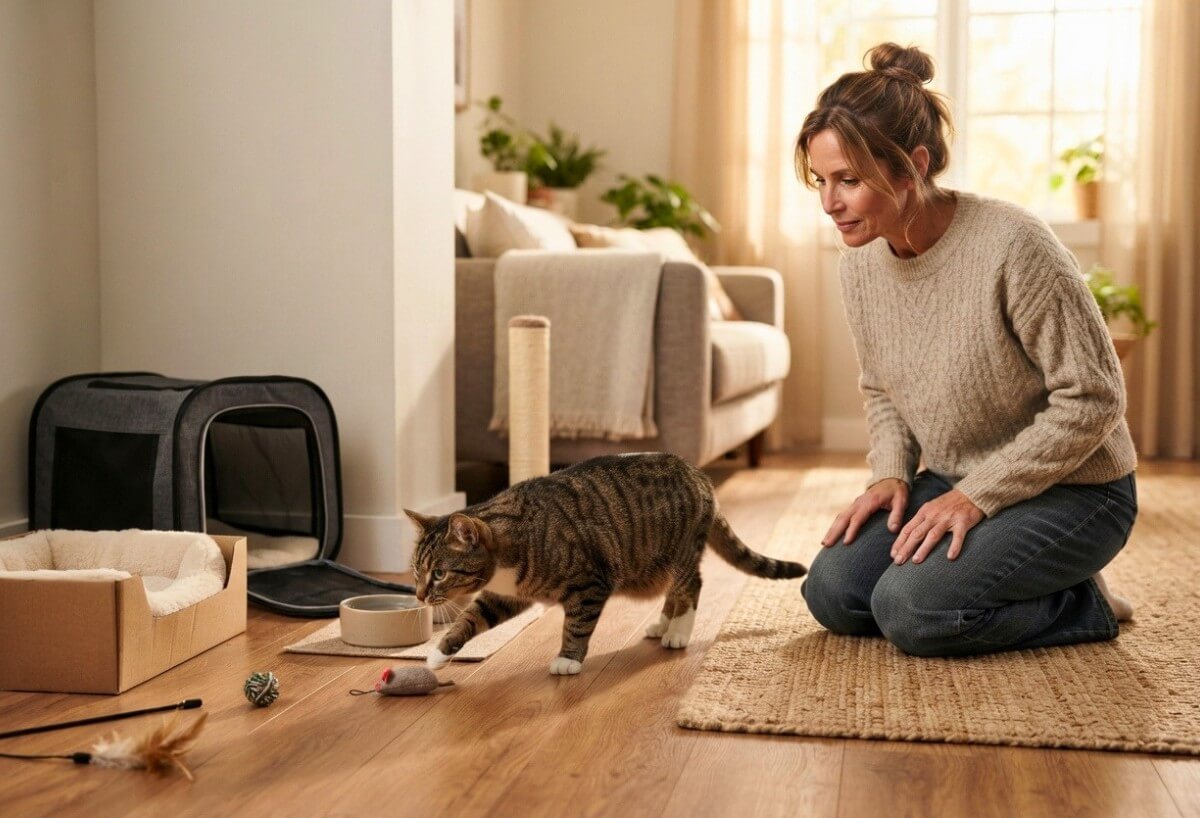
If one of two or more cats has died, you may wonder whether the surviving cat needs a new companion.
Try not to assume that another cat is automatically the answer.
Cats form their own bonds with each other.
If your surviving cat was very close to the cat who died, that doesn’t automatically mean they’ll be happy to have a new cat in the house.
The surviving cat may also need time to adjust to changes in territory, routines and household relationships.
Blue Cross recommends allowing a surviving cat time to adapt rather than bringing home a new cat or kitten immediately.
The RSPCA similarly notes that even a cat who was bonded to the cat who died may not want or accept a different companion.
Watch your cat’s behavior and maintain familiar routines as much as possible.
If they stop eating, become unusually withdrawn, vocalize much more than normal or show other worrying changes, contact your vet.
Changes associated with loss can resemble signs of illness, so it’s important not to assume that grief is the only explanation.
When you eventually consider another cat, think about your current cat’s age, energy, temperament and previous relationships with other cats.
An older, quiet cat may find an energetic kitten exhausting.
And if your cat only ever tolerated the cat who died, they may actually be happier on their own.
It’s important to think about what you want, but also about what will make life comfortable for the cat you already have.
Check with your vet after an infectious illness
If your cat died from an infectious illness, it’s worth checking with your vet before bringing another cat home.
Some infections can linger in the environment, so you may need to wait or clean certain things thoroughly first.
Cats Protection specifically recommends asking your vet about this, as they may advise waiting for a while after some infectious illnesses.
Tell your vet what your cat had and ask whether there’s anything you need to clean, replace or wait for before adopting again.
Choosing another cat after a loss
When you do feel ready, take your time.
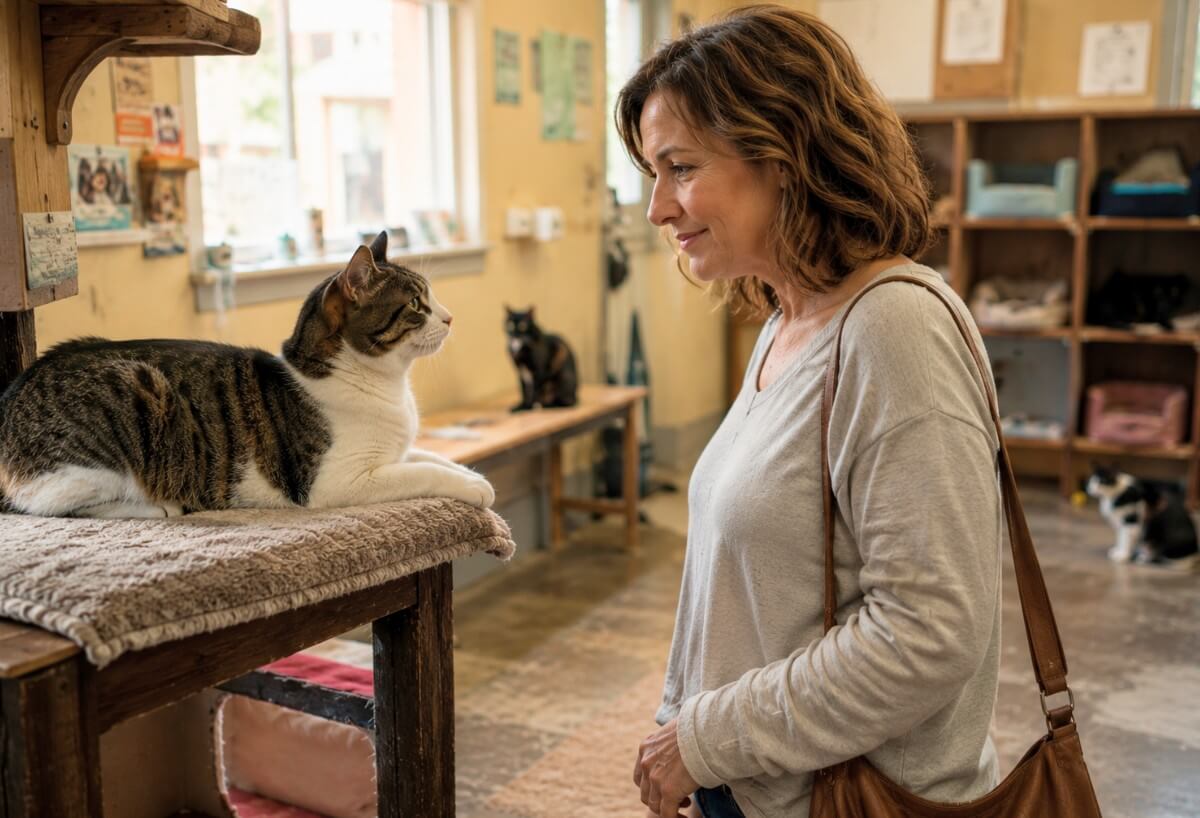
If you can, spend a little time with the cat rather than choosing from a photo alone.
Ask the rescue or foster carer what they’re like day to day — whether they’re playful or quiet, how they are with other animals, and what kind of attention they enjoy.
A kitten can feel like a lovely fresh start, especially after caring for an older or sick cat, but kittens are also a lot of work.
An adult cat may be easier to get to know because their personality is already more settled.
There’s no better choice.
It’s really about finding a cat who feels like a good fit for your home and your life.
Try not to choose entirely through comparison
It’s natural to notice similarities between a new cat and your previous cat.
This cat has the same color eyes.
That one sleeps in the same position.
Another has a similar patch of white beneath their chin.
A resemblance may feel comforting, and you don’t need to avoid it automatically.
Just be careful that you aren’t choosing based only on the hope that resemblance will produce the same relationship.
No cat can promise that.
Be honest with the rescue organization
It’s completely fine to tell the rescue that you’ve recently lost a cat and you’re not quite sure whether you’re ready yet.
A good rescue won’t push you into making a decision.
They may be able to suggest cats who would suit your home and your pace, or simply give you time to meet a few without any pressure.
You’re allowed to meet a cat and realise it’s too soon.
And you’re allowed to meet one and feel something shift.
What about your cat’s belongings?
You don’t have to clear away every reminder of your cat before another one comes home.
Some things may be easy to wash and reuse, like beds, blankets, bowls or toys.
Other things may feel too special to pass on, and that’s OK too.
A favourite blanket, collar or toy can simply stay yours to keep.
There’s no right way to decide what gets reused and what doesn’t.
Deal with anything that needs cleaning for hygiene reasons, then give yourself time with the rest.
A new cat won’t know that a particular bed or toy belonged to the cat you lost.
But you will.
If seeing them use it feels comforting, leave it out.
If it feels wrong or hurts too much, put it somewhere safe instead.
A gentle readiness check
Before making the decision, try completing these sentences honestly:
When I picture another cat, I imagine…
The thing I hope another cat will give me is…
The thing I’m most afraid of is…
If the new cat is very different from my cat, I think I will feel…
On a difficult day, I would still be able to provide…
The other people and animals in my home need…
I would feel comfortable waiting longer if…
You don’t need to produce perfect answers.
The purpose is to notice whether the idea feels mainly like a desperate escape from grief or the beginning of a genuine willingness to know another cat.
Sometimes it will feel like both.
That doesn’t automatically mean you aren’t ready.
It simply means the decision deserves tenderness and honesty.
A New Cat Would Make a New Place in Your Heart
The cat you lost has a place in your heart that belongs only to them.
No other cat can take that place, because no other cat shared those years, those routines, those little moments that became part of your life together.
A new cat would make their own place.
At first, it might feel small and unfamiliar.
You may compare them.
You may accidentally call them by the wrong name.
You might even feel guilty the first time they make you laugh or the house starts to feel less empty.
But slowly, you’ll begin to know this cat too.
You’ll learn the sound of their footsteps, where they like to sleep, how they ask for attention and the funny little things that are completely their own.
You won’t stop missing the cat you lost.
And loving another cat won’t mean leaving them behind.
It simply means that, alongside all the love and memories you already carry, there may be room for another cat to become precious to you too.
There’s no date on the calendar when that has to happen.
But one day, the thought of another cat may stop feeling like replacing the one you lost.
It may simply feel like being ready to love a cat again.
Frequently asked questions
How long should you wait to get another cat after one dies?
There’s no universal waiting period.
Some people adopt again within days or weeks, while others wait months or years.
Focus on whether you can accept a different cat, manage the responsibilities involved and make the decision without expecting the new cat to erase your grief.
Is getting another cat a betrayal of the cat who died?
No. A new cat can’t replace your previous cat or take away the history you shared.
Loving another cat creates a different relationship; it doesn’t rewrite the first one.
Can getting another cat help with grief?
Another cat may bring companionship, routine, affection and moments of relief.
But they won’t remove grief completely, and it isn’t fair to expect them to behave like the cat who died.
Grief may continue even while a new bond grows.
Is it normal to feel guilty about wanting another cat?
Yes. You may worry that wanting another cat means you’re forgetting, replacing or moving on from the cat you lost.
These feelings are common, but wanting companionship doesn’t diminish the love you still carry.
For more reassurance, read My Cat Died and I Can’t Stop Crying: Is This Grief Normal?.
Should I get the same breed or color as my previous cat?
You can, provided you understand that appearance won’t produce the same temperament or relationship.
Choosing a cat who looks different may feel easier for some people, while familiar features may comfort others.
Should I get a kitten or an adult cat after losing an older cat?
Consider your energy, household and expectations rather than choosing only from emotion.
Kittens require considerable play, supervision and training.
An adult cat’s established temperament may be easier to assess and may suit a quieter household.
Will I love the new cat as much as the one I lost?
You may love them just as deeply, but probably not in exactly the same way.
Relationships become meaningful through time and shared experience.
Try not to judge the new bond by whether it immediately feels like the old one.
What if adopting another cat makes my grief worse?
The arrival of another cat may bring memories and comparisons to the surface.
This doesn’t necessarily mean the adoption was a mistake.
Give the relationship time, seek support and remember that the new cat is also adjusting.
If you feel unable to care for them safely or your distress remains overwhelming, contact the rescue organization, your doctor or a grief counselor for support.
Further Reading
If you’re still finding your way through the loss of your cat, these may help too:
Why Does Losing a Cat Hurt So Much?
A gentle look at why the loss of a cat can feel so deep, and why your grief may be stronger than you expected.
Why the House Feels So Empty After Your Cat Dies
This explores the strange quiet that follows a cat’s death, when their absence seems to be everywhere you look.
What to Do With Your Cat’s Ashes: Gentle and Meaningful Options
If you have your cat’s ashes and aren’t sure what to do with them, this offers some thoughtful ways to keep, scatter or memorialize them.
There’s no right time to get another cat after a loss. Some people need years; others know much sooner that they want a cat in their life again.
If you’d like to share, tell us about the cat you lost — or the new cat who came along when you least expected it.
Loving another cat doesn’t replace the one you lost. It simply begins a new story.