
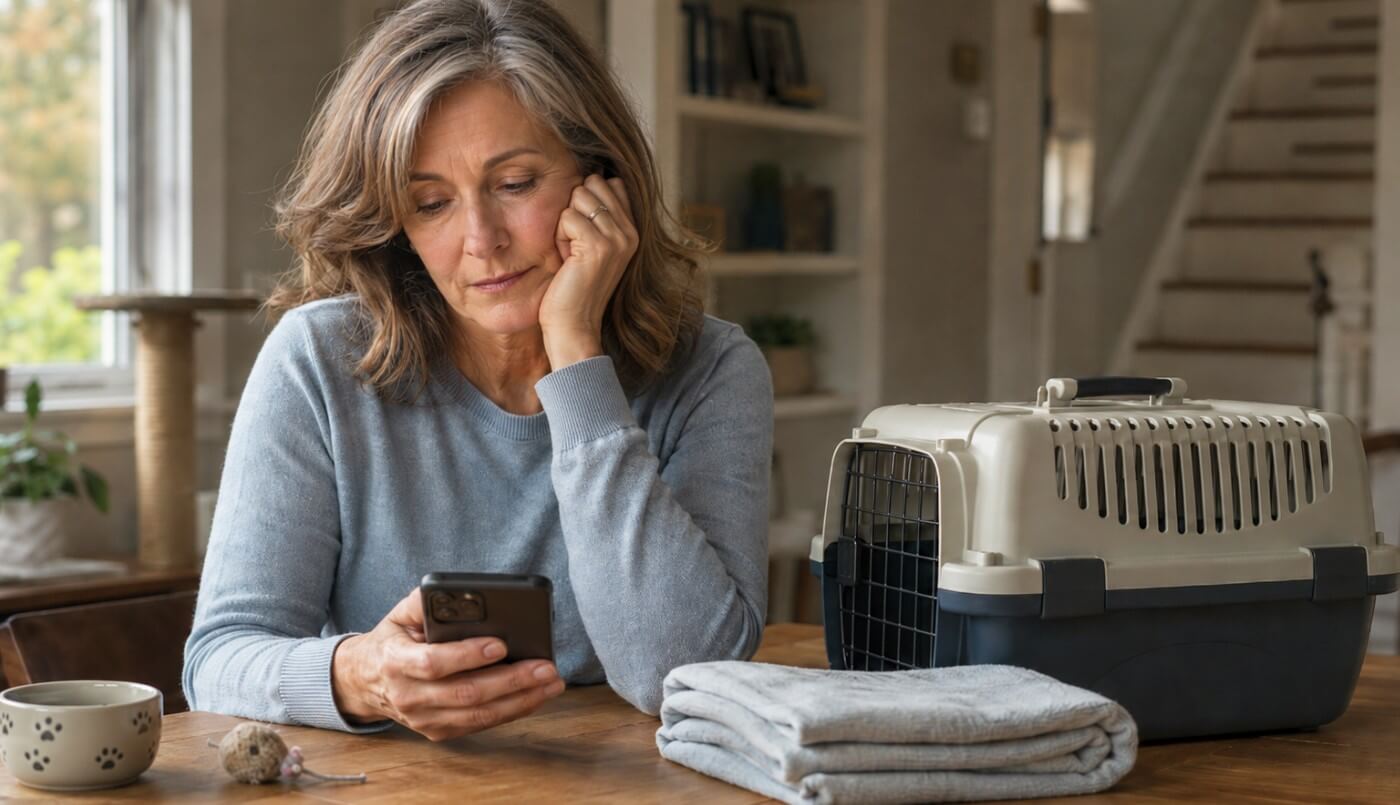
What to Do When Your Cat Dies at Home
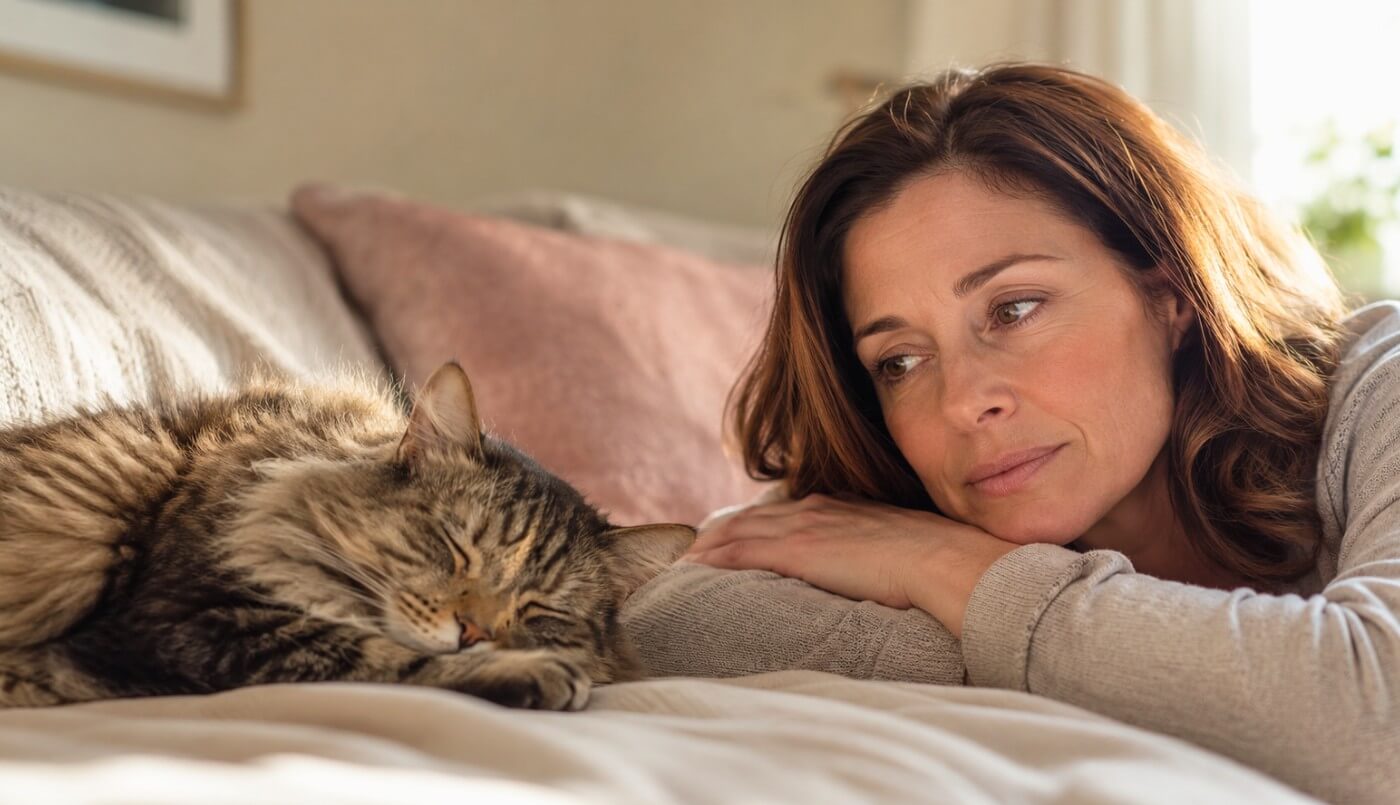
Perhaps you went looking for your cat, and found them curled up in their usual sleeping spot in the sun.
You called their name, reached out to touch them gently — and in the stillness that followed, you began to understand that they were gone.
Even when a cat has been elderly or unwell, finding that they’ve died at home can leave you shocked and unsure what to do.
You may be grieving intensely while also wondering who to call, whether you need to move them and how quickly you must make decisions.
For now, you don’t have to understand everything that has happened.
You only need to take the next small step.
Important: If you aren’t completely certain that your cat has died, or your cat has collapsed and may still be alive, contact your vet or the nearest emergency animal hospital immediately. Don’t wait for the situation to become clearer.
If Your Cat Has Just Died at Home
If your cat has died at home, give yourself a moment before doing anything. Contact your vet or a local emergency clinic for advice, especially if the death was sudden or unexplained. Place an absorbent towel beneath your cat, wrap them gently in a blanket or towel and keep them in the coolest appropriate area of your home while you arrange cremation, burial or veterinary care. If you may want a postmortem examination, ask your veterinarian before freezing or making permanent aftercare arrangements.
First, make sure there isn’t still a chance to help
A severely ill or unconscious cat can sometimes be extremely still.
You don’t need to perform complicated checks yourself.
If you have any uncertainty about whether your cat has died, treat the situation as an emergency and call your vet.
Tell them:
- what has happened
- whether your cat had been ill
- when you last saw your cat moving around, and
- whether you can see any breathing or movement.
The veterinary team can tell you whether to bring your cat in immediately and may help confirm what has happened.
Even if you feel embarrassed about not being sure, call.
This is an unfamiliar and frightening situation.
Nobody expects you to know instinctively what to do.
Give yourself a quiet moment
Once you know your cat has died, you don’t have to move them that very second.
Sit beside them if that feels right.
You might stroke their fur, talk to them, say their name or simply remain quiet.
You may want to ask someone you trust to come and sit with you or help with the practical arrangements.
There are timing considerations when caring for your cat after death, particularly in a warm home, but you ordinarily have enough time to breathe, gather yourself and say goodbye before moving them.
You aren’t doing anything wrong by needing a few minutes.
You also aren’t doing anything wrong if you can’t bear to remain in the room.
There’s no single correct way to respond to this moment.
Call your veterinarian
Your regular vet is usually the best first contact, even if your cat died outside normal clinic hours.
The clinic’s voicemail may provide an emergency number or instructions for contacting an after-hours hospital. A veterinary clinic may be able to:
- confirm what you should do next
- receive your cat’s body
- arrange cremation
- give you details for a local pet crematorium
- explain burial options
- discuss a postmortem examination, and
- tell you how to transport your cat safely.
Many vet clinics can help arrange aftercare even if your cat has died naturally at home rather than at the clinic.
They can talk you through the options available, including cremation or burial, and help you decide what feels right for you and your cat.
You may find it difficult to speak clearly on the phone.
It’s perfectly acceptable to begin with:
“My cat has died at home, and I don’t know what I’m supposed to do.”
The person answering will understand why you’re upset.
What if your cat dies during the night?
Call your regular veterinary clinic and listen to its recorded message.
It may direct you to an emergency animal hospital or after-hours service.
You can also search for a local pet crematorium or veterinary aftercare service.
Some have telephone support or collection services outside ordinary business hours.
If your cat’s death has been confirmed and there is no possibility of an emergency affecting another animal, you may be able to keep your cat safely at home until morning.
However, you should keep them cool and seek local professional advice because room temperature, the length of the delay and available services all matter.
How to care for your cat until arrangements are made
This part may feel daunting, especially if you’re alone.
Go slowly.
Ask someone to help if possible.
You’re not expected to handle everything perfectly.
Place Something Absorbent Beneath Your Cat
After death, the muscles of the body relax, and a small amount of urine or other fluid may sometimes be released.
This is a normal physical change and doesn’t mean your cat was frightened or suffering.
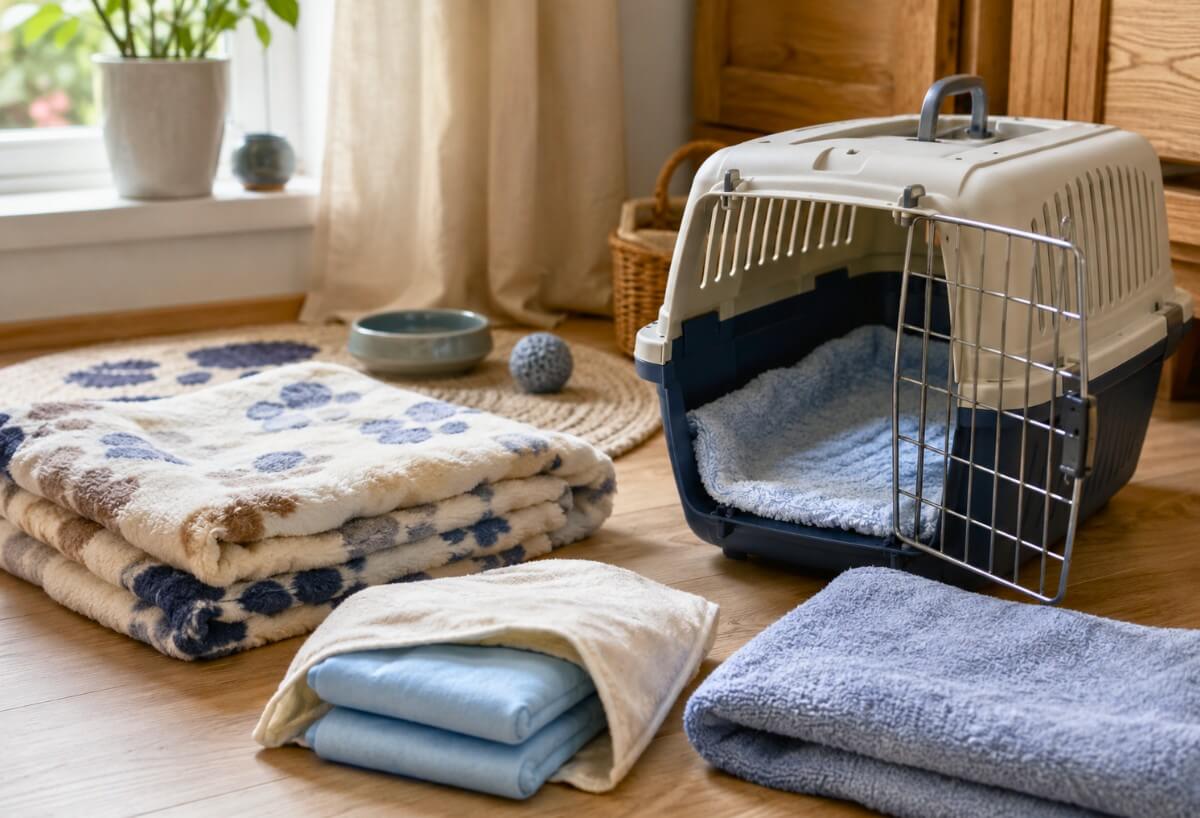
Gently place a thick towel, absorbent pad or folded blanket beneath your cat to protect the surface underneath.
Wrap your cat gently
You might wrap your cat in:
- a favorite blanket
- a clean towel
- a soft sheet, or
- a blanket you’re comfortable parting with.
You don’t need to wrap them tightly.
If your cat is still relaxed, you can gently position them in a natural sleeping posture.
If their body has begun to stiffen, don’t force their legs or body into a different position.
Some people find it comforting to leave the face uncovered for a little while as they say goodbye.
Others prefer to cover their cat completely.
Either choice is all right.
Keep your cat cool
Move your cat to the coolest suitable place in the house, away from direct sunlight, heaters and warm rooms.
If there will be a delay before they can be taken to a veterinary clinic or crematorium, place wrapped ice packs around—not directly against—their body.
Replace the packs as they thaw.
Veterinary aftercare providers recommend cooling the body to slow natural changes and reduce odor while arrangements are made.
Your veterinarian or aftercare provider may give you more specific instructions based on the expected delay and the temperature in your home.
Use a carrier or sturdy container for transport
When it’s time to move your cat, place their wrapped body in:
- their usual carrier
- a sturdy cardboard box
- a secure basket, or
- a container supplied by the crematorium.
Line the carrier or container with another towel or absorbent pad.
There’s nothing disrespectful about using your cat’s familiar carrier.
For some families, it feels gentler than using an unfamiliar box.
You may also ask a family member, friend, mobile vet or pet aftercare service to transport your cat if you feel unable to do it yourself.
Don’t freeze your cat if you may want answers about the death
If your cat died suddenly, was young or appeared healthy, you may want to ask your vet about a postmortem examination.
It may help identify illness, injury, toxins or other possible causes of death, although it can’t always provide a definite answer.
This may be particularly worth discussing when:
- the death was completely unexpected
- more than one animal has become unwell
- you suspect poisoning or contaminated food
- there was an unexplained accident or injury
- your vet needs more information about a possible disease, or
- knowing the cause may protect another cat in the household.
If you might want an autopsy, speak to your vet promptly.
If you suspect food, medication, a plant or another substance may have been involved, keep other animals away from it.
Set aside any packaging or remaining product and tell the vet what you found.
Don’t arrange cremation or burial until you’ve asked about an autopsy, as those choices can’t be reversed afterward.
Choosing what happens to your cat’s body
Once immediate arrangements have been made, you’ll usually need to choose between cremation and burial.
These can feel like enormous decisions when you’re in shock.
Try to remember that you’re choosing how to care for your cat’s body.
You aren’t deciding how much they meant to you.
Your love for them isn’t measured by the type of cremation, the price of an urn or the size of a memorial.
There are several aftercare options.
The right choice is simply the one that feels most appropriate for you, your cat and your circumstances.
Individual or private cremation
With individual cremation, your cat is cremated separately and their ashes are returned to you.
The provider may return the ashes in a simple container or include an urn as part of its service.
Ask what’s included before choosing, because terms and procedures can vary between businesses.
You don’t need to decide right away what you’ll eventually do with the ashes.
They can remain safely in their original container for as long as you need.
When you feel ready to think about what comes next, What to Do With Your Cat’s Ashes: Gentle and Meaningful Options explores some of the choices available, from keeping them close to creating a personal memorial.
Communal cremation
During communal cremation, several pets are cremated together.
Individual ashes generally aren’t returned to families.
The crematorium may scatter or respectfully inter the combined ashes in a designated area.
This is usually less expensive than individual cremation.
Neither option is more loving than the other.
The right choice is the one that suits your beliefs, circumstances and finances.
Burial at home
Some people prefer to bury their cat in their garden, or another meaningful place.
Before doing this, check the laws and public-health requirements where you live.
Rules can vary by state, county, municipality, property ownership and the circumstances of the death.
Your vet, local government authority or pet cemetery can explain what’s permitted in your area.
Home burial may not be practical when:
- you rent your home
- you may move in the future
- local rules don’t permit it
- the ground is unsuitable
- the death may have involved an infectious disease or toxin, or
- wildlife could disturb the burial site.
A pet cemetery may be an alternative if burial feels right but home burial isn’t possible.

Should your other cat see the body?
There isn’t one answer that suits every household.
Some vet behavior professionals believe that allowing a surviving cat to approach and investigate the body may help them recognize that their companion is gone.
However, it isn’t guaranteed to prevent searching, distress or behavioral changes afterward.
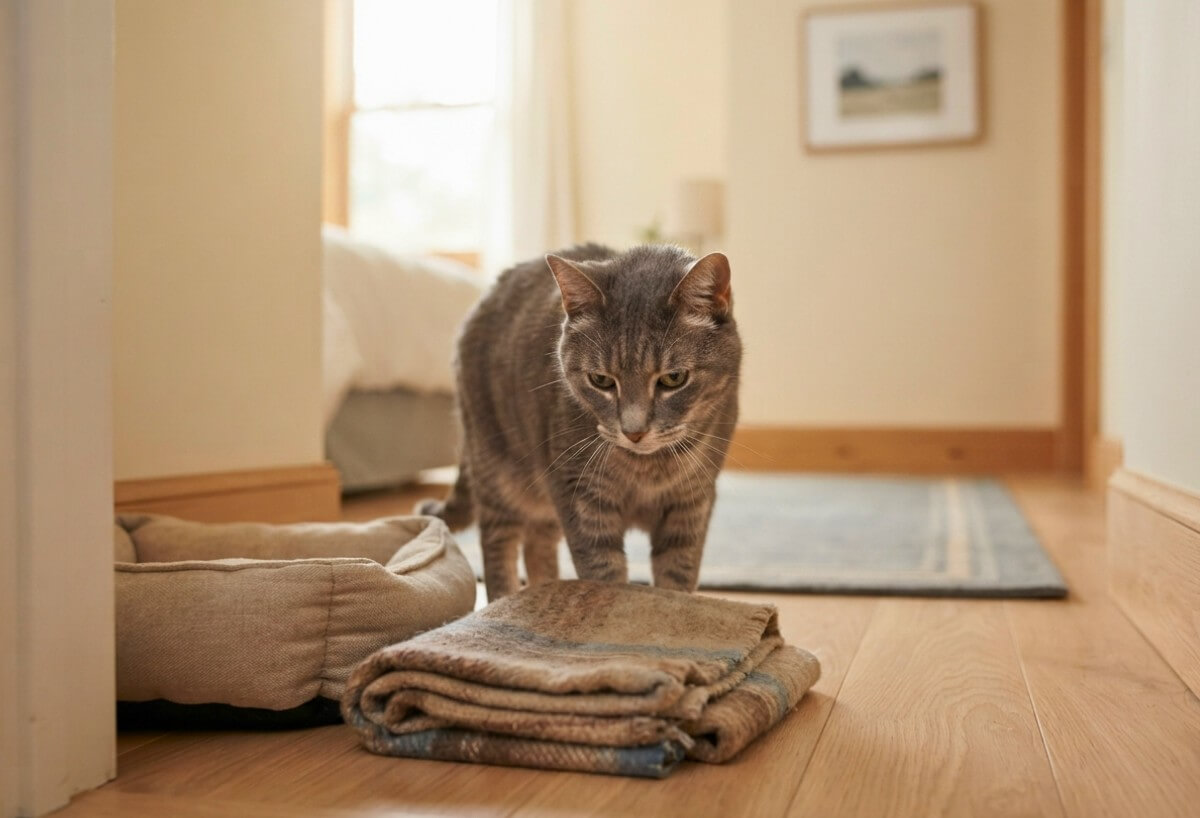
You might allow your other cat to enter quietly and approach in their own time.
Don’t carry them over, hold them beside the body or force them to remain.
They may sniff briefly, sit nearby or walk away immediately.
All of those responses are normal.
Don’t allow another pet access if:
- your veterinarian is concerned about an infectious illness
- poisoning or contamination may have caused the death
- the body has been treated with any chemical product
- your surviving cat is becoming distressed, or
- you don’t feel emotionally able to manage the encounter.
It’s also completely acceptable not to show them the body.
Your surviving cat can still adjust with time, a predictable routine, familiar food and gentle attention.
What to tell children
A cat’s death may be a child’s first close experience of loss.
Try to use simple and honest language appropriate to the child’s age.
You might say:
“Molly died today. Her body stopped working, so she can’t breathe, eat, move or feel pain anymore.”
Avoid saying only that the cat “went to sleep.”
Younger children may interpret this literally and become frightened of sleeping or expect the cat to wake up.
Children may ask the same question repeatedly.
This doesn’t necessarily mean they weren’t listening.
They may be trying to understand that death is permanent.
Depending on their age and wishes, they might want to:
- see the cat
- draw a picture
- write a note
- choose a blanket
- say goodbye privately
- help select a photograph, or
- attend a burial or small family ceremony.
Don’t force a child to see the body or participate.
Give them a genuine choice, explain gently what they can expect and let them change their mind.
You don’t need to make every decision today
After your cat has been taken to the vet clinic or crematorium, you may return to a home filled with reminders.
Their bowl may still contain water.
Their bed may still be warm or indented.
Medication may be waiting for the next dose that will never be needed.
You don’t have to clear everything away immediately.
You also don’t have to preserve the room exactly as it is.
You can move a few things that feel unbearable and leave everything else.
You can ask someone to put medication out of sight.
You can wash a bowl or leave it untouched.
There’s no timetable you have to follow.
If the familiar rooms suddenly feel strange, empty or painfully different, you may also find comfort in Why the House Feels So Empty After Your Cat Dies.
You also don’t need to choose:
- a permanent urn
- a memorial
- what to do with their toys
- whether to keep their collar
- whether to scatter ashes, or
- whether you will ever have another cat.
Those decisions can wait until the first shock has softened.
The first hours may feel unreal
Once the practical arrangements are complete, you may expect to feel calmer.
Instead, you may feel worse.
The phone calls and decisions may have given you something to concentrate on.
When they stop, the reality of the loss can arrive more fully.
You may feel numb, shaky, exhausted, restless or unable to stop replaying what happened.
You may also feel guilty that you didn’t notice something sooner, weren’t in the room or didn’t know exactly what to do.
Finding your cat after they’ve died can be deeply upsetting.
Your mind may return repeatedly to the final image because it’s recent and shocking—not because it represents the whole of your cat’s life.
Their life was every ordinary and wonderful day that came before it.
It was the familiar greeting, the sound of paws in the hallway, the place they chose beside you and the small routines the two of you shared.
When all of that suddenly disappears, the first days can feel especially disorienting.
If you’re struggling with those early waves of grief, you may find some comfort in The First Few Days After Losing a Cat: What Grief Feels Like.
Take care of only the next few hours
You don’t need to figure out how you’ll live without your cat tonight.
For now, try to do a few very small things:
Drink a glass of water.
Tell one kind person what has happened.
Write down any instructions from the vet, because shock can make details difficult to remember.
Cancel anything that doesn’t have to be done.
Eat something simple if you can.
Rest without expecting yourself to sleep.
You may feel that you should be handling the loss better.
But there is no “better” way to lose someone who was woven into your home and everyday life.
If you’re wondering why the loss can feel so overwhelming, Why Does Losing a Cat Hurt So Much? explores why the bond with a cat can leave such a deep absence.
The intensity of your reaction reflects the place your cat held in your world.
It isn’t an overreaction or a failure to cope.
And if you find yourself questioning whether your grief is somehow too much, My Cat Died and I Can’t Stop Crying: Is This Grief Normal? may help reassure you that there is no fixed measure for how deeply you are allowed to grieve.
For now, only take the next step
When your cat dies at home, grief and responsibility arrive together.
You may have to make phone calls while crying, touch your cat when you’re afraid to and choose an aftercare option before the loss feels real.
None of those decisions has to be perfect.
Call the vet.
Ask someone to help.
Keep your cat cool.
Choose the next arrangement you can live with, and let that be enough for today.
Your cat’s life will not be defined by what happened in these final hours.
It will be remembered in all the ordinary, precious moments that came before — the years, months or days in which they knew your voice, your hands, your home and your love.
That’s the part of their life that mattered most.
And that’s the part you gave them.
Frequently Asked Questions
Who should I call when my cat dies at home?
Call your regular vet first.
If the clinic is closed, its voicemail may provide an emergency number.
An emergency animal hospital, mobile veterinarian or local pet crematorium may also be able to advise you about transport and aftercare arrangements.
Can I take my cat to the vet after they’ve died?
Yes.
Call before leaving so the clinic knows you’re coming and can explain what to do when you arrive.
Many veterinary clinics can receive your cat, talk you through cremation or burial options and help arrange aftercare.
How long can I keep my cat at home after death?
There isn’t one time limit that applies in every situation.
Room temperature, climate and how quickly veterinary or aftercare services are available can all make a difference.
Keep your cat somewhere cool and contact your vet or aftercare provider as soon as you can.
They can advise you on what to do if collection or transport will be delayed.
Can I bury my cat in my backyard?
Possibly, but the rules around home burial vary depending on where you live.
Before making arrangements, check with your vet or local authority to make sure home burial is permitted and whether there are any requirements you need to follow.
Should I let my other cat see the cat who died?
You can allow your surviving cat to approach and investigate if you feel comfortable doing so, but there is no need to force the interaction.
Some cats may sniff their companion briefly and walk away.
Others may show very little interest.
It’s also completely okay if you decide not to offer this opportunity.
If your cat died from a potentially infectious illness, poisoning or another unusual cause, ask your vet for advice.
What should I do if my cat’s death was sudden or unexplained?
Contact your vet before arranging cremation or burial, particularly if you would like to understand what may have happened.
Your vet can tell you whether a post-mortem examination, sometimes called a necropsy, might be useful and how your cat’s body should be cared for in the meantime.
If you suspect poisoning or another hazard in the home, keep other pets away from anything that might have been involved and tell your vet what you suspect.
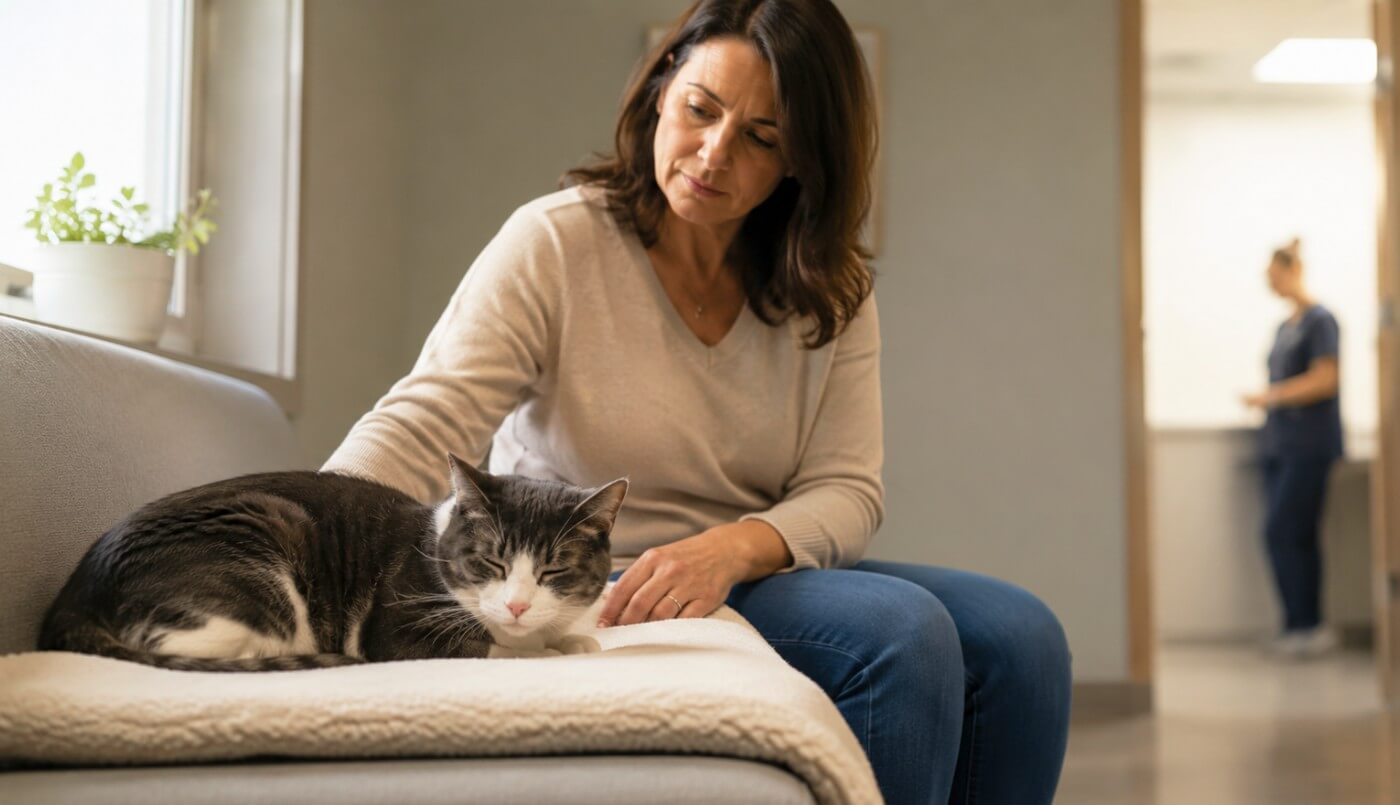
When a cat dies at home, the practical decisions can feel almost impossible to make while you’re still trying to understand what has happened.
You don’t have to do everything perfectly. Calling your vet and taking one step at a time is enough.
Did your cat die naturally at home, or was the loss completely unexpected?
Share only what feels comfortable.
Your experience may help another grieving cat parent feel less alone.