
Guilt After Cat Euthanasia: Why It Happens and How to Cope
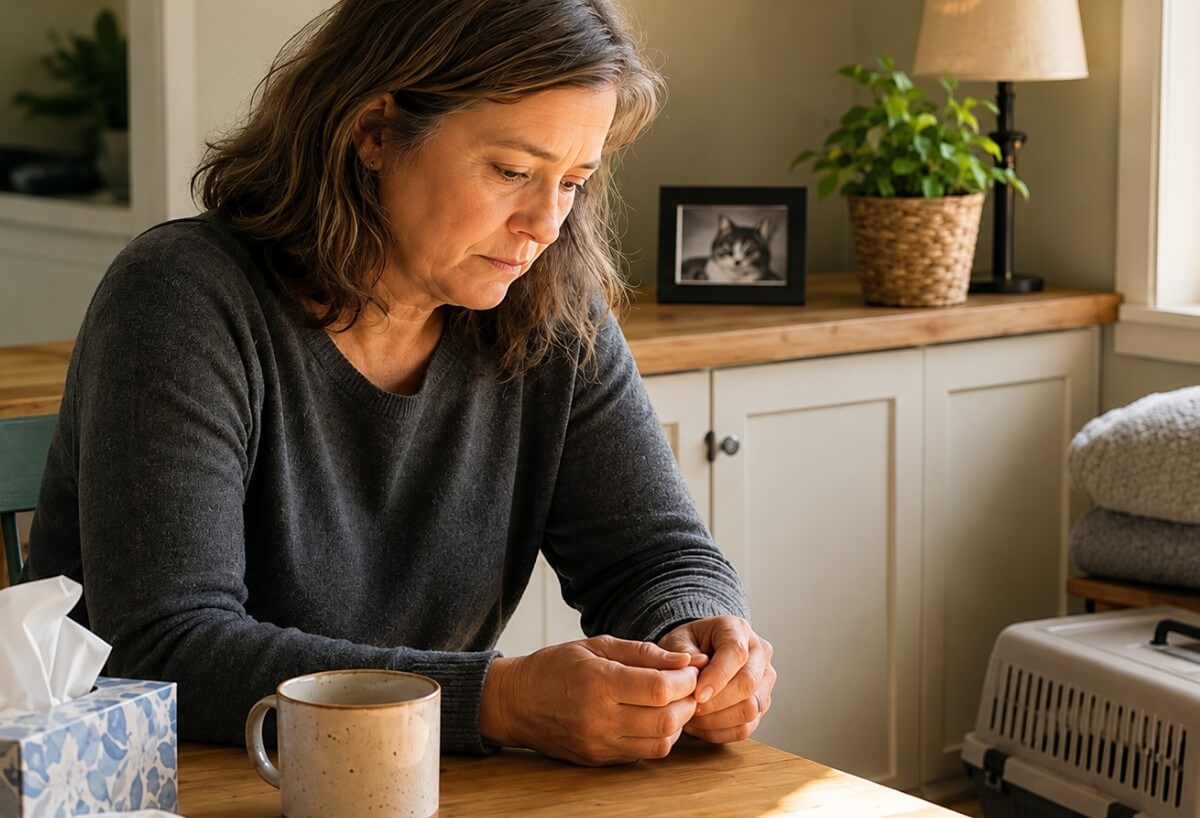
There’s a particular kind of guilt that can come after euthanizing a cat.
It doesn’t always arrive gently.
Sometimes it crashes in after the silence.
After the carrier is empty.
After the blanket is folded.
When the house feels wrong.
You may find yourself replaying everything.
The last appointment.
The last look.
The way your cat breathed.
The way they rested their head.
The way you signed the form.
The moment you agreed.
And then the questions begin.
Did I do it too soon?
Did I wait too long?
Did my cat know what was happening?
Did they feel betrayed?
Did I give up on them?
Did I make the wrong choice?
If you’re carrying guilt after your cat’s euthanasia, it doesn’t mean you made a cruel decision.
It means you’re grieving, and your mind is trying to make sense of a choice no loving person ever wants to make.
You were trying to protect your cat from suffering, even if the decision still hurts in ways you can barely explain.
The short answer
Guilt after cat euthanasia is common because you had to make a loving decision that still felt unbearable. You were responsible for protecting your cat from suffering, but you were also the person who had to say yes to the thing that ended their life. That contradiction can feel impossible to carry. But guilt doesn’t automatically mean you did something wrong. Often, it means you loved your cat so much that your mind is searching for another ending.
Why guilt after cat euthanasia feels so intense
Euthanasia is one of the most compassionate choices you can make for a suffering animal.
But emotionally, it can still feel like the opposite.
You may know, logically, that your cat was ill, declining, in pain, or no longer able to enjoy life in the way they once did.
You may have spoken to your vet.
More than once, I bet.
You may have watched the symptoms worsen.
You may have seen the bad days start to outnumber the good ones.
And still, your heart may say:
“But I chose it.”
That’s what makes this kind of guilt so painful.
With many losses, death happens to us.
With euthanasia, we have to participate in the timing.
Even when the decision is made to prevent suffering, it can feel as though you crossed a line you never wanted to cross.
You may not feel like you “let your cat go.”
You may feel like you caused their death.
That feeling can be devastating.
But there’s an important difference between causing harm and accepting that suffering cannot be made better.
Euthanasia is not a failure of love.
Sometimes, it is the last responsibility love asks of us.
You may be confusing responsibility with blame
When you love a cat, so much of their life rests in your care.
You feed them, keep them safe, notice small changes, make vet appointments, give medication, clean up after them, comfort them, and quietly worry over every sign that something might be wrong.
So when the end comes, that same sense of responsibility can turn against you.
It can become blame.
You may think:
“I should have noticed sooner.”
“I should have tried another treatment.”
“I should have waited one more day.”
“I should have done it sooner.”
“I should have known.”
But responsibility and blame are not the same thing.
Responsibility means you were the person who had to care, notice, decide, and act.
Blame means you did something wrong.
Most people grieving after cat euthanasia are not guilty of failing their cat.
They are guilty only of being the person who had to make the decision.
And that’s a heartbreaking role to carry.
“Too soon” guilt after cat euthanasia
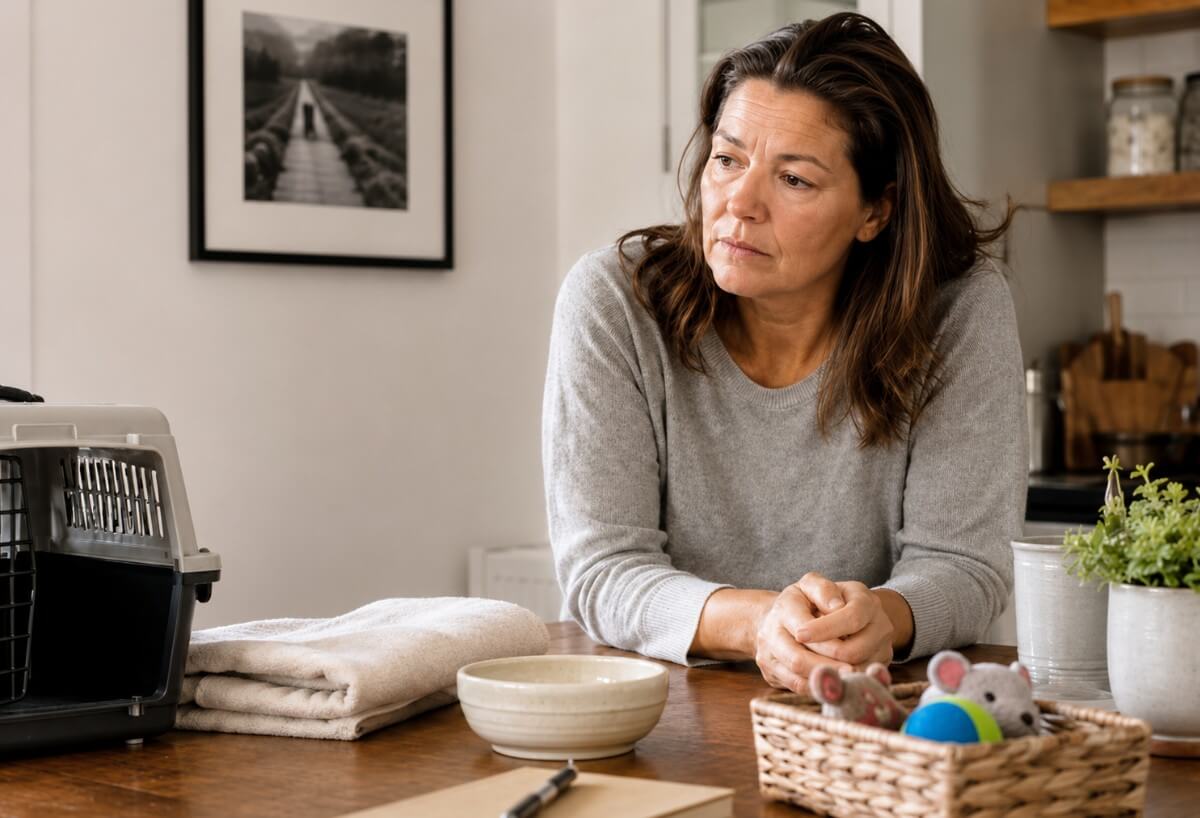
One of the most painful thoughts after euthanasia is:
“What if I did it too soon?”
This guilt can be especially strong if your cat still had occasional good moments.
Maybe they still purred, ate a little, looked at you with recognition, had one bright afternoon, or curled into your hand at the vet.
Those moments matter.
They’re part of your cat’s story, and it’s natural to hold onto them.
But they don’t always mean your cat was well.
A cat can still purr while suffering.
They can still eat a little while declining.
They can still love you while exhausted.
They can still have a good moment inside a body that’s failing.
This is one of the hardest truths of end-of-life care.
We want the good moments to mean the story isn’t over.
Sometimes they mean our cat still knows love.
That’s different.
Choosing euthanasia before every trace of comfort has disappeared is not necessarily “too soon.”
Sometimes it means your cat was spared the worst part.
That doesn’t make the grief lighter.
But it may help you understand that a peaceful ending can look, from the outside, like there was still time.
And maybe there was time.
But the question is not only whether there was more time.
It’s what kind of time that would have been.
“Too late” guilt after cat euthanasia
The opposite guilt can be just as brutal.
“What if I waited too long?”
You may replay the final days and feel sick with regret.
The hiding, the weakness, the pain, the confusion, the difficult breathing, the loss of appetite, the way your cat looked at you — all of it can come back in painful detail.
You may wonder why you didn’t act sooner.
But decline is not always clear while you’re living inside it.
When you’re caring for a sick or elderly cat day after day, you’re not watching a simple before-and-after picture.
You’re watching tiny changes, small rallies, new symptoms, brief improvements, and frightening dips.
One day, your cat seems worse.
The next, they seem a little brighter.
Then they decline again, eat a little, hide, come out, rest, rally, and slip back.
That back-and-forth can make the decision feel impossible.
You may have been hoping for one more good day. That hope wasn’t selfish. It was love.
You were trying to understand what your cat needed while your heart was breaking.
If you waited because you were confused, afraid, hopeful, or trying to gather the courage to do the right thing, that doesn’t mean you failed your cat.
It means you were human.
The guilt of signing the form
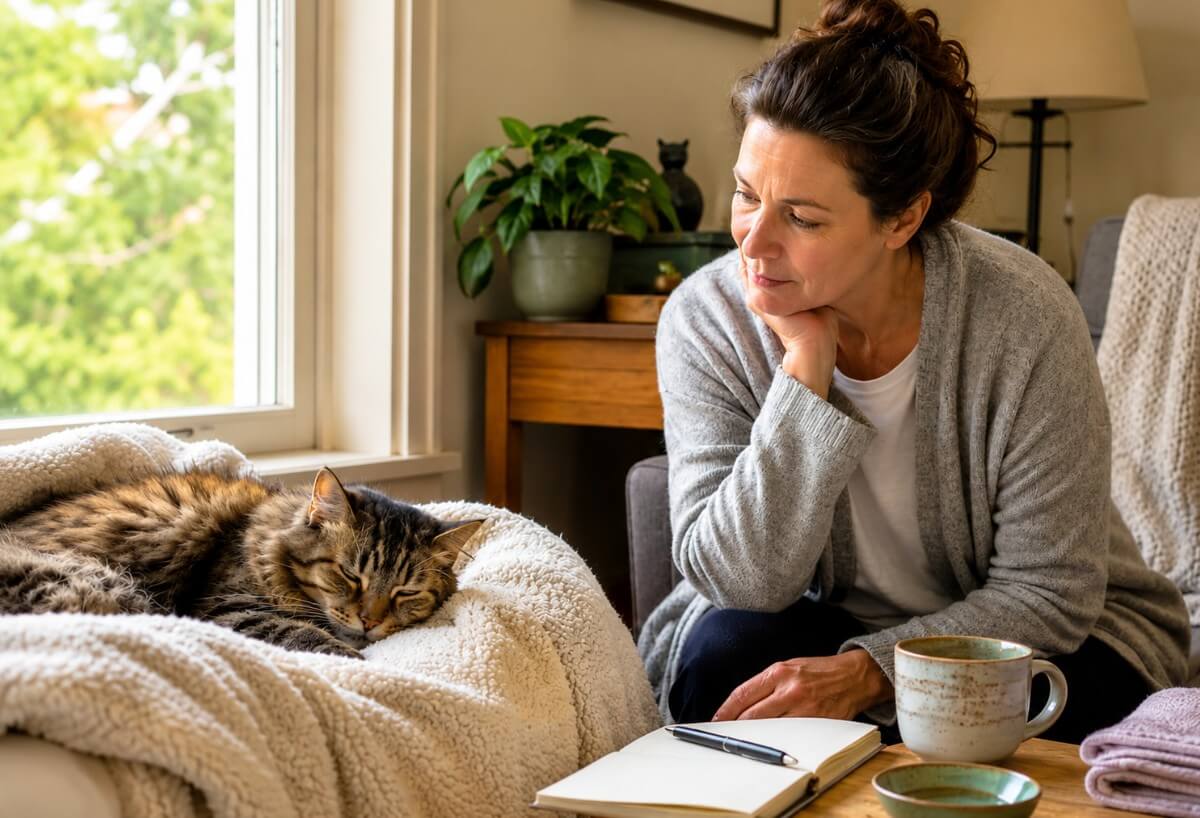
There’s something awful about the practical side of euthanasia.
Making the appointment.
Driving there.
Answering questions.
Signing paperwork.
Paying the bill.
Choosing ashes or burial.
And then walking back into the world afterward.
These ordinary actions can feel unbearable because they sit beside something sacred.
You may think:
“How could I sign a form for my cat’s death?”
But that form was not a betrayal.
It was part of a medical process designed to end suffering gently.
You did not sign because your cat didn’t matter.
You signed because they mattered so much that you were willing to take the pain into yourself instead of letting them carry more of it.
That may not feel comforting yet.
But one day, it may.
Did my cat feel betrayed?
This question can haunt people.
“Did my cat know?”
“Were they scared?”
“Did they think I abandoned them?”
“Did they wonder why I let it happen?”
These thoughts can be agonizing because they imagine your cat’s final moments through your guilt, not necessarily through your cat’s experience.
Your cat didn’t understand euthanasia as a moral decision.
They didn’t know about paperwork, calendars, or the terrible debate happening inside your mind.
They knew you.
They knew your smell, your hands, your voice, your presence, and your love.
If you were there with them, or if you made sure they were held by gentle people, your cat’s last experience was not betrayal.
It was care.
Even if you were crying.
Even if you felt broken.
Even if you weren’t as calm as you wanted to be.
Your cat didn’t need you to be perfect.
They needed you to love them.
And you did.
Why your mind keeps replaying the decision
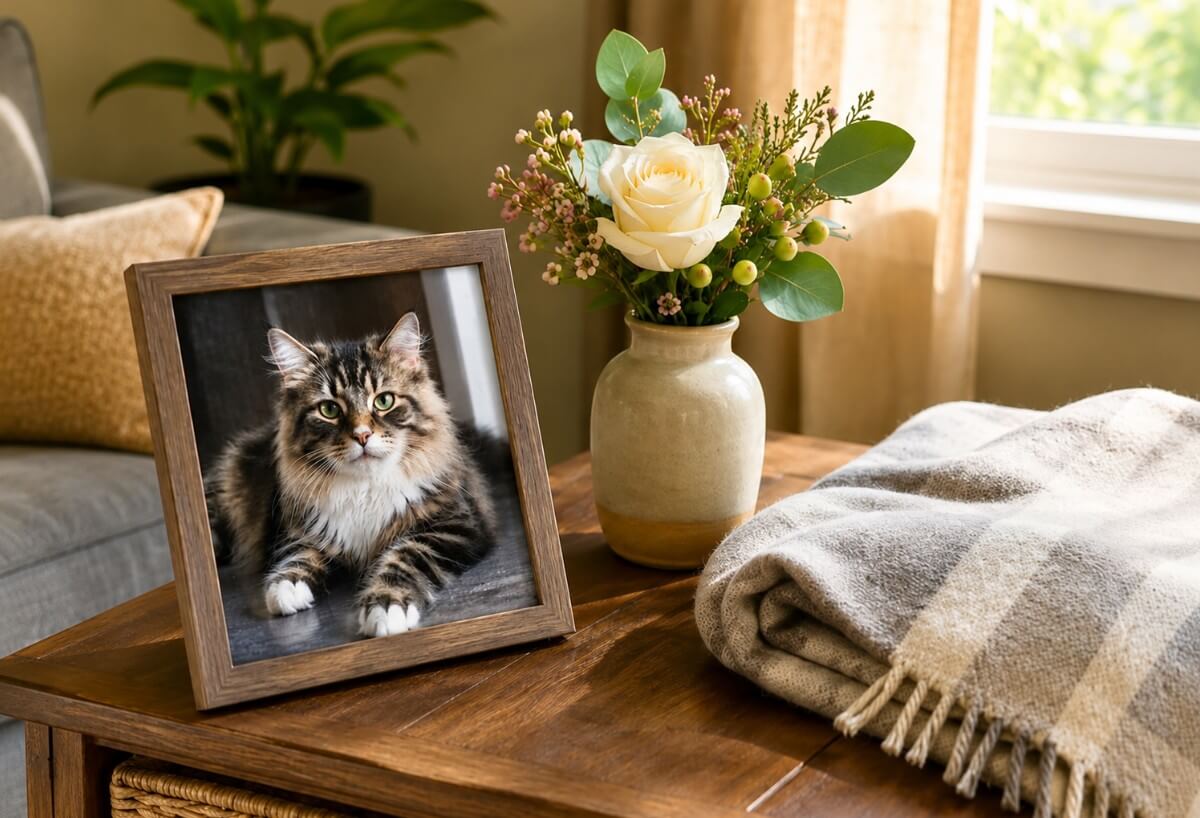
After euthanasia, your mind may loop through every detail.
This is common after a painful loss.
Your brain is trying to solve something that can’t be solved.
It searches for the moment when things might have turned out differently: if you’d tried another vet, changed the medication, waited longer, acted sooner, noticed the signs earlier, or asked one more question.
This kind of replay can feel like proof that something went wrong.
But often, it’s grief looking for control.
Because the truth is too painful:
Your cat was dying.
Your choices were limited.
There may not have been a perfect option.
There may only have been the least cruel one.
That’s very hard for the mind to accept.
So it keeps going back.
It keeps asking.
It keeps trying to create a version where your cat lives, recovers, and stays.
Of course it does.
You loved them.
Guilt can be grief in disguise
Sometimes guilt feels safer than grief.
That may sound strange, because guilt feels terrible.
But guilt gives the mind something to do.
It creates a task…
Investigate.
Review.
Judge.
Punish.
Rehearse.
Try again.
Grief is different.
Grief asks you to accept that your cat is gone.
And that’s unbearable.
So guilt may step in because guilt feels active, while grief feels helpless.
If you blame yourself, part of you may feel as if you still have control over the story.
“If I did something wrong, then maybe there was a way to stop this.”
But often there wasn’t.
Age, pain, cancer, organ failure, or decline may have reached a point where love could no longer change what was happening.
That doesn’t mean love failed.
It means love had to take a different form — comfort, presence, permission to rest, and one final kindness.
What if I feel relieved after my cat’s euthanasia?
Relief after cat euthanasia can bring another layer of guilt.
You may feel a small sense of relief that the suffering is over, that the constant watching has stopped, that the medication schedule is finished, and that you no longer have to carry the decision every moment of the day.
And then, almost immediately, shame may follow.
“How can I feel relieved when my cat is dead?”
But relief doesn’t mean you wanted your cat gone.
It means the crisis has ended.
It means your nervous system has been living under pressure, and some part of you knows the suffering, fear, and uncertainty have stopped.
Relief can exist beside devastation.
You can miss your cat desperately and still feel relief that they’re no longer struggling.
You can be heartbroken and exhausted.
You can be grateful they’re at peace and furious that they had to leave – all at the same time.
Grief is rarely one clean feeling.
It’s a tangle.
Relief is allowed to be part of it.

What if I couldn’t be there at the end?
Some people carry guilt because they weren’t present during their cat’s euthanasia.
Maybe it happened during an emergency, or hospital rules made it difficult.
Maybe another family member went in your place.
Maybe your cat declined suddenly, you couldn’t bear to stay, or you truly thought you’d have more time.
This guilt can also be extremely painful.
But your cat’s life was not defined only by the final minutes.
Your cat knew your love through thousands of ordinary moments.
Feeding them.
Talking to them.
Letting them sit on you.
Cleaning up after them.
Learning their routines.
Knowing their moods.
Taking them to the vet.
Worrying over them.
Making space for them in your life and your heart.
The ending matters, sure.
But it doesn’t repesent the whole relationship.
If you couldn’t be there, that doesn’t erase the life you gave them.
It doesn’t erase the safety, warmth, care, and belonging they knew because of you.
What if my cat seemed calm and I still chose euthanasia?
This can be confusing.
If your cat seemed calm, sleepy, quiet, or still, you may wonder whether they were truly suffering.
But cats often suffer quietly.
They may hide pain, withdraw from ordinary routines, stop doing the things that once made them feel like themselves, or sleep more because their body is tired.
Sometimes a cat seems calm not because they’re truly comfortable, but because they no longer have the energy to protest.
A peaceful cat is not always a comfortable cat.
And a cat who looks peaceful at the end may also be receiving the gift of not having to reach a more frightening stage.
Many loving cat parents expect the “right time” to be obvious.
Sometimes it is.
But often, it isn’t.
Sometimes the right time comes while your cat still has dignity.
While they still know your voice.
While they can rest in familiar hands.
While the ending can still be gentle.
That can feel like guilt afterward.
But it may also mean your cat was spared a harder ending.
How to begin carrying the guilt
You may not be able to make the guilt disappear by arguing with it.
Grief doesn’t usually respond to logic alone.
But you can begin to carry it differently.
Start by changing the question.
Instead of asking: “Did I kill my cat?”
Try asking: “What was I trying to protect my cat from?”
Instead of: “Did I give up?”
Try: “What had my cat’s body already lost?”
Instead of: “Did I choose death?”
Try: “Was I trying to prevent suffering?”
Instead of: “What if I was wrong?”
Try: “What did I know at the time, with the information I had?”
That last part matters.
You didn’t make the decision with hindsight.
You made it in the middle of fear, grief, medical uncertainty, and love.
You made it with the information available to you then.
That’s all anyone can do.
Write down what was happening before the decision
This can be painful, but it can also help.
After euthanasia, your mind may soften the hardest parts because you miss your cat so much.
You may remember the good moments more vividly than the decline.
That’s natural.
But it can make the decision feel less understandable later.
Try writing down what was happening before the euthanasia decision.
Not to punish yourself.
To tell the truth.
You might write about:
What symptoms was my cat having?
What had changed in their eating, drinking, movement, grooming, or comfort?
What did the vet say?
What treatments had we tried?
What were the bad days like?
What was I afraid would happen next?
What did I want to spare my cat from?
You don’t have to write beautifully.
You don’t even have to keep what you’ve written.
The point is to help your grieving mind remember the whole picture, not only the final moment.
Your cat’s death was not one isolated decision.
It came at the end of a longer story.
And that story matters.

Talk to yourself as if you were talking to another grieving cat parent
Imagine someone you love came to you and said:
“My cat was suffering. I spoke to the vet. I tried to help. I was terrified of making the wrong decision.
I chose euthanasia because I didn’t want them to suffer anymore. Now I feel like a terrible person.”
Would you tell them they were cruel?
Would you tell them they betrayed their cat?
Would you tell them they should suffer forever?
Probably not.
You would likely see their love more clearly than they could.
You would hear the pain in their voice and understand that they were trying to do something merciful.
Try offering yourself even a little of that same mercy.
Not all at once.
Just a little.
“I made the best decision I could with the information I had.”
“I didn’t want my cat to suffer.”
“I loved my cat.”
“I was trying to be kind.”
“I can be heartbroken without being guilty.”
“My cat’s life was more than the ending.”
You may not believe these words yet.
That’s okay.
Let them sit near you anyway.
Your cat’s life was not reduced to one decision
This is important.
Your cat’s life was not only the euthanasia appointment.
It was the first day you had with them.
The daily routines.
The favorite food bowls.
The naps in the sun.
The silly habits that made you smile every day.
The way they looked at you.
The way they demanded things at the most inconvenient moment.
The way they made your home feel occupied by a small, powerful presence.
It was years of care, or months of care, or however much time you had.
It was ordinary love.
And ordinary love counts.
A peaceful death, when suffering can’t be fixed, is not a cancellation of that love.
It’s a part of it.
The last day hurts so much because of all the other days behind it.
When guilt becomes too heavy to carry alone
Some guilt softens with time, support, and grieving.
But sometimes it becomes crushing.
If you can’t sleep, eat, function, or stop replaying the euthanasia in a way that feels unbearable, you deserve support.
That might mean talking to:
A pet loss support group
A grief counselor
A therapist
A trusted vet
A compassionate friend who understands animal grief, or
A helpline or crisis service if you feel unsafe with yourself.
Needing help doesn’t mean you’re grieving “wrong.”
It means this loss has gone deep.
And cat grief can go very deep.
Your cat may have been your daily companion, your comfort, your safe place, your little shadow, your family.
There is nothing silly or excessive about needing help after losing them.
A gentle way to remember your cat
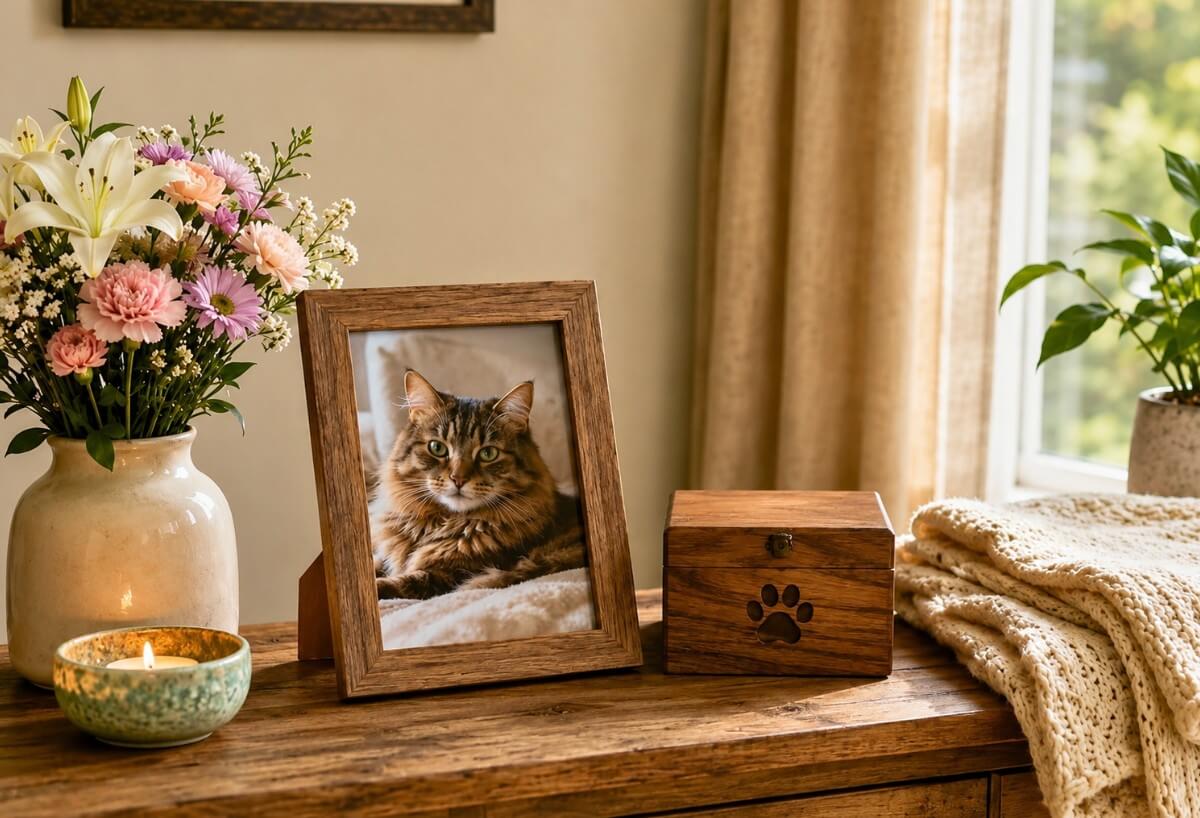
When you’re ready, you might create a small ritual that focuses not on the euthanasia decision, but on your cat’s life.
You could:
Write your cat a letter.
Print a favorite photo.
Make a small memory box.
Light a candle on a hard day.
Plant something in their honor.
Keep their blanket somewhere safe.
Tell a story about one ridiculous thing they used to do.
Say their name out loud.
The goal is not to “move on.”
You don’t have to move on from love.
The goal is to make room for more than the final day.
Your cat was not only their illness.
Not only their decline.
Not only the appointment.
Not only the goodbye.
They were themselves.
And they were loved.
Final thoughts
Guilt after cat euthanasia can make you feel as if you’re standing trial inside your own heart.
But love is not always clean and certain.
Sometimes it’s confused.
Sometimes it’s terrified.
Sometimes it signs the form with shaking hands, says yes to ending suffering, and then spends weeks or months wondering whether it had the right.
If that’s where you are, please be gentle with yourself.
You made a decision no one wants to make.
You made it because your cat mattered.
You made it because you were trying to protect them from pain, fear, or further decline.
Your guilt may tell you that you failed.
But your grief tells a deeper truth.
You loved your cat.
You stayed responsible for them.
You carried the decision they could not carry.
And you’re hurting now because the love didn’t end when their life did.
That love is still here.
Even in the guilt.
Even in the silence.
Even now.
Frequently Asked Questions
Is it normal to feel guilty after euthanizing a cat?
Yes. Guilt after cat euthanasia is very common, even when the decision was medically appropriate and made with love.
You may feel guilty because you had to choose the timing, because you miss your cat, or because your mind keeps searching for another possible outcome.
Does guilt mean I made the wrong decision?
Not necessarily.
Guilt often means you loved your cat deeply and hated having to make the decision.
It doesn’t automatically mean you chose too soon, waited too long, or failed your cat.
What if I euthanized my cat too soon?
This is one of the most painful questions after euthanasia.
But choosing euthanasia before your cat reaches extreme suffering can be an act of mercy.
A cat may still have small good moments while their overall quality of life is declining.
What if I waited too long to euthanize my cat?
Many cat parents worry they waited too long.
Try to remember that decline is often confusing while you’re living through it.
You may have been trying to understand your cat’s condition, follow veterinary advice, and give them every reasonable chance.
Why do I feel relieved after my cat’s euthanasia?
Relief can happen because the suffering, fear, decision-making, and constant watching are over.
It doesn’t mean you wanted your cat gone.
It means you were under emotional strain, and part of you knows your cat is no longer struggling.
How do I forgive myself after cat euthanasia?
Self-forgiveness may take time.
It can help to write down what your cat was experiencing before the decision, talk to yourself as kindly as you would talk to another grieving cat parent, and remember that your cat’s life was much more than the final day.




One of the hardest things about cat euthanasia is that the decision can be loving and still leave you questioning yourself afterward.
If you’re replaying the timing, the appointment, or the final days, please remember that you didn’t make that choice with hindsight. You made it in the middle of fear, grief, responsibility, and love — with the information you had at the time.