
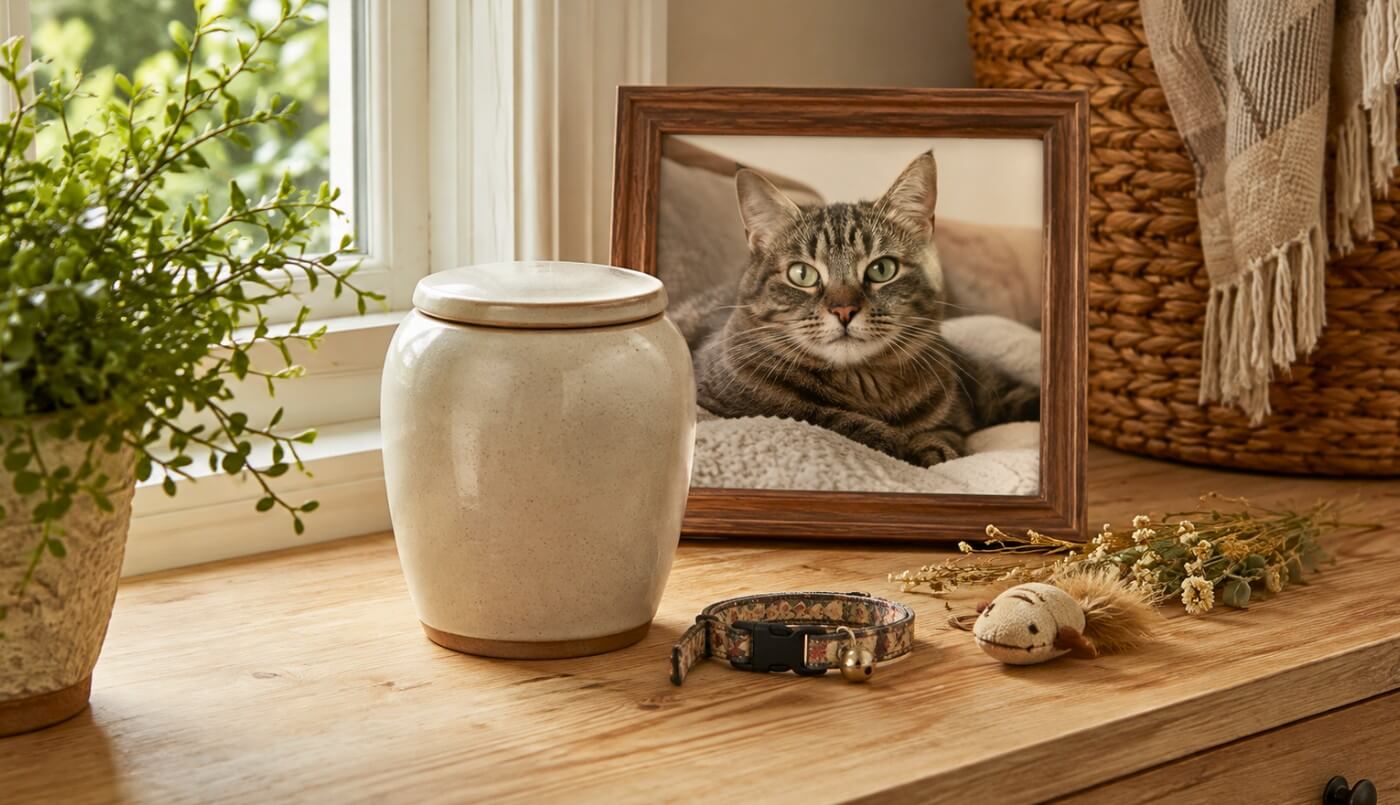
What to Do With Your Cat’s Ashes: Gentle and Meaningful Options
Bringing your cat’s ashes home can be a very emotional moment.
The container may be much smaller than you expected.
You might place it carefully on a shelf, then find yourself looking toward it every time you walk into the room.
Perhaps you feel comforted that your cat is home again.
And perhaps the sight of the box makes their death feel painfully real.
You may feel both things at once.
Receiving your cat’s ashes can bring a fresh wave of grief, even if you knew they were coming.
It can also leave you facing a decision you may not feel ready to make: what are you supposed to do with them now?
There’s no single correct answer.
You can keep your cat’s ashes in the container provided by the crematorium, choose a special urn, scatter or bury them, divide them between meaningful places, or incorporate a small amount into a keepsake.
You can also do nothing for now.
Your cat’s ashes don’t need an immediate destination.
You’re allowed to take your time and choose whatever feels most comforting, manageable, and true to the relationship you shared.
The Short Answer
There’s no single right thing to do with your cat’s ashes. You can keep your cat’s ashes at home, place them in an urn or memory box, scatter or bury them somewhere meaningful, divide them between family members, or use a small amount in jewelry, glass art, or another memorial. You don’t have to decide immediately, and you don’t have to choose the option anyone else expects. The right choice is the one that brings you the most comfort.
When Your Cat’s Ashes Come Home
You may feel relieved when your cat’s ashes are returned.
After the unfamiliarity of the vet clinic or crematorium, it may feel as though your cat has finally come home.
Having the ashes nearby can offer a physical point of connection when so much else feels painfully absent.
Or you may find receiving the ashes deeply upsetting.
The container can feel impossibly small for the lively, warm, opinionated cat you loved.
You may understand intellectually that these are your cat’s cremated remains, while emotionally struggling to connect them with the cat who slept on your bed, waited outside the bathroom, and appeared the moment a food packet was opened.
You might cry as soon as you see the container.
You might feel numb.
You might put it somewhere safe and avoid opening the cupboard for weeks.
None of these responses means you’re not grieving in the right way.
Grief often changes shape when something tangible arrives.
The return of the ashes can make the loss feel final in a way that the previous days didn’t.
This can be especially difficult if you are already struggling with guilt after your cat’s euthanasia or wondering whether you made the right decisions at the end of their life.
You don’t need to make another important decision right away.
When you’re ready, there are many gentle and meaningful things you can do with your cat’s ashes.
Some involve keeping them close, while others create a memorial, return them to a special place, or simply leave them exactly as they are.
Here are some of the options you may want to consider.
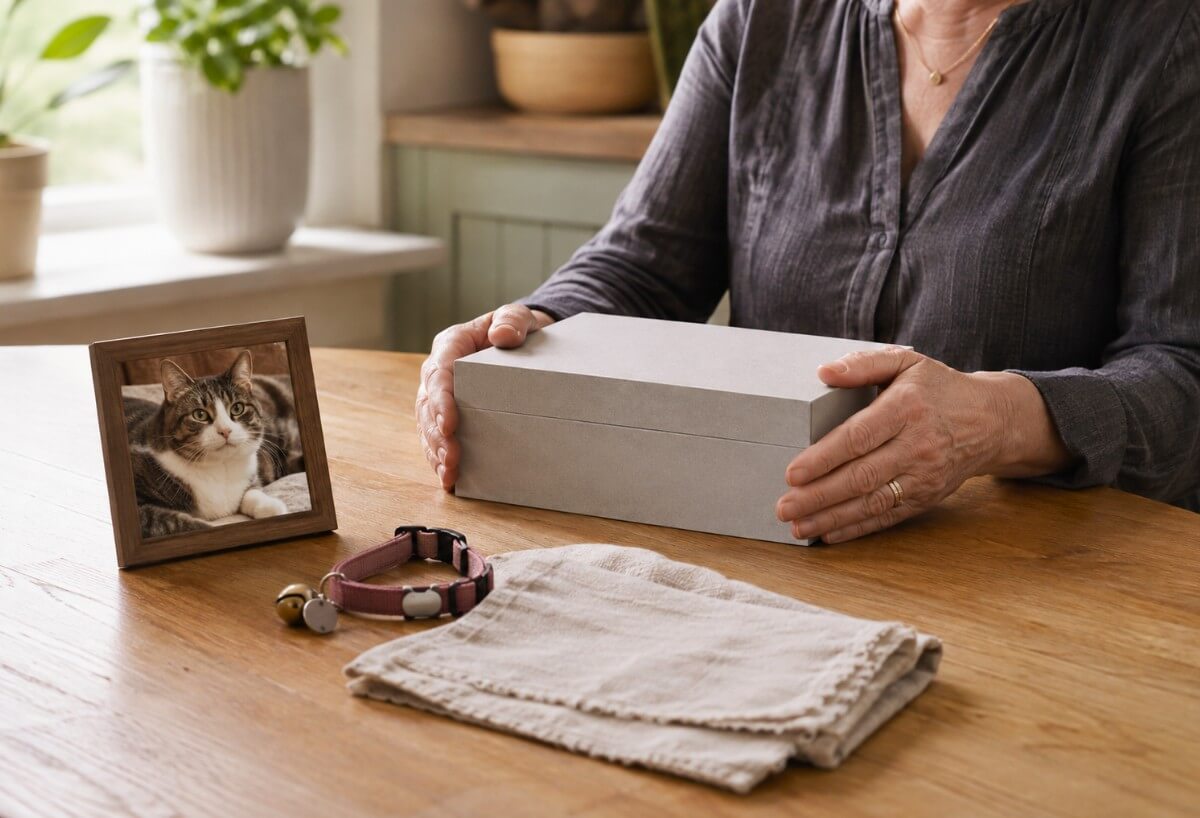
1. Keep the Ashes in Their Original Container
You don’t have to transfer the ashes into a decorative urn.
Pet crematoriums usually return ashes in a sealed bag placed inside a box, tin, scatter tube, pouch, or other basic container.
That original container can remain their permanent home if it feels right to you.
It doesn’t mean you loved your cat any less because you haven’t bought an elaborate urn.
You might place the container:
- In a safe cupboard or drawer
- On a bookshelf
- Inside a memory box
- Beside your cat’s photograph
- In the room where your cat spent the most time, or
- Somewhere private that only you know about.
Some people want the ashes visible.
Others feel more comfortable knowing they’re safely nearby but not constantly in view.
Both choices are loving choices.
If the original packaging looks temporary or upsetting, you can place the whole container inside a decorative wooden box, fabric-covered box, ceramic vessel, or basket without disturbing the ashes themselves.
2. Choose an Urn That Feels Like Your Cat
An urn doesn’t need to look solemn or formal.
It can reflect your cat’s personality, your home, or the memories you want to preserve.
You might choose something simple and understated rather than an urn that immediately announces what it contains.
Options include:
- A ceramic urn in a color that reminds you of your cat
- A small wooden box
- A hand-thrown pottery vessel
- A photo urn
- A carved stone container
- A discreet metal urn
- A custom urn made by a local artist, or
- A small container decorated with your cat’s name or likeness.
You don’t have to choose an urn shaped like a cat.
Some people find those comforting, while others find them too literal.
Think about where the urn will be kept and whether you want it to blend naturally into the room or become a visible memorial.
Before ordering, check the dimensions and capacity carefully.
Product photographs can make an urn appear much larger or smaller than it really is.
If you are not ready to shop for one, wait.
Your cat’s ashes will remain safe in their original sealed container while you decide.
3. Create a Small Remembrance Space
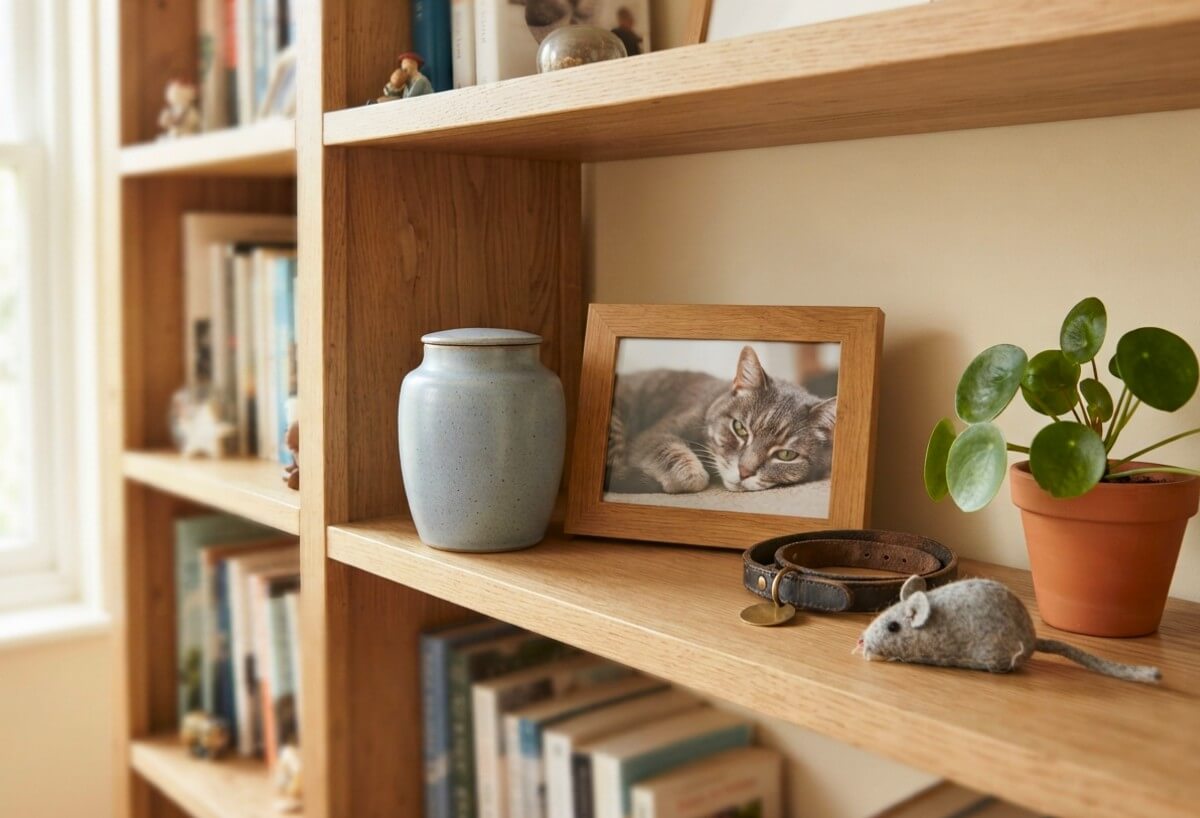
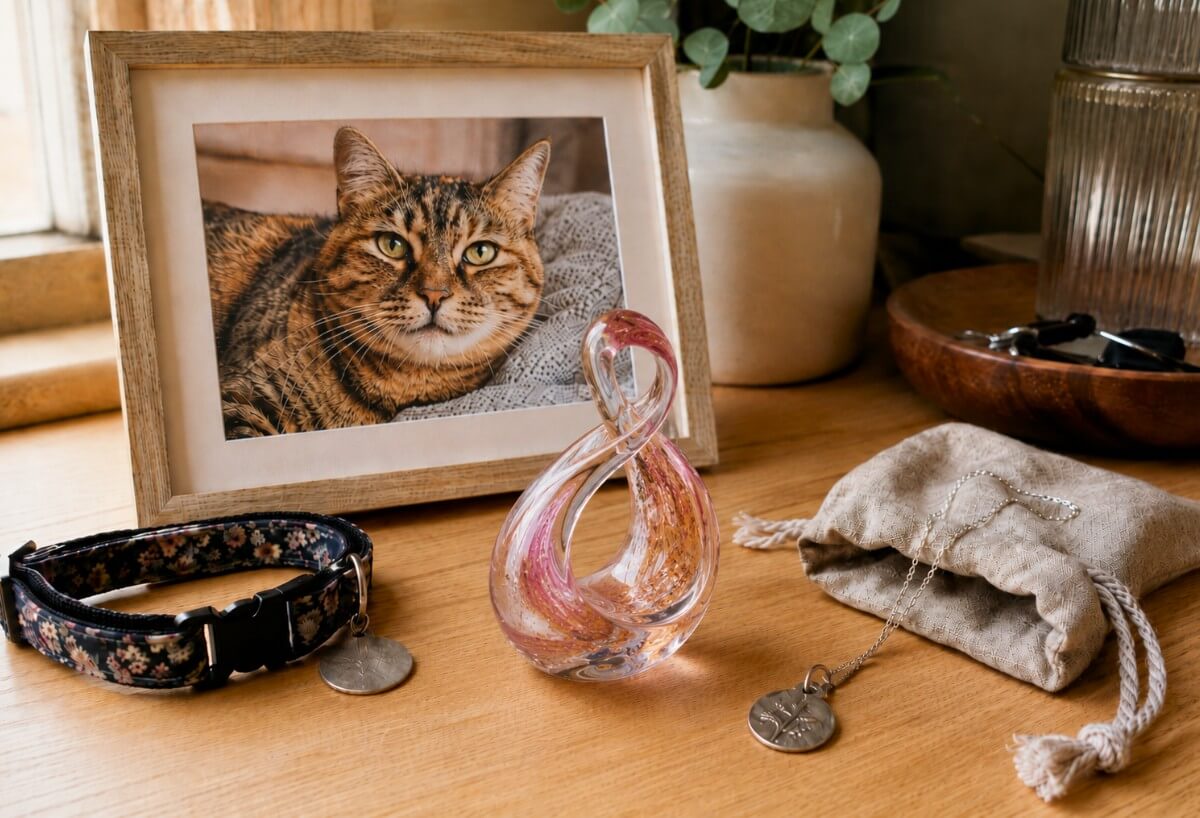
A remembrance space can be as simple as one photograph beside the urn.
It doesn’t need to become a formal shrine or dominate the room.
In fact, a small collection of ordinary things often feels more personal than an elaborate memorial arrangement.
You might include:
- Your favorite photograph of your cat
- Their collar or identification tag
- A paw print
- A clipping of fur
- Their favorite small toy
- A sympathy card
- A note or letter you wrote to them
- A small plant
- A piece of fabric from a favorite blanket, or
- A tiny dish that once belonged to them.
Choose items that make you feel connected to your cat rather than objects you believe a memorial is supposed to contain.
You may also find that you want to change the arrangement over time.
Something that feels too painful to display now may become comforting later.
After a cat dies, familiar rooms can feel strangely altered.
Creating one intentional place for their ashes and keepsakes may help when the house feels unbearably empty without them.
4. Place the Ashes Inside a Memory Box
A memory box gives you one protected place to keep your cat’s ashes and other belongings together.
This can be helpful if you don’t want the ashes on display or if seeing them every day feels too intense.
The ashes can remain sealed in their original container and be placed inside the box alongside photographs, veterinary records, sympathy cards, fur clippings, paw prints, or small belongings.
You might also add memories that cannot be physically preserved:
- A written description of your cat’s personality
- A list of their peculiar habits
- The nicknames you used
- Stories you are afraid you might forget
- The sound they made when they wanted food
- Where they slept
- The way they greeted you, or
- The things that made them unmistakably themselves.
Those small details can become precious as time passes.
A memory box can be opened whenever you want to feel close to your cat and kept safely closed when you need a little distance from the grief.
5. Divide the Ashes
It’s usually possible to divide cremated ashes between several smaller containers.
You might choose this option when:
- More than one person loved and cared for the cat
- Family members live in different homes
- You want to keep some ashes and scatter the rest
- You want to use a small amount in jewelry or artwork
- Your cat had more than one especially meaningful place, or
- You want one memorial at home and another in the garden.
Dividing ashes doesn’t divide your cat or diminish the meaning of what remains.
Your relationship with your cat was never contained in one physical object.
Keeping a small portion can feel just as meaningful as keeping all of the ashes together.
You may be able to ask the crematorium, funeral provider, vet or memorial artist to divide and transfer them for you.
This can be easier emotionally than doing it yourself.
If you do divide the ashes at home, work slowly in a still, private space without open windows, fans, children, or other pets moving around.
Keep each portion in a properly sealed inner bag or suitable container.
You’re also allowed to decide that you don’t want the ashes separated.
This is a personal preference rather than a rule.
6. Scatter the Ashes Somewhere Meaningful
Scattering ashes can feel like returning your cat to a place connected with freedom, warmth, safety, or love.
That place might be:
- Your own garden
- A peaceful area of family land
- Near a favorite sunny spot
- Beneath a tree
- At a family property where your cat once lived, or
- Somewhere that holds special meaning for you, even if your cat never visited it.
Indoor cats may not have had a favorite beach, forest, or mountain.
You don’t need to invent an adventurous outdoor life for them after death.
A place can be meaningful because of what it represents to you.
Before scattering ashes, consider whether you might later wish you had kept a small portion.
Once ashes have been released, they cannot be gathered again in any complete way.
You could scatter only some and retain the rest at home.
It may also help to choose a quiet day, check the wind direction, and use a purpose-made scattering tube rather than trying to pour ashes directly from a bag.
Some families say a few words, play a piece of music, share a story, or simply stand together quietly.
Check local rules before scattering ashes in a public park, protected natural area, cemetery, waterway, or on land that doesn’t belong to you.
Obtain the owner’s permission before using private property.
The moment does not have to be cinematic or perfect.
It only needs to feel respectful and right for you.

7. Bury the Ashes
Some people prefer burial because it creates a permanent physical place they can return to.
You might bury the ashes:
- In your garden
- Beneath a tree or flowering plant
- Near a favorite window or outdoor resting place
- At a pet cemetery, or
- On family land where you expect the memorial can remain undisturbed.
You can bury the ashes in their existing container, transfer them to a biodegradable urn, or use another sealed vessel suitable for burial.
Before choosing a location, think about the future.
You may eventually move house.
The land may be sold.
Gardens are redesigned, trees are removed, and access to family property can change.
That doesn’t mean you shouldn’t bury the ashes.
It simply helps to ask whether leaving them permanently in that place will feel peaceful or whether it may create another difficult decision later.
Check local requirements before burying ashes outside your own property or using a pet cemetery.
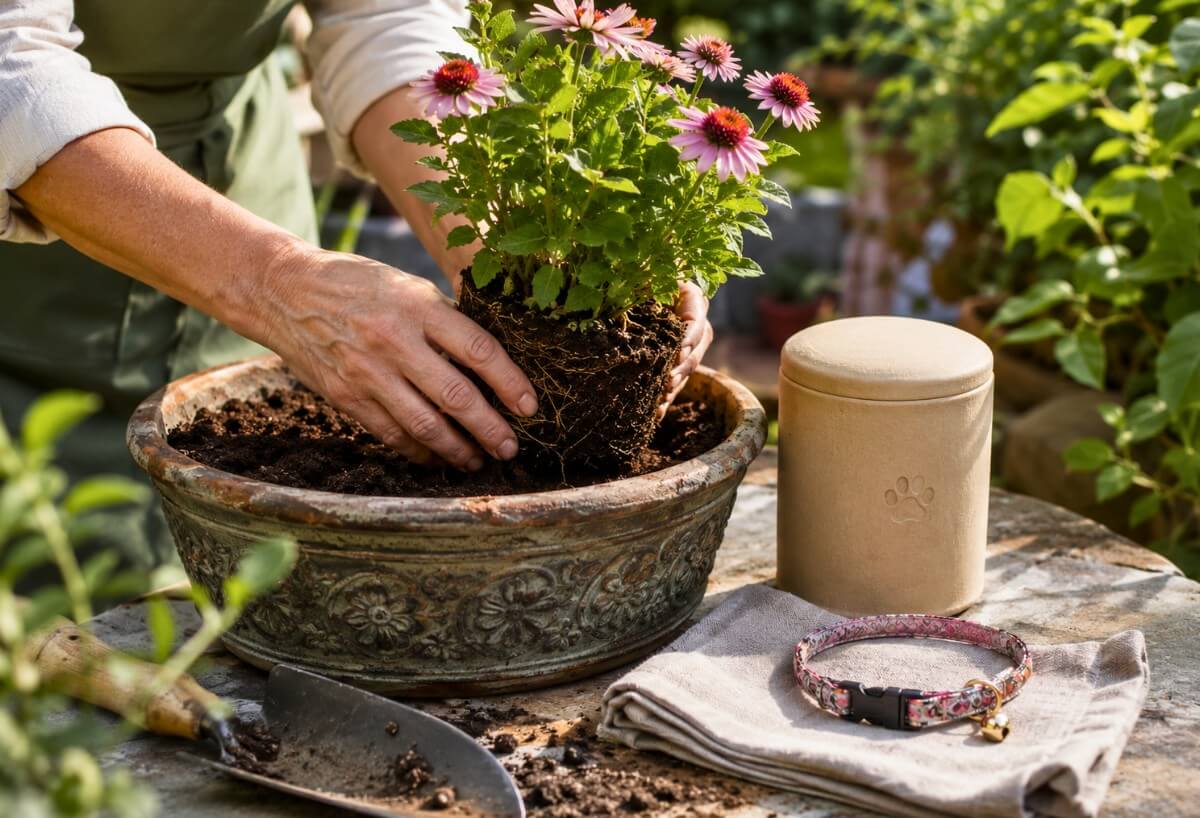
8. Create a Memorial Garden or Planter
A plant can provide a living focus for remembrance.
You might plant:
- A flowering perennial
- A rose
- Lavender
- A small ornamental tree
- Catmint
- A native plant that attracts birds or butterflies, or
- A plant that flowers near your cat’s birthday or adoption anniversary.
Your cat’s ashes can be buried in a sealed biodegradable urn beneath or near the planting.
Purpose-designed memorial planting products may also combine cremated remains with a suitable growing medium.
Avoid assuming that ashes should simply be poured directly around the roots of a delicate plant.
Ask the plant-urn provider or a knowledgeable nursery how the ashes and soil should be prepared.
If you rent, expect to move, or don’t have a garden, choose a large portable planter.
You can take it with you rather than leaving the memorial behind.
The plant doesn’t have to thrive forever for the memorial to have mattered.
Plants are living things, and sometimes they struggle despite careful attention.
Losing a memorial plant is not losing your cat again.
9. Use a Small Amount in Memorial Jewelry
Memorial jewelry allows you to keep a tiny portion of your cat’s ashes close to you.
Options include:
- A pendant with a sealed inner chamber
- A ring containing cremation glass or resin
- A bracelet charm
- A locket
- A small bead
- A piece made in your cat’s birthstone color, or
- A design incorporating a whisker, fur, or paw-print impression.
Some jewelry contains the ashes inside a secure compartment.
Other pieces use a small amount of the ashes within glass, resin, ceramic, or another material.
Check how the ashes will be handled, whether unused remains will be returned, and how securely the finished piece is sealed.
It’s also worth considering whether wearing the ashes will feel comforting to you.
Some people love the sense of closeness.
Others feel anxious about losing or damaging the jewelry.
If that concern would prevent you from enjoying the piece, you could keep it in a jewelry box and wear it only on meaningful occasions.
10. Commission Glass, Ceramic, Resin, or Stone Art
A memorial artist may be able to incorporate a small amount of your cat’s ashes into a decorative object.
Possible options include:
- A handblown glass orb
- A glass heart
- A paperweight
- A ceramic vessel
- A resin ornament
- A small memorial stone
- A sun catcher, or
- A custom sculpture.
These pieces can be displayed without looking like a conventional urn.
Ask the artist how much ash is required, how it will appear in the finished work, and what happens to any portion that’s not used.
Because ashes can vary in color and texture, the result may not look exactly like an online example.
A reputable artist should explain what’s realistically possible rather than promising a perfectly controlled pattern.
Look closely at the artist’s previous work and independent reviews before sending any ashes. You may want to begin with only a very small amount.
11. Keep a Small Portion in a Travel Urn or Keepsake
A miniature urn can be useful when your life is spread between more than one home or place.
You might keep a small portion:
- In a bedside drawer
- At a second home
- In a private keepsake box
- With a family member
- In a small travel memorial, or
- Somewhere associated with an important period of your life together.
You don’t need to carry ashes everywhere you go for your cat to remain part of your life.
However, some people find comfort in bringing a small keepsake when they move house, travel for a long period, or return to a place connected with their cat.
Choose a securely sealed container and store it carefully.
Avoid leaving it permanently in a vehicle, loose inside luggage, or anywhere it could be mistaken for an ordinary container.
If traveling by air or across an international border, check the relevant transport and customs requirements before packing cremated remains.
12. Make a Plan for the Future
You may want your cat’s ashes to remain with you during your lifetime and be scattered, buried, or placed somewhere else later.
Some people hope that their pets’ ashes will eventually be:
- Scattered together in one place
- Buried alongside them where permitted
- Entrusted to a family member
- Added to a shared memorial for several pets
- Returned to a former home or family property, or
- Kept by the person who inherits their home and belongings.
Write down what you would like to happen.
A brief note stored with your important documents can prevent confusion later.
Tell someone you trust where the ashes are kept and whether you have strong preferences about their eventual care.
Local cemetery, burial, transport, and cremation rules vary, so any future arrangement may need to be confirmed when the time comes.
What If You Have More Than One Cat’s Ashes?
It’s common to keep the ashes of several cats over the course of a lifetime.
You may display each cat’s ashes separately, place their individual containers inside one larger memorial box, or eventually scatter or bury them together.
There’s no need for every cat to be memorialized in exactly the same way.
One cat may have a decorative urn while another remains in the original box.
One set of ashes may be scattered while another stays at home.
These differences don’t measure how deeply each cat was loved.
The choice often reflects your circumstances and emotional needs at the time of each loss.
Label every container clearly, even if you believe you will always remember which is which.
Grief, house moves, repacking, and the passing of time can make unmarked containers difficult to identify later.
What If Family Members Disagree?
Ashes can carry different meanings for different people.
One family member may want to scatter them immediately.
Another may feel distressed at the idea of letting them go.
Someone else may want a permanent urn or a piece of jewelry.
Try to discuss what each person is hoping the decision will provide.
Is it closeness? A place to visit? A way to say goodbye?
A fear that scattering means losing the cat again?
A combination may be possible.
You could keep most of the ashes together while using small portions for individual keepsakes or scattering a symbolic amount.
Avoid making an irreversible decision during a tense conversation.
The ashes can remain safely where they are until everyone has had time to think.
What If the Ashes Don’t Feel Like Your Cat?
You may look at the container and feel no connection to it at all.
That’s okay.
Your cat was their warmth, habits, voice, expressions, trust, and daily presence.
It can be difficult to feel that any of this is represented by a small sealed bag or box.
You don’t have to keep the ashes close to prove your love.
You may decide to scatter or bury them because the physical remains don’t bring comfort. You may keep them safely stored without displaying them.
You may ask another family member to care for them.
Your bond with your cat doesn’t depend on what you do with their ashes.
Their place in your life was created through the ordinary days you shared, which is part of why losing a cat can hurt so much.
Questions to Ask Before Making a Decision
When you feel ready, it may help to ask yourself:
- Do I want the ashes somewhere I can see them?
- Would a private location feel more comforting?
- Do I expect to move house in the future?
- Would I regret scattering all of the ashes?
- Is there anyone else who would like a small portion?
- Does jewelry feel comforting or stressful?
- Do I want a place I can visit?
- Would I prefer a memorial that does not obviously contain ashes?
- Am I making this choice because it feels right to me or because I think I should?
- Could I make a temporary decision now and revisit it later?
You may not know all the answers.
Sometimes you discover what feels right only after living with the ashes for a while.
You Don’t Have to Decide Today
Your cat spent their life becoming part of yours.
They lived in the sounds of your home, the shape of your routines, the places you automatically looked, and the tiny decisions you made around them every day.
No urn, garden, scattering place, or keepsake could contain all of that.
The ashes are one physical reminder of your cat, but they are not the whole of your relationship.
Keep them close if that comforts you.
Put them somewhere private if seeing them is too painful.
Scatter them, bury them, divide them, turn a small amount into something beautiful, or leave the decision for another day.
You don’t need to find a perfect option.
You only need to find the one that feels gentle enough for you.
Frequently Asked Questions
Is it okay to keep my cat’s ashes at home?
Yes.
Many people keep their cat’s ashes at home permanently.
They may be displayed in an urn, placed inside a memory box, or stored somewhere private and secure.
Keeping ashes at home is not unhealthy or inappropriate.
Choose a dry, protected location where the container is unlikely to be knocked over, damaged, or mistaken for something else.
How long can I keep my cat’s ashes?
Cremated ashes can be kept indefinitely when they are stored in a properly sealed container in a dry, secure place.
There’s no emotional deadline either.
You can keep them for weeks, years, or for the rest of your life.
Can I divide my cat’s ashes?
Yes.
Your cat’s ashes can usually be divided between smaller urns, keepsakes, jewelry, memorial art, or different family members.
A crematorium or memorial provider may be able to transfer them for you if you don’t feel comfortable handling the ashes yourself.
Can I scatter my cat’s ashes anywhere?
Not necessarily.
Rules can vary depending on the country, state, council, park, cemetery, waterway, or landowner.
Check local requirements and obtain permission before scattering on private land that is not yours or in public and protected places.
Can I bury my cat’s ashes in the garden?
You may be able to bury ashes on your own property, subject to local rules.
Consider using a sealed or biodegradable urn rather than placing loose ashes directly around plant roots.
Think about whether you are likely to move and how you would feel about leaving the burial place behind.
Do I need to buy an urn?
No.
The original cremation container may be kept permanently, placed inside another box, or stored safely until you decide whether you want an urn.
The cost or appearance of the container has no relationship to how much you loved your cat.
What should I do if I cannot bear to look at the ashes?
Place them somewhere secure but out of sight, or ask a trusted person to keep them temporarily.
You don’t have to display the ashes, open the container, or decide what to do with them before you feel ready.
Is it wrong if I don’t want to keep my cat’s ashes?
No.
Some people feel comforted by ashes, while others do not feel that the remains represent the cat they knew and loved.
Scattering, burying, or entrusting the ashes to someone else does not mean you are abandoning or forgetting your cat.
Should I open the container?
You don’t need to open it.
If you want to transfer or divide the ashes, you can ask the crematorium or another experienced memorial provider to help.
Keeping the internal bag sealed reduces the risk of spills and protects the ashes from moisture.
Deciding what to do with your cat’s ashes can feel surprisingly difficult, especially when no option seems large enough to represent the life you shared.
You’re welcome to share what you chose, what you’re still considering, or simply leave your cat’s name here. There is no deadline and no single right way to remember them.