
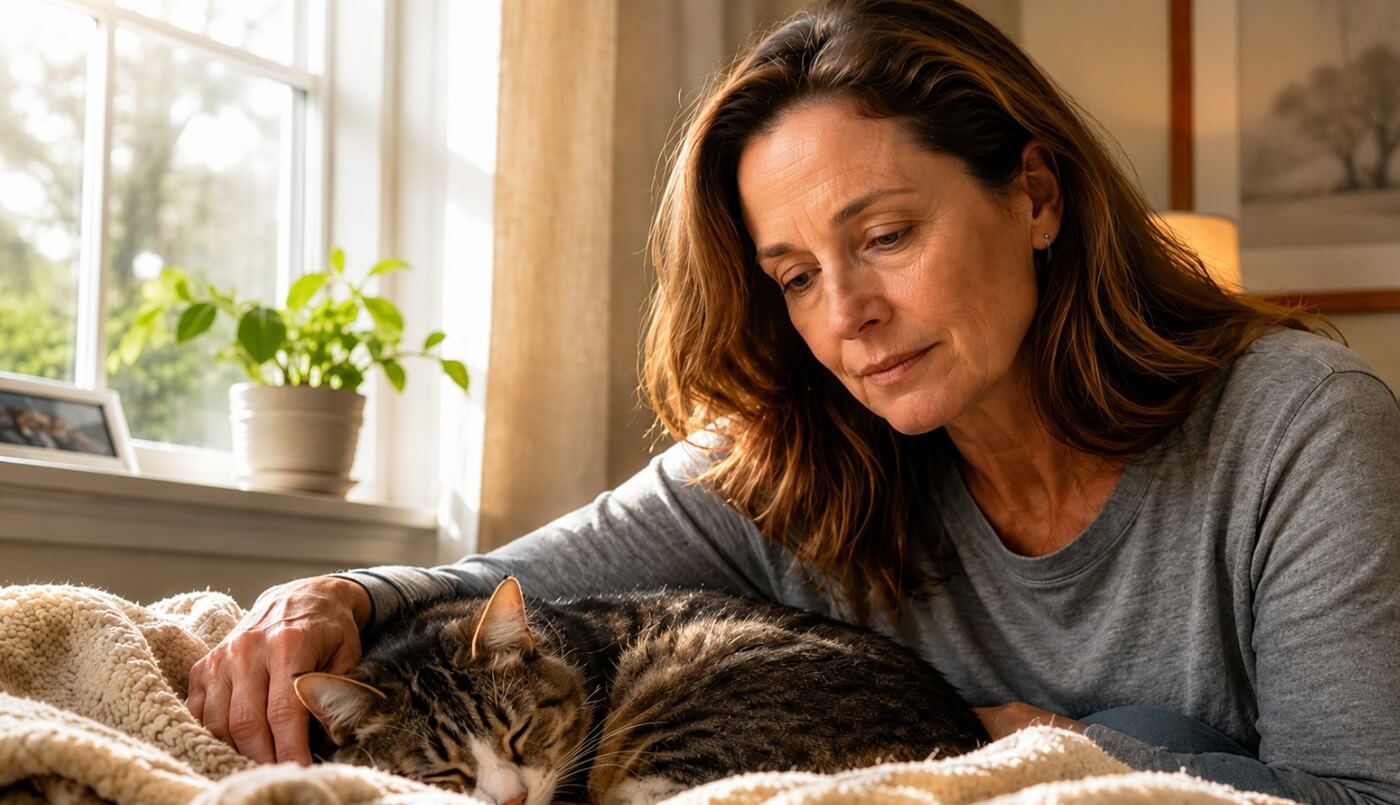
How Do You Know When It’s Time to Euthanize a Cat?
There are some questions you hope you’ll never have to ask.
This is one of them.
How do you know when it’s time to euthanize a cat?
Not when your cat is old.
Not when your cat is inconvenient to care for.
Not when you’re tired, frightened, or overwhelmed.
But when the kindest thing may no longer be more time.
That question can feel unbearable because cats trust us completely.
They don’t sit us down and explain what they want.
They don’t tell us whether they’re ready.
They often hide pain, keep quiet, and continue doing tiny normal things long after something serious has changed.
So we’re left watching.
Counting meals.
Studying their breathing.
Noticing whether they still enjoy being touched.
Wondering whether we’re acting too soon, too late, or from the wrong place entirely.
The short answer
You may know it’s time to euthanize a cat when your cat’s pain, distress, weakness, or loss of quality of life can no longer be managed well, and when the bad days are becoming more frequent than the good ones. This decision should always be made with veterinary guidance, but common signs include ongoing pain, difficulty breathing, repeated refusal to eat or drink, inability to use the litter box, hiding, withdrawal, confusion, collapse, or no longer enjoying the things that once gave your cat comfort. Euthanasia isn’t about giving up on your cat. When suffering can’t be eased, it can be one final act of protection.
This isn’t a decision anyone makes lightly.
If you’re reading this with a sick cat nearby, or with a vet appointment coming, I’m so sorry.
You’re probably not looking for a cold checklist.
You’re looking for something steadier than panic.
So let’s walk through it gently.
First, this decision shouldn’t rest on you alone
You may be the person who knows your cat best.
You know their normal.
You know their little routines.
You know the way they usually eat, sleep, complain, greet you, avoid you, forgive you, demand things, and quietly take over the house.
But euthanasia decisions shouldn’t be carried by instinct alone.
A vet can help you understand what’s happening medically, whether your cat’s pain can be managed, whether there are realistic treatment options, and whether your cat is likely to improve or decline.
That matters.
Sometimes what looks terrifying can be treated.
Sometimes what looks manageable is actually a sign of serious suffering.
And sometimes the kindest thing a vet can do is gently confirm what your heart already suspects.
You don’t have to walk into this decision pretending to be calm and certain.
You can ask your vet directly:
“Is my cat suffering?”
“Can this be managed?”
“What would improvement realistically look like?”
“Are we buying good time, or only more time?”
“If this were your cat, what would you be thinking about?”
That last question can be hard to ask.
But it can also open the door to the honest conversation you need.

Why it’s so hard to know when it’s time
One of the cruelest parts of loving a cat is that the end isn’t always obvious.
Some cats decline slowly.
Some rally for a day and make you question everything.
Some still purr.
Some still eat a little.
Some still look at you with the same familiar face, even when their body is failing.
And because we love them, we look for signs that mean, “Not yet.”
A mouthful of food.
A walk to the sunny patch.
A small purr.
One familiar stretch.
One normal-looking moment can undo a whole week of fear.
That doesn’t mean you’re foolish.
It means you love your cat.
But when you’re trying to judge quality of life, it helps to look at the whole pattern, not one beautiful moment.
Look at the pattern, not just the good moments
A good moment is precious.
It may be real.
But one good moment doesn’t always mean your cat is having a good life.
Try to look at the day as a whole.
Then the week.
Then the trend.
Is your cat mostly comfortable?
Or mostly enduring?
Are they still having ordinary cat pleasures?
Or are they only surviving between episodes of pain, fear, nausea, weakness, or exhaustion?
This is where many people find the “good days and bad days” question helpful.
If your cat still has more good days than bad, and their symptoms can be managed, it may not be time yet.
If the bad days are becoming more frequent, more intense, or harder to recover from, the question may be changing.
Not “Can my cat keep going?”
But “Should my cat have to?”

Signs your cat’s quality of life may be declining
Every cat is different, and no single sign automatically means it’s time.
But these signs are worth taking seriously, especially when several are happening together.
Your cat is in pain that can’t be controlled
Pain in cats can be subtle.
They may not cry out.
They may hide, hunch, stop grooming, avoid being touched, growl, flinch, breathe differently, or simply seem less like themselves.
Some cats become quiet.
Some become irritable.
Some withdraw from everyone.
If your cat is in ongoing pain and medication is no longer helping enough, this is one of the clearest quality-of-life concerns.
Pain doesn’t have to be dramatic to matter.
Your cat is struggling to breathe
Breathing difficulty is serious.
A cat who is open-mouth breathing, gasping, panting at rest, using their whole body to breathe, or unable to settle comfortably needs urgent veterinary help.
This isn’t something to “watch for a few more days.”
Breathing distress can be frightening for the cat, and it can change the euthanasia conversation very quickly.
Your cat has stopped eating or drinking
A cat refusing food once may not mean the end.
But repeated refusal to eat or drink, especially in a cat who is already very ill, weak, nauseous, or losing weight, is a serious sign.
You may find yourself offering every favorite food.
Chicken.
Tuna.
Treats.
Warm food.
Food that you gently offer by hand.
Food at 2 a.m. because maybe this time they’ll take it.
That stage is emotionally brutal.
It’s also a sign that the body may be struggling in a deeper way.
The important question isn’t only, “Can I get my cat to eat something?”
It’s also, “Does my cat still want to eat and enjoy food?”
There’s a difference.
Your cat can no longer move comfortably
Mobility matters because cats need to reach food, water, resting places, and the litter box.
A cat who’s stiff but comfortable may still have good quality of life.
A cat who’s collapsing, unable to stand, dragging themselves, crying when moved, or unable to get to basic needs may be suffering.
This can be especially hard when the mind still seems present.
You may think, “But they’re still in there.”
And they may be.
But the body they’re trapped in matters too.
Your cat can’t use the litter box or stay clean
Accidents alone don’t mean a cat should be euthanized.
There may be treatable causes.
There may be practical changes that help, like lower-sided trays, puppy pads, pain relief, better placement, or easier access.
But if your cat can no longer toilet comfortably, is lying in urine or feces, seems distressed by being soiled, or can’t be kept clean without repeated stress, this becomes a quality-of-life issue.
Cats are clean animals.
Loss of hygiene can be physically uncomfortable and emotionally distressing for them.
Your cat has withdrawn from life
Some cats become less social as they age or become ill.
That alone doesn’t mean it’s time.
But pay attention if your cat no longer seems interested in anything that once mattered.
No favorite spot.
No response to your voice.
No interest in touch.
No curiosity.
No comfort.
No pleasure.
No peaceful rest.
Just hiding, enduring, or waiting.
Withdrawal can be one of the hardest signs to interpret because cats often retreat when unwell.
But if your cat seems to have left ordinary life behind, that deserves attention.
Your cat is confused, frightened, or distressed
Some end-of-life conditions can cause confusion, agitation, seizures, pacing, crying, or distress.
A cat who can’t settle, seems frightened, or is no longer able to feel safe in their own home may be suffering even if they’re not showing obvious physical pain.
Quality of life isn’t only about the body.
Fear matters too.
Distress matters.
The ability to rest matters.
A simple quality-of-life check for your cat
You don’t have to make this complicated.
You can sit quietly and ask:
Is my cat in pain?
Can the pain be managed?
Is the medication working?
Is my cat comfortable between doses, or only briefly?
Is my cat eating and drinking willingly?
Not just accepting a tiny bit because I keep trying.
Actually wanting food.
Showing interest.
Swallowing comfortably.
Keeping food down.
Can my cat rest peacefully?
Can they sleep?
Can they settle?
Or are they pacing, crying, hiding, breathing hard, or constantly shifting position?
Can my cat move enough to meet basic needs?
Can they reach food, water, litter, and a comfortable resting place?
Can they move without fear or obvious pain?
Can my cat stay clean and comfortable?
Are they grooming?
Can I help them gently?
Or are they soiling themselves, lying in mess, or becoming distressed by handling?
Does my cat still enjoy anything?
Sun.
Food.
Touch.
A favorite person.
A blanket.
A window.
A familiar voice.
A gentle brush.
A cat doesn’t need a long list of joys.
But there should ideally still be some comfort, some ease, some little reason to stay.
Are there more good days than bad days?
This isn’t a perfect test.
But it can help.
If bad days now outweigh good days, and your cat’s condition isn’t expected to improve, it may be time to talk seriously with your vet about euthanasia.
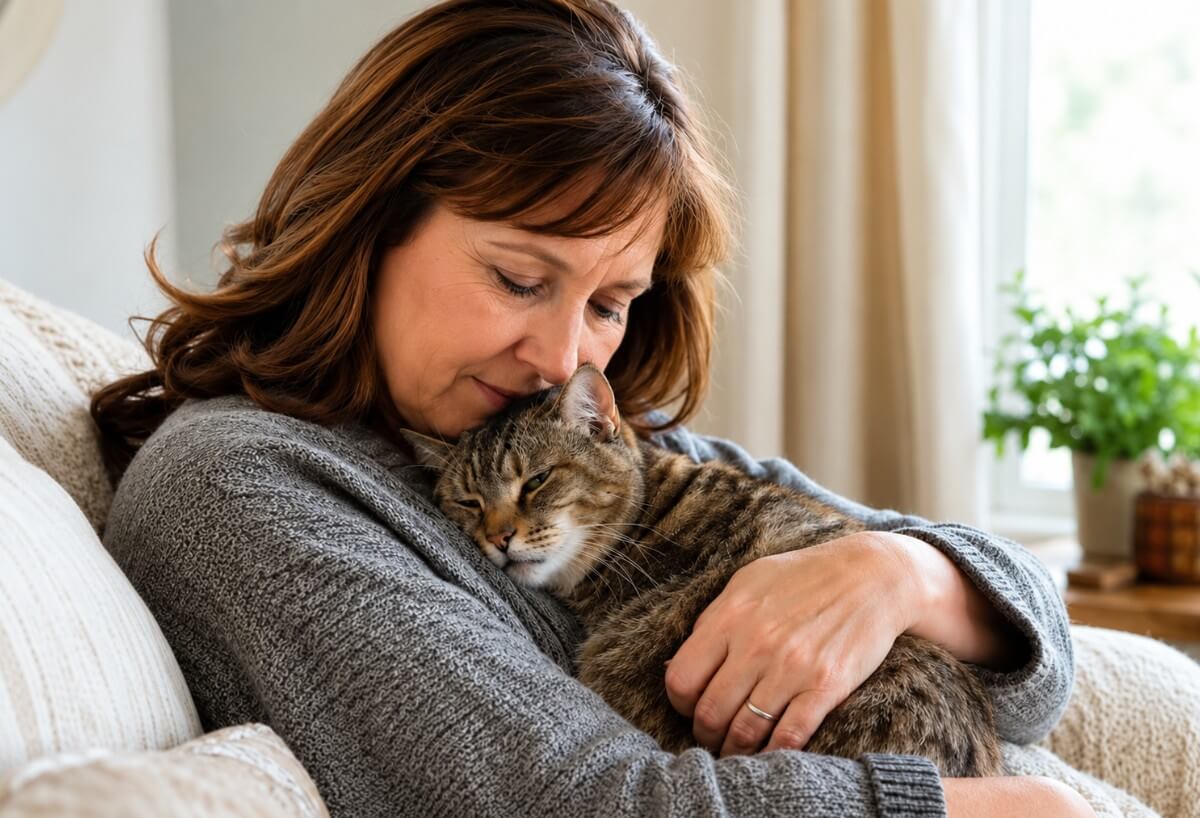
What if your cat still purrs?
This one breaks people.
Because purring feels like proof.
Proof they’re happy.
Proof they’re okay.
Proof they’re not ready.
Sometimes that’s true.
Cats do purr when they’re content.
But cats may also purr when they’re frightened, unwell, injured, or trying to comfort themselves.
So purring should be noticed, but not used as the only sign.
Ask what comes with the purr.
Is your cat relaxed?
Comfortable?
Settled?
Enjoying touch?
Breathing easily?
Able to rest afterward?
Or are they purring while hunched, hiding, refusing food, struggling to breathe, or unable to move?
A purr can be beautiful.
But it doesn’t cancel out suffering.
What if your cat still has good days?
Good days matter.
They’re not meaningless.
If your cat is still having regular comfortable days, enjoying food, resting peacefully, seeking affection, and responding to care, your vet may help you make a plan for ongoing support.
But when good days become rare, or when a good day is followed by several bad ones, it may be time to ask whether you’re seeing a temporary rally rather than true recovery.
A rally can feel like a miracle.
Sometimes it gives you one more precious day.
Sometimes it gives you the chance to say goodbye more consciously.
But it can also make the decision feel impossible.
This is why looking at the overall pattern helps.
Not because grief needs a spreadsheet.
But because love under stress can forget the week and cling to one good hour.
What if you’re scared of choosing too soon or too late?
Almost everyone is.
That fear is normal.
It comes from love.
You may worry that one more treatment could have helped.
One more day might have been good.
One more sign might have appeared.
One more version of your cat might have come back.
You may also worry that you’re waiting too long.
That your cat is suffering because you can’t bear to say goodbye.
That you’ll look back and think, “I should have known.”
These fears are brutal.
And they’re very common.
The truth is, there’s often no perfect moment.
There’s usually a window.
Too early sits on one side.
Too late sits on the other.
And somewhere inside that heartbreaking window is the kindest decision you can make with the information you have.
If your cat is suffering and there’s no realistic path back to comfort, choosing euthanasia slightly before a crisis may be kinder than waiting until panic, collapse, or severe distress forces the decision.
That isn’t giving up.
It’s protecting them from the worst part.
What to ask your vet before deciding
If you’re unsure, here are questions that can help:
“Is my cat in pain?”
And if yes:
“Can that pain be controlled well enough?”
“Is my cat likely to improve?”
Not just survive.
Improve.
“What happens next if we don’t euthanize?”
This can be a hard question, but it’s important.
Ask what decline may look like.
Ask what symptoms might worsen.
Ask what an emergency could involve.
“Are we in the final stage?”
Sometimes hearing this clearly helps.
“Would palliative care help?”
Palliative care is comfort-focused care.
It may include pain relief, nausea control, appetite support, fluids, environmental changes, or other comfort measures.
For some cats, it can provide meaningful quality time.
For others, it may not be enough.
“What signs would mean we shouldn’t wait?”
This is one of the most useful questions.
Ask your vet what specific signs would mean your cat needs urgent help or that euthanasia shouldn’t be delayed.
Write them down if you need to.
Grief makes details slippery.

What if your cat has a terminal illness?
A terminal diagnosis doesn’t always mean euthanasia needs to happen immediately.
Some cats have good time after diagnosis.
They may still eat, rest, seek affection, enjoy familiar routines, and respond to comfort care.
But a terminal diagnosis does mean the question may become less about cure and more about comfort.
You may need to ask:
“What are we hoping this treatment gives my cat?”
“Are we treating the illness, or easing symptoms?”
“Is this helping my cat feel better, or only helping me feel like I’m doing something?”
That last question is painfully honest.
And it’s one many loving people eventually face.
Treatment isn’t wrong.
Hope isn’t wrong.
Trying isn’t wrong.
But when treatment becomes stressful, painful, frightening, or unlikely to give your cat real comfort, it may be time to reconsider the goal.
The goal may shift from fighting for more time to protecting the time that remains.
What if your cat is old but not clearly dying?
Old age alone isn’t a reason to euthanize a cat.
Many elderly cats still have good quality of life.
They may move more slowly, sleep more, need medication, need help grooming, or prefer a quieter world.
That can still be a life worth living.
The question isn’t, “Is my cat old?”
The questions are:
“Is my cat comfortable?”
“Is my cat coping?”
“Can my cat still enjoy being a cat in some way?”
“Are their needs manageable without causing them ongoing distress?”
An old cat who sleeps in the sun, eats with interest, uses the litter box, enjoys gentle contact, and rests peacefully may still be doing well.
A cat who is old and suffering is different.
Age may explain the decline.
It doesn’t make suffering unimportant.
What if money is part of the decision?
This is a tender subject, and people often feel ashamed to say it.
But money is a real issue.
Vet care can be expensive.
Ongoing treatment can become financially impossible.
And guilt can become unbearable when money and love collide.
If you’re facing this, it doesn’t mean you don’t love your cat.
It means you’re human and living inside real limits.
Tell your vet honestly what you can and can’t do.
Ask what comfort-focused options are available.
Ask which tests or treatments are essential and which are unlikely to change the outcome.
Ask what can be done to reduce suffering if advanced treatment isn’t possible.
A loving decision isn’t measured by how much money you spend.
It’s measured by whether you’re trying to prevent unnecessary suffering with the resources and information you have.
Planning euthanasia doesn’t mean you’re killing your cat
This is the thought many people can barely say.
“I’m choosing their death.”
That thought can feel unbearable.
But when a cat is already dying, seriously ill, or suffering in a way that can’t be relieved, euthanasia isn’t the same as causing the loss.
The illness is causing the loss.
The failing body is causing the loss.
The pain, disease, or decline is causing the loss.
Euthanasia is the choice to prevent further suffering when there’s no kinder path left.
That distinction matters.
You’re not choosing death instead of life.
You’re choosing a peaceful death instead of a frightening or painful one.
You’re allowed to choose a peaceful goodbye
Some people feel they must wait until there’s absolutely no doubt.
Until the cat is barely conscious.
Until the suffering is undeniable.
Until the decision is forced.
But waiting for absolute certainty can sometimes mean waiting for a crisis.
You’re allowed to choose a peaceful goodbye before your cat is in unbearable distress.
You’re allowed to choose a day when your cat is still able to be held, spoken to, stroked, and comforted.
You’re allowed to protect your cat from a traumatic ending.
That doesn’t make the grief smaller.
But it may make the ending kinder.
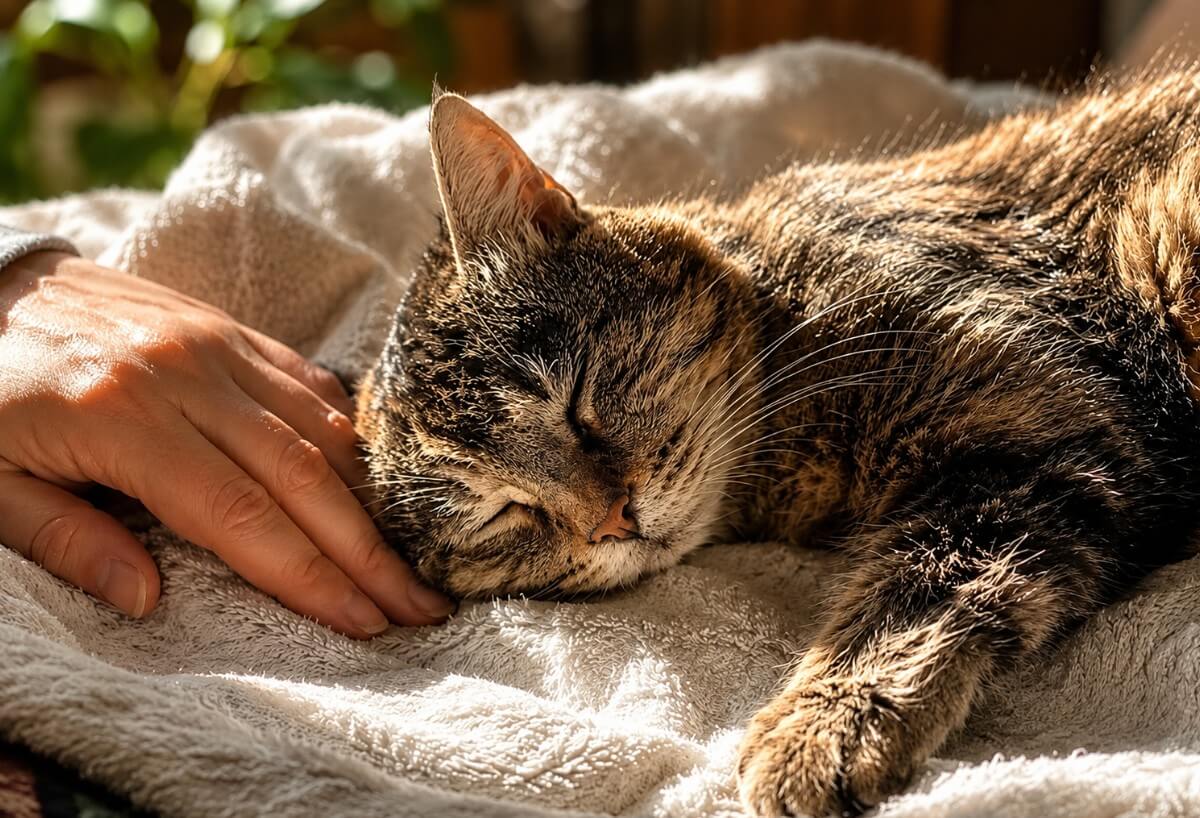
Final thoughts
Knowing when it’s time to euthanize a cat is rarely simple.
It’s not one sign.
It’s not one bad day.
It’s not one skipped meal or one quiet afternoon.
It’s the pattern.
The pain that can’t be managed.
The fear that won’t settle.
The body that can’t keep up.
The pleasures that have faded.
The bad days that are taking over.
And underneath all of that, it’s love trying to make the least cruel choice.
If you’re facing this decision, please speak to your vet.
Ask the hard questions.
Tell the truth about what you’re seeing.
Tell the truth about what you’re afraid of.
And remember this:
Choosing euthanasia for a suffering cat isn’t a failure of love.
Sometimes it’s love doing the hardest, kindest thing left.
Frequently Asked Questions
How do I know if my cat is suffering?
Cats often hide suffering, so the signs may be subtle.
Watch for changes in appetite, breathing, movement, grooming, litter box use, hiding, vocalizing, posture, sleep, and interest in normal comforts.
If you’re unsure, ask your vet to assess pain and quality of life.
Is it too soon to euthanize my cat if they still have good moments?
Not necessarily, but good moments need to be weighed against the whole pattern.
If your cat has occasional good moments but is mostly in pain, distress, or decline, it may still be time to discuss euthanasia with your vet.
Should I wait until my cat stops eating?
No, not always.
Stopping eating can be an important sign, but it shouldn’t be the only sign you wait for.
Some cats may suffer significantly before they fully stop eating.
Quality of life includes pain, breathing, mobility, hygiene, comfort, and whether your cat can still enjoy life.
Do cats know when they’re dying?
We can’t know exactly what cats understand about death.
Some cats withdraw, seek quiet places, or behave differently when they’re very ill.
What matters most is whether they feel safe, comfortable, and free from distress.
Is euthanasia painful for cats?
Veterinary euthanasia is intended to be peaceful and to prevent suffering.
Many vets use sedation first so the cat is relaxed or asleep before the final injection.
Ask your vet what will happen step by step so you know what to expect.
What if I regret euthanizing my cat?
Regret and guilt are very common after euthanasia, even when the decision was compassionate.
Your grief may question everything because you loved your cat deeply.
Try to remember what you knew at the time, what your vet advised, and whether your choice was made to prevent suffering.

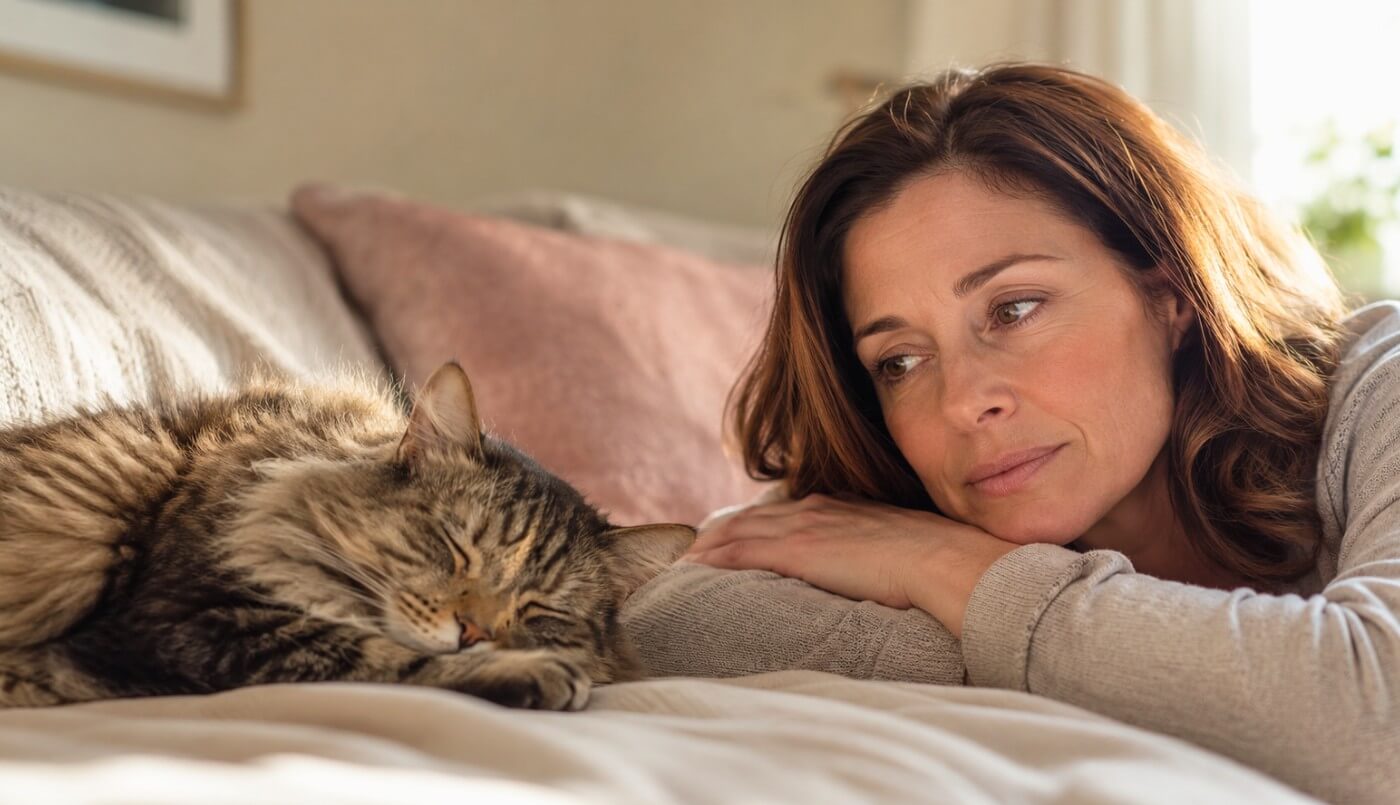


If you’re reading this while trying to decide whether it’s time, my heart goes out to you.
This is not a decision most people make with certainty. It’s often made through tears, second-guessing, vet conversations, tiny changes, hard questions, and a deep wish to protect your cat from suffering.
You’re welcome to share your cat’s name here, or what you’re finding hardest about this stage — the waiting, the not knowing, the guilt, the fear of choosing too soon, or the fear of waiting too long.
Please remember that comments can offer comfort, but they can’t replace veterinary guidance. If your cat is struggling, in pain, not eating, having breathing trouble, or you feel something has changed quickly, please contact your vet or an emergency vet.